
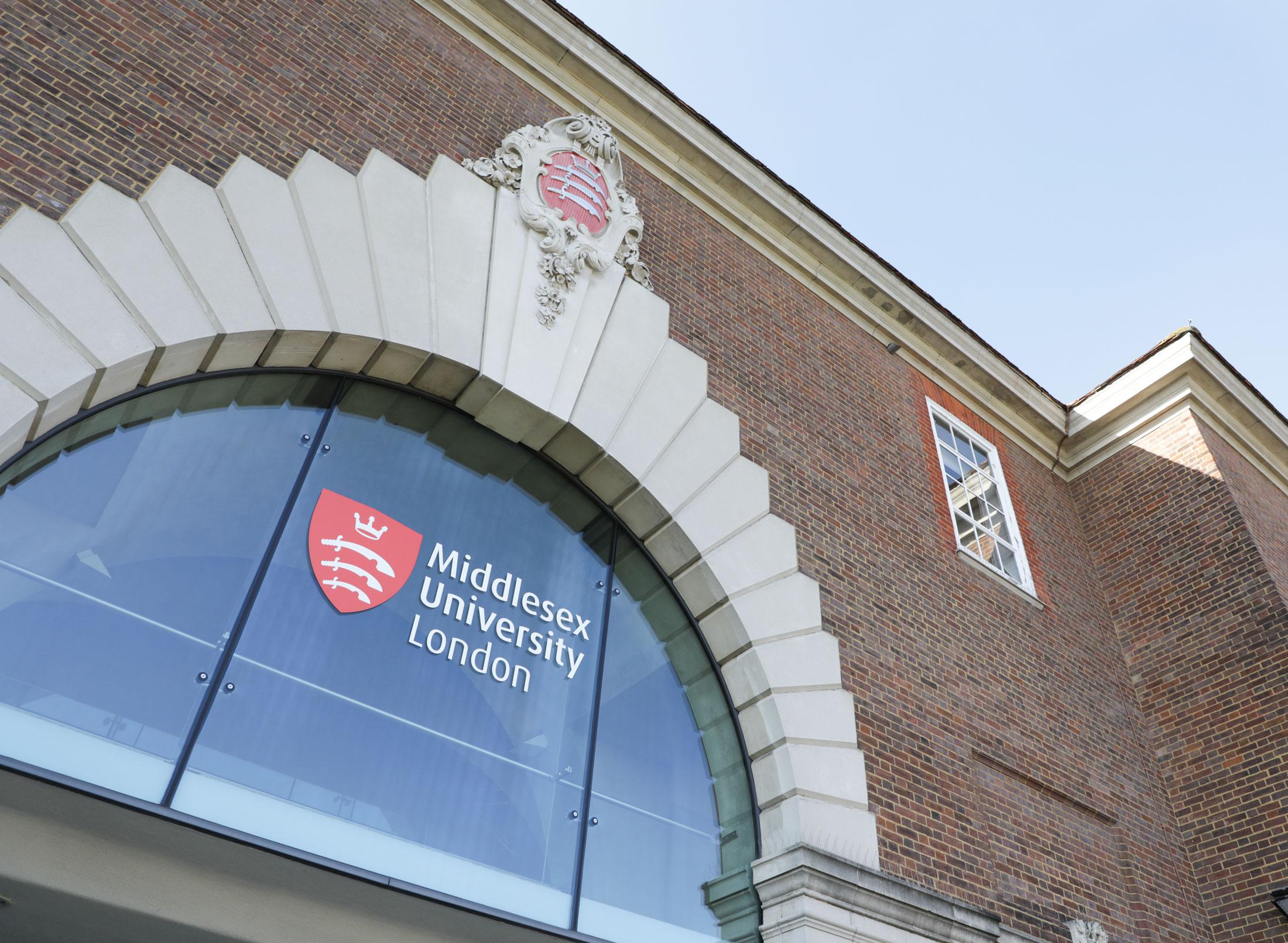

University in United Kingdom
London, England, United Kingdom
University profile
Middlesex University is a modern university based on a single campus in Hendon, north London, with further campuses in Dubai and Mauritius. Its roots go back to 1878 and St Katherine's College, a women's teacher training college in Tottenham, and it became Middlesex University in 1992 after nearly two decades as Middlesex Polytechnic. Teaching is career-focused and practical, built around industry placements, live projects and links with more than 1,000 industry and employer partners.
The university supports over 37,000 students and apprentices across London, Dubai and Mauritius. The London campus at The Burroughs, Hendon, has over 15,000 students and 1,700 staff, and has been the home of all London teaching since 2013. More than £200m has been invested in it, including the Grove building for the creative disciplines, the Ritterman building and the Hatchcroft building's science laboratories. A healthcare and sports science training centre opened in 2022 in the West Stand at StoneX Stadium, home of Saracens Rugby.
In London, study is organised in four faculties:
Programmes run from foundation years and undergraduate degrees, including part-time, top-up and January-start options, to taught master's, PGCEs, degree apprenticeships and research degrees such as the MPhil/PhD, PhD by Public Works, MA/MSc by Research, Doctor of Professional Studies and DBA. The university won three Queen's Anniversary Prizes, for Higher and Further Education (1996), Education Technology (1998) and its Flood Hazard Research Centre (2000), and holds a Silver award in the Teaching Excellence Framework (2023).
Students in London come from more than 140 countries. University halls (Usher Hall in Hendon, and Platt Hall and Writtle House in Colindale) offer bills-inclusive rooms with 24/7 security and resident assistants. The Sheppard Library holds over 350,000 books, with 1,000 study areas and more than 600 computers. Sport includes over 20 teams, the Fitness Pod gym and outdoor pitches and courts, and the Students' Union runs over 50 clubs and societies. All students get free course printing, and most receive their core reading-list book free as an e-book. Middlesex is a licensed Student route visa sponsor, with international offices around the world helping applicants.
For 2026/27, UK undergraduates pay £9,790 a year for standard full-time courses, £11,750 for accelerated courses and £7,335 for part-time study. The first year of an integrated foundation year costs £9,790 in science, engineering and creative and performing arts, or £5,760 for classroom-based courses. From 2027/28 the standard full-time fee is expected to rise to £10,050. Most international undergraduate degrees cost £17,200 a year (September 2025/January 2026 entry). International postgraduate taught fees vary by course, mostly between £12,800 and £21,300 a year. Undergraduate finance | International fees
Students may apply for more than one scholarship but can hold only one at a time, and receive the highest-value award. Scholarships and bursaries
Scholarships for international students
The Living Costs Fund gives non-repayable money or food vouchers for unexpected costs to all enrolled students, and students can apply more than once. The Student Support Fund helps students in financial difficulty, and fee reductions are available to some groups, including the children of Gurkhas. Free laptop loans, free course printing, free core e-books and free Adobe Creative Suite access are also available. UK students can apply for government tuition fee and maintenance loans.
Middlesex University Regional and International Merit Awards →
Middlesex University Alumni Postgraduate Award →
Browse the scholarships listed for Middlesex University and check each award’s eligibility.
View scholarships for Middlesex University →Full-time undergraduate degrees, integrated foundation years and top-up degrees are applied for through UCAS (institution code M80); part-time courses and January-start courses are applied for directly through the Middlesex Online Applicant Portal. Nursing, midwifery and social work applications go through UCAS, and teacher training through the Department for Education service. Offers take account of achieved and predicted grades, a personal statement, references and any barriers to learning, such as leaving care or seeking asylum. A-level and BTEC offers are made as a range, with the lower end used where barriers are identified. Some courses require an interview, portfolio, showreel or audition, and creative courses usually ask for a portfolio.
Typical offers run from 128 UCAS points (ABB at A level, Distinction in T Level) to 96 points (CCC, T Level Pass with C or above on the core), with most courses asking for 96 to 128 points. Foundation-year entry can be lower (64 points, DDE). Applicants normally also need three GCSEs at grade 4/C, including English, and some courses also require Maths or Science. The full International Baccalaureate Diploma is accepted, as are Scottish Highers and Advanced Highers (at least three Highers or two Advanced Highers), Access to HE Diplomas, BTEC Nationals and the Irish Leaving Certificate. Relevant work or prior learning can be counted through recognition of prior learning.
The UCAS application fee for 2027 entry is £34.50 for up to five choices.
International applicants can apply through the Applicant Portal, through Middlesex international offices or through UCAS. Qualifications from all over the world are accepted, with equivalences set out for each country. Interviews, tests, auditions and portfolios can be completed online by applicants outside the UK. Copies of transcripts and certificates must be on letterheaded paper or stamped by the awarding body, with official translations where needed.
Applicants who are not nationals of a majority English-speaking country, or whose education has not been in English, must show English proficiency. Typical minimums are:
Tests are accepted for two years from the exam date. Applicants without a test can take the Middlesex approved test free of charge, and pre-sessional English courses (6 to 30 weeks) are available for those below the required level.
Master's courses usually require a second-class honours degree (2:2) or above, or equivalent, in a relevant subject. Some courses, such as MBAs, also require relevant work experience. Applications go directly through the Online Applicant Portal (PGCE and teaching routes through the Department for Education). There is no fixed deadline, but early application is recommended. Most courses start in September, with January and May intakes on selected programmes.
MPhil and PhD applicants usually need an honours degree at 2:1 or above, or relevant professional experience. A relevant master's degree is desirable but not always essential. Applications go through the Online Applicant Portal, ideally at least three months before the intended start in September or January, and are matched by an admissions tutor to suitable supervisors or research centres. All PhD students first enrol on an MPhil and then transfer.
Middlesex is a licensed Student route visa sponsor. Once an offer is accepted and the tuition fee deposit is paid, the university issues a Confirmation of Acceptance for Studies (CAS), which requires bank statements, academic qualifications and evidence of English level. Applicants must be at least 16. Short courses and CPD under six months are not eligible for Student route sponsorship.
Study programmes offered at Middlesex University.
Experiences shared by students of Middlesex University.
Studied here? Share your experience to help other applicants.

Book a free consultation with our expert counsellors and take the first step towards your dream university.
Copyrights © 2026 StudyMapped. All rights reserved.

Enter your credentials to continue.
Join us and start your study abroad journey.


