

University in United Kingdom
London, England, United Kingdom
University profile
The London School of Hygiene & Tropical Medicine (LSHTM) is a postgraduate-only specialist university for public and global health, based in Bloomsbury, central London. Its mission is to improve health and health equity in the UK and worldwide through research, education and the translation of knowledge into policy and practice. It has around 4,600 postgraduate students, around 3,500 staff and annual research income of more than £167 million.
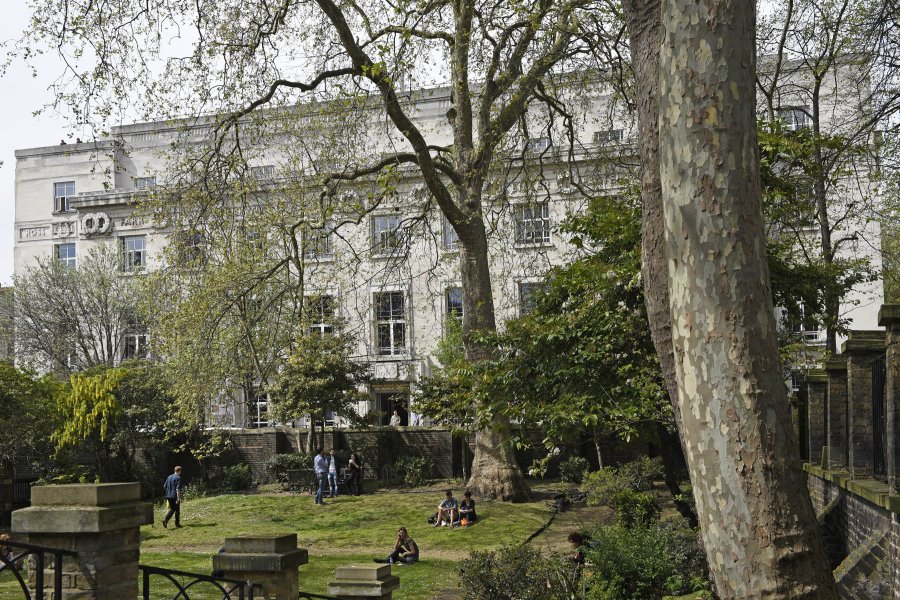
Teaching and research in London run across two sites a short walk apart: the Grade II listed Keppel Street building, home since 1929 to most lecture theatres, laboratories and the library, and Tavistock Place, where the Education Centre (opened for teaching in January 2026) has 19 classrooms and student services. Overseas, the School runs the MRC Unit The Gambia at LSHTM and the MRC/UVRI and LSHTM Uganda Research Unit, which joined in February 2018.
Academic work is organised in three faculties and a Doctoral College:
Study options are MSc, PG Diploma and PG Certificate programmes taught in person, online or by distance learning, plus MPhil/PhD and DrPH research degrees, a joint PhD in Global Health with Nagasaki University, short courses and individual modules. Around 1,200 students study face to face for master's and doctoral degrees, about 2,500 by distance learning from over 150 countries, and about 900 each year on short courses and CPD.
As a member of the University of London, LSHTM gives students access to Senate House Library, intercollegiate halls, sports facilities, clubs and societies. The School has no dedicated accommodation office; for 2026/27 it holds 40 rooms in College Hall, International Hall and the Garden Halls and runs a Rent Guarantor Scheme for full-time students renting privately. Students, staff and alumni come from more than 190 countries, and the alumni community numbers over 30,000.
LSHTM holds a Royal Charter (1924) and is one of around 20 specialist institutions receiving institution-specific funding from the Office for Students. It belongs to the M8 Alliance, the Association of Schools of Public Health in the European Region and the Consortium of Universities for Global Health. It was Times Higher Education University of the Year 2016 and received Queen's Anniversary Prizes in 2017 (Ebola response) and 2022 (COVID-19 response).
Fees cover registration, library membership and examinations and are charged by home (UK) or overseas fee status. Examples of full-time MSc fees: Public Health £13,580 (UK) / £31,450 (overseas); Epidemiology £14,930 / £34,590; Medical Statistics £14,230 / £31,450; Tropical Medicine & International Health £14,930 / £34,590; Immunology of Infectious Diseases £15,650 / £35,070; Global Mental Health £17,541 / £40,450. Online MSc programmes in Climate Change & Planetary Health and Demography & Health cost £23,100 full-time for all students. Some programmes add a field trip fee, and students carrying out overseas projects may need up to £1,500 extra.
Research degrees (DrPH/MPhil/PhD) cost £7,870 a year full-time for UK students, and £23,740 (non-lab-based) or £28,780 (lab-based) for overseas students. Full-time research students pay the full rate for three years and then a writing-up fee for year 4. Distance learning MSc fees are £17,640 (Public Health) or £19,440 (Clinical Trials, Epidemiology, Global Health Policy and other programmes), and can be paid module by module. Fees for continuing students will not normally rise by more than 5% a year.
Students receive funding from more than 200 sources. For 2027/28, the master's and research degree scholarship tables list ESRC UBEL DTP Studentships (deadline 30 October 2026), Commonwealth Master's and PhD Scholarships (deadline 20 October 2026) and the Chevening Scholarship (deadline 6 October 2026). For 2026/27, research studentships included the NIHR Vaccine Effectiveness Studentship and the LSHTM-Royal Society PhD Scholarship for home students. UKRI-funded studentships are open to international applicants. Applications from Black, Asian and minority ethnic and first-generation students are particularly encouraged. Full scholarship holders do not pay the tuition deposit. See master's funding and research degree funding; enquiries go to [email protected].
Registered London-based students can apply for School trust funds, with 2025/26 values including the Stuart Paynter Memorial Scholarship (£12,000), Val Curtis Memorial Scholarship (£4,000), Neil Davis Memorial Scholarship (£3,000), Amanda Jaclyn Berger Research & Travelling Scholarship (£3,000), Dr Ijeoma Ejekam Idaresit Fund Scholarships (£2,000), Helena Vrbova Scholarship (£1,500), David Bradley Travel Grant (£1,000), DrPH RSI/OPA Scholarships (£15,000) and Doctoral Project Travelling Scholarships (£60,000), with a deadline of 20 April 2026. Chadwick Trust fellowships of up to £5,000 (MPhil/PhD) and £2,500 (master's) are open to LSHTM and UCL students. Income from the £50 application fee goes to scholarships and the student hardship fund. See current student funding.
Eligible UK students can take government Postgraduate Loans through the Student Loans Company. US Federal and private loans, Canadian loans, and Lendwise loans of up to £100,000 for UK-resident students are also available. Tuition fees cannot normally be paid in instalments, except for loan-funded students and UK research students receiving an LSHTM stipend. See student loans.
LSHTM Fund Scholarship (MSc, 2026-27) →
LSHTM Next Generation Scholarships (MSc, 2026-27) →
LSHTM First Generation Scholarships (Distance Learning MSc, 2026-27) →
GSK Scholarships for Future Health Leaders (MSc, 2026-27) →
Browse the scholarships listed for London School of Hygiene & Tropical Medicine and check each award’s eligibility.
View scholarships for London School of Hygiene & Tropical Medicine →LSHTM admits postgraduate students only, to MSc, PG Diploma and PG Certificate programmes (in person, online and distance learning), MPhil/PhD and DrPH research degrees, short courses and modules. All applications go through the LSHTM application portal; admissions enquiries are handled by email at [email protected].
Applicants need a first degree at Second Class Honours (2:2) standard in a relevant discipline, a medical degree recognised by the UK General Medical Council, or an equivalent overseas degree recognised by UK ENIC or the GMC. A professional qualification or relevant professional experience judged equivalent to a 2:2 may also be accepted. Some programmes set higher or additional requirements. Up to two programmes can be applied for, in order of preference, and applicants may hold only one offer.
Documents: passport photo page, CV, academic transcripts, degree certificates and evidence of English ability where applicable. A non-refundable £50 application fee applies, and decisions are made within about 6 weeks of a complete application. Offers must be accepted within 28 days. For in-person programmes the non-refundable deposit is £500 for home students and £2,000 for overseas students; online and distance learning programmes take a £500 deposit.
Popular programmes may close earlier if full.
Applications from under-represented groups are welcomed, including Black applicants, care-experienced applicants, carers, disabled applicants, applicants estranged from family, first-generation applicants and refugees or asylum seekers.
Applicants need evidence of aptitude for research and at least one of: a master's degree in an appropriate subject (recommended); an appropriate qualification in medicine, dentistry or veterinary studies; or an Upper Second Class Honours (2:1) degree or overseas equivalent in a relevant subject. DrPH applicants also need at least two years of appropriate experience and must submit an organisational and/or policy analysis outline (around 500 words). A research proposal and two references are required; decisions are made within about 12 weeks. MPhil/PhD students can start in September, January or April (April 2027 entry deadline: Friday 22 January 2027); the DrPH starts in September only.
Programmes are set at Band B (standard) or Band C (lower). Accepted tests, taken within two years of the programme start (online tests, including IELTS Online, are not accepted):
Nationals of UKVI majority English-speaking countries, and holders of a bachelor's-equivalent degree taught in one of those countries, are exempt. QLS assessment at CEFR C1 is also accepted. Research degrees require Band B.
Country and region pages set out accepted international qualifications for master's entry. Student visa applicants receive instructions after a formal offer; CAS requests go to [email protected] and visa enquiries to [email protected]. Because of a UK government visa brake, LSHTM cannot sponsor Student visas for nationals of Afghanistan, Cameroon, Myanmar or Sudan.
Both London sites have quiet rooms, multi-faith prayer spaces, parent-carer rooms, accessible entrances and Wi-Fi. Through the University of London, students can use Senate House Library, intercollegiate halls, sports centres and social spaces. LSHTM's 2026/27 hall allocation is 40 rooms: Garden Halls (self-catered townhouse singles, 50 weeks, £339.92 to £351.54 per week), International Hall (catered single with shared bathroom £301.59; single studio £333.17; double studio £351.92 per week, 40 weeks) and College Hall on Malet Street (catered single en suite £380.17; double en suite £455.71 per week, 40 weeks).
Study programmes offered at London School of Hygiene & Tropical Medicine.
Experiences shared by students of London School of Hygiene & Tropical Medicine.
Studied here? Share your experience to help other applicants.

Book a free consultation with our expert counsellors and take the first step towards your dream university.
Copyrights © 2026 StudyMapped. All rights reserved.

Enter your credentials to continue.
Join us and start your study abroad journey.


