

University in United Kingdom
London, England, United Kingdom
University profile
The London School of Economics and Political Science (LSE) is a specialist social science university in central London, founded by social reformers in 1895 for "the betterment of society". Known within the institution as "the School", it teaches and researches across economics, politics, law, sociology, international relations, management, finance and the wider social sciences. It is a member of the Russell Group, the Aspect social science commercialisation network and SHAPE, and in Europe belongs to CIVICA, The European University of Social Sciences. LSE joined the University of London in 1900 and has awarded its own degrees since 2008.
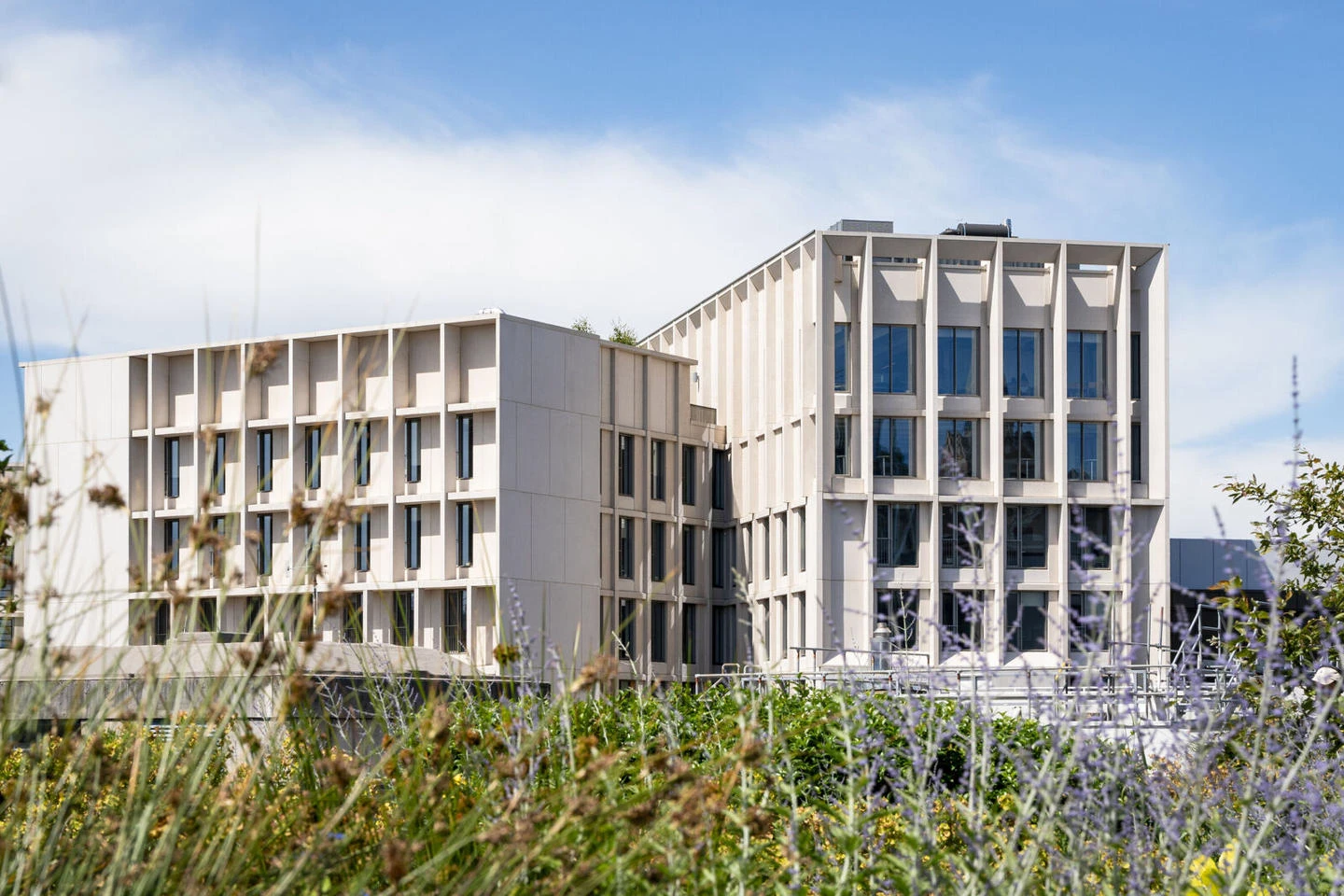
The campus is concentrated around Houghton Street, Clare Market, Lincoln's Inn Fields and the Aldwych, close to the Strand. Landmark buildings include the Old Building, the Centre Building, the Marshall Building at 44 Lincoln's Inn Fields, the Sir Arthur Lewis Building (home of the Department of Economics), the Cheng Kin Ku Building and the Saw Swee Hock Student Centre. The School also has its own sports ground at Berrylands in New Malden, Surrey.
Teaching and research are organised through academic departments and interdisciplinary institutes rather than faculties. They include Accounting; Anthropology; Economics; Economic History; Finance; Gender Studies; Geography and Environment; Government; Health Policy; International Development; International History; International Relations; the LSE Law School; Management; Mathematics; Media and Communications; Methodology; Philosophy, Logic and Scientific Method; Psychological and Behavioural Science; Social Policy; Sociology; and Statistics, alongside the School of Public Policy, the Global School of Sustainability, the Data Science Institute, the European Institute, the Firoz Lalji Institute for Africa, the International Inequalities Institute, the Marshall Institute and the Centre for Language Studies.
The LSE Library, founded in 1896 as the British Library of Political and Economic Science, holds over 4 million printed items and has designated status from Arts Council England. Student life centres on the LSE Students' Union in the Saw Swee Hock Student Centre, with more than 250 clubs and societies, on-campus gyms, LSE LIFE for academic and personal development, LSE Careers, the Volunteer Centre, the Faith Centre and the LSE Generate entrepreneurship programme. Each year the School allocates accommodation to over 4,000 students across its own halls, University of London intercollegiate halls and partner private halls.
LSE is strongly international: students come from over 140 countries and around 40 per cent of staff are from outside the UK. In 2024-25, 7,608 of 11,887 full-time students were international by domicile. Alongside its degrees, the School runs the General Course for visiting students, executive education, summer schools and online courses.
For undergraduates starting in 2027/28, the Home fee is £10,050 a year, set at the government maximum. Overseas undergraduate fees depend on the programme's tier and range from £30,400 to £41,900 a year. The Overseas fee is fixed at the entry-year rate for the whole degree. Postgraduate taught fees vary by programme (for example, £43,100 for the MSc Economics in 2027/28). MPhil/PhD fees for 2027/28 are £5,368 (Home) and £25,300 (Overseas) a year full time. LSE undergraduates going straight on to taught graduate study at LSE get a 10 per cent fee reduction (some executive programmes excluded). For graduate students, LSE suggests budgeting at least £1,550 a month for living costs. Table of fees
A non-repayable bursary for every eligible Home fee status undergraduate, based on household income. New entrants from 2025/26 receive £4,250 a year (income up to £30,000), £3,000 (£30,001 to £35,000), £2,250 (£35,001 to £40,000) or £1,250 (£40,001 to £50,000). No separate application is needed: students apply to Student Finance for the income-assessed Maintenance Loan and consent to share their data. The final date to be considered for 2026/27 is 26 March 2027. LSE Discretionary Bursaries, an Accommodation Bursary and a Care Experienced and Estranged Student Bursary are also available. LSE Bursary
The LSE Undergraduate Support Scheme helps Overseas fee status offer holders who cannot meet all their costs. Awards are usually £15,000 to £25,000 a year and are renewable for each year of the programme. Other donor-funded awards include the Beacon Scholarship, the Bluemoon Foundation Scholarship Fund, Global School of Sustainability Scholarships, the LSE Mauritius Scholarship, the Pestalozzi International Scholarship, the Singapore LSE Trust Undergraduate Scholarship, the Zygmunt Gasiorowski Scholarship Fund and up to ten Uggla Family Scholarships each year for students from under-represented backgrounds. Awards are based first on financial need and then on academic merit. One LSE Undergraduate Scholarship Application, with an academic reference, covers every scheme. For 2026/27 the deadlines were 30 April 2026 (Overseas) and 1 June 2026 (Home). Overseas undergraduate support
These cover tuition fees and living costs for asylum seekers, refugees, people with humanitarian protection and UK residents with Discretionary or Limited Leave to Remain. Access to Education Scholarships
The School gives around £3 million a year through the Graduate Support Scheme. It makes need-based awards of £5,000 to £20,000 to Home and Overseas applicants for diploma and taught master's programmes. Applicants complete the Graduate Financial Support application in the Graduate Applicant Portal after applying for admission and must hold an offer by the deadline (23 April 2026 for 2026 entry). The same form puts applicants forward for LSE Master's Awards and country-based awards. LSE Excellence Scholarships, worth £20,000 in total, go to exceptional taught postgraduate applicants and need no separate application. Graduate fees and funding
LSE PhD Studentships cover full fees and an annual stipend for four years and are open to UK, EU and international students. ESRC studentships also cover full fees and a stipend; for international students, LSE pays the difference between UK and overseas fees. Up to eight LSE-CSC Scholarships a year support students from China. There is no separate funding application: departments nominate candidates who apply for admission by the funding deadline. Research funding
Eligible Home undergraduates can borrow tuition fee and maintenance loans from Student Finance England (through the Lifelong Learning Entitlement for 2027 starters), Student Finance Wales, Student Finance Northern Ireland or SAAS.
LSE Undergraduate Support Scheme →
LSE Graduate Support Scheme (GSS) →
LSE Bursary and Discretionary Bursary →
LSE Care Experienced and Estranged Student Bursary →
Browse the scholarships listed for London School of Economics and Political Science and check each award’s eligibility.
View scholarships for London School of Economics and Political Science →All undergraduate applications are made through UCAS; LSE does not accept direct applications. For entry in September 2027 (and deferred entry in 2028), the deadline for full and equal consideration is 13 January 2027, 18.00 (GMT). Applications after this date are considered only if places remain, which is rare. LSE does not usually take part in UCAS Extra or Clearing, does not interview applicants and does not use education agents for undergraduate recruitment. In 2026 the School received approximately 34,000 applications for roughly 1,900 places.
Standard offers are expressed in GCE A-levels and the International Baccalaureate Diploma and are listed on each programme page; meeting them does not guarantee an offer. Selectors weigh achieved and predicted grades, subject combinations, the personal statement, contextual information and the UCAS reference. BTEC Level 3 qualifications are considered individually, normally alongside A-levels in two traditional academic subjects (for example a Distinction in a BTEC Extended Certificate with A*A for A*AA programmes), with GCSE English and Mathematics at grade B. Scottish Advanced Highers, the Welsh Baccalaureate, Access to HE Diplomas, Advanced Placement and UK-delivered international foundation programmes are also considered. Applicants with less familiar qualifications may be asked to sit the Undergraduate Admissions Assessment (UGAA), an LSE test of English and Mathematics.
For Home fee status applicants from the UK, contextual flags supplied by UCAS are taken into account. Applicants from TUNDRA Quintile 1 postcodes, those eligible for Free School Meals, care-experienced applicants and participants in specified LSE widening participation or Sutton Trust Pathways programmes may receive a contextual offer one or two grades below the standard offer; any mathematics requirement must still be met.
Applicants to the LLB (M100) must sit the Law National Admissions Test (LNAT), by 31 December 2026 for 2027 entry. The Test of Mathematics for University Admission (TMUA) is compulsory for BSc Economics and BSc Econometrics and Mathematical Economics, and recommended for several other programmes.
International applicants use the same UCAS process and are strongly advised to apply by the January deadline. Country pages set out how national qualifications are treated; for example, the West African Senior School Certificate of Education (WASSCE) on its own is not accepted, so applicants from Ghana need A-levels, the IB or another accepted qualification. Second-year entry is possible only in exceptional cases and in a limited number of departments.
Undergraduates need proof of English only once an offer is made, by a deadline in July. Accepted results include IELTS Academic 7.0 overall with 7.0 in each component; TOEFL iBT 100 overall (minimum 27 Writing, 25 Reading, 24 Listening, 24 Speaking); Pearson PTE Academic (in person) 70 overall with 70 in each component; Cambridge C1 Advanced or C2 Proficiency 185 in each component; GCSE English Language grade B/6; and IB English A at Higher Level (any grade) or Standard Level 6. Graduate programmes use four bands. The Standard band is IELTS 7.0 overall with 6.5 in each component, or TOEFL iBT 100. The Higher band is IELTS 7.0 with 7.0 in Reading. The Research band is IELTS 7.0 with 7.0 in Reading and Writing. The Law band is IELTS 7.5 with 7.0 in each component, or TOEFL iBT 109. Test results must be less than two years old.
Master's programmes normally require a first or upper second class honours (2:1) degree from a UK university, or the non-UK equivalent, in a relevant subject; popular programmes often look for a first. For degrees outside the UK the usual benchmark is at least 70 per cent in final-year examinations or a GPA of 3.5 out of 4. Some quantitative programmes require GRE or GMAT scores. Applications for 2027/28 open in October 2026 through LSE's online system and can be submitted once per cycle. They need two references, a statement of academic purpose, a CV, transcripts and a £95 application assessment fee. Most programmes decide on a rolling basis and close when full.
MPhil/PhD entry normally requires a UK taught master's degree with merit or equivalent, plus a research proposal; MRes/PhD tracks require at least a 2:1 degree. Application and funding deadlines for 2027 entry are 3 December 2026 (some departments), 13 January 2027 (main deadline for ESRC and LSE PhD Studentships) and 27 May 2027 (final deadline).
LSE has a single central London campus around Houghton Street and Lincoln's Inn Fields (Houghton Street, London WC2A 2AE), with halls of residence across inner London and a sports ground in Surrey.
Study programmes offered at London School of Economics and Political Science.
Experiences shared by students of London School of Economics and Political Science.
Studied here? Share your experience to help other applicants.

Book a free consultation with our expert counsellors and take the first step towards your dream university.
Copyrights © 2026 StudyMapped. All rights reserved.

Enter your credentials to continue.
Join us and start your study abroad journey.


