
University in United Kingdom
Kingston upon Thames, England, United Kingdom
University profile
Kingston University is a public university in the Royal Borough of Kingston upon Thames, south-west London, with roots in the Kingston Technical Institute of 1899. It has more than 20,000 students from 140 countries and describes itself as the UK's leading university for Future Skills, a programme built into teaching through dedicated Future Skills studios and a Career Centre at Penrhyn Road.
Teaching is spread across four campuses in and around Kingston upon Thames, linked by an intersite bus service: Penrhyn Road near the town centre, Kingston Hill beside Richmond Park, Knights Park on the Hogsmill River and Roehampton Vale near Wimbledon Common. Central London is about 30 minutes away by train.
Academic work is organised in four faculties:
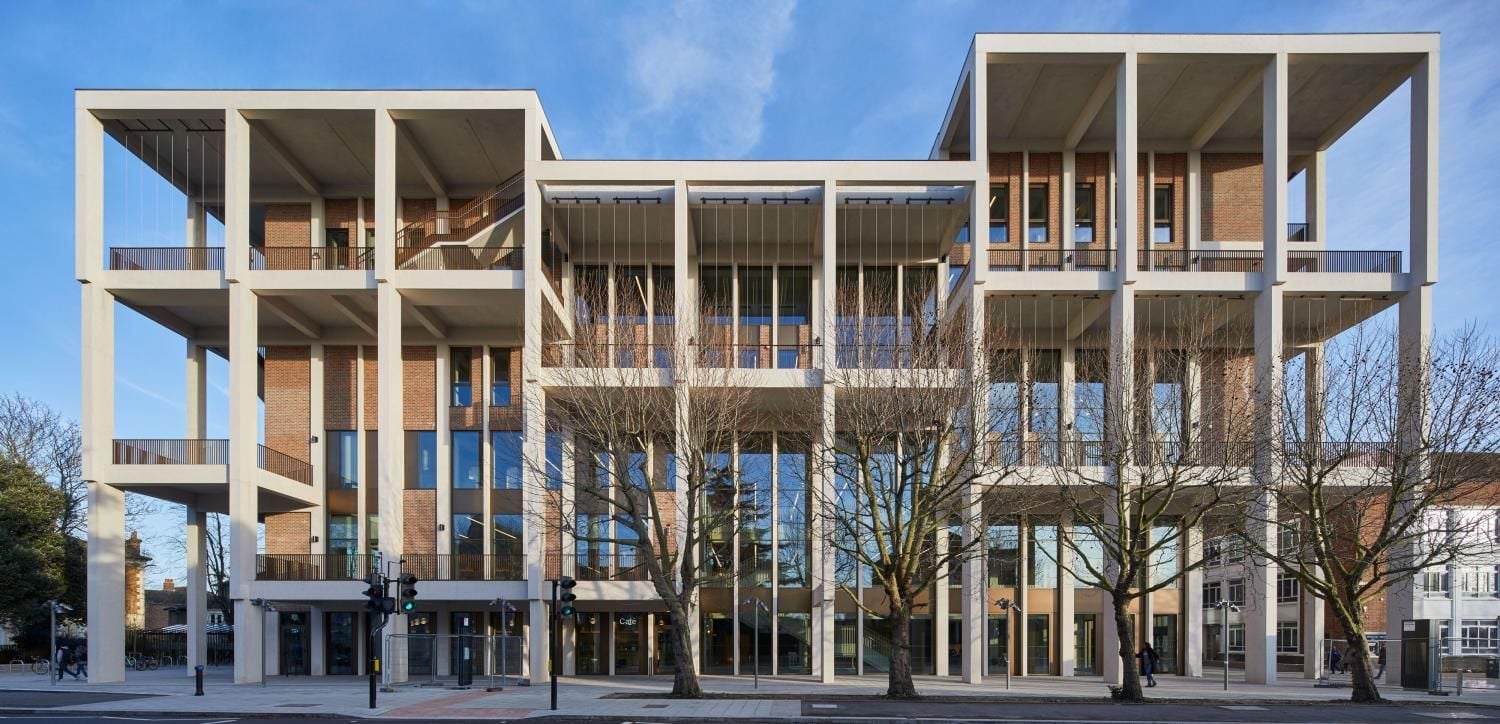
Notable facilities include the Town House at Penrhyn Road, winner of the 2021 RIBA Stirling Prize and the 2022 EU Mies van der Rohe Award, which holds the library; a Bloomberg trading room and the Visconti Studio at Kingston Hill; the Stanley Picker Gallery at Knights Park; and wind tunnels and engineering labs at Roehampton Vale. The university holds Gold ratings in all three categories of the Teaching Excellence Framework (TEF).
Kingston Students' Union is based at Penrhyn Road, with over 60 sports clubs and societies, and Study Abroad options in more than 30 countries. The university offers over 2,000 halls rooms across six residences, including Seething Wells, its largest. Around 1,500 international students join each year from more than 140 countries, and some postgraduate courses start in January as well as September.
Home full-time undergraduate fee: £9,790 (2026/27) and £10,050 (2027/28). Foundation Year 0 (classroom based) is £5,760. International and EU Year 1 fees for 2026/27 range from £18,500 (other classroom-based courses) to £21,400 (art and design), with Aerospace Engineering at £19,600 and Pharmacy (MPharm) at £19,900. For 2027/28 entry, international Year 1 fees range from £19,800 to £22,900. International fees rise each year and are published in advance for the whole course. Undergraduate tuition fees
£2,000 in the first year for home fee-status students starting Year 1 of an undergraduate course in September 2026 with a household income of £25,000 or less (assessed by Student Finance England or Wales). There are at least 500 bursaries. No application is needed: eligible students are identified through their student finance assessment, which must be completed by 30 June 2026, with Kingston as their first choice. The Kingston Bursary
Other bursaries cover care leavers (£1,500, paid in three instalments, through the KU Cares team), estranged students, young adult carers and Sanctuary Scholars, along with the O+T Foundation Bursary, Salutem scholarships and the AVSH scholarship. Undergraduate finance
The British Council GREAT Scholarship (£10,000 for students from Turkey or Vietnam), Chevening and Commonwealth Scholarships are listed as external awards. International scholarships and bursaries
Postgraduate scholarships include the BAFTA UK scholarship, PGCE bursaries, The Stationers' Company bursaries, the Chelsea Arts Club Trust MA Materials and Research Award, and the Gangolli, Inspire the Future, Kevin Walsh and Salutem Care and Education scholarships, plus Master of Social Work funding. UK students may be eligible for a Postgraduate Masters Loan of up to £12,858 from Student Finance England, and DfE bursaries of up to £29,000 apply to some Secondary PGCE subjects. Student Support Funds help UK postgraduates facing unexpected financial difficulty. Postgraduate finance
Kingston University International Merit-Based Scholarship →
Kingston University Postgraduate Progression Scholarship →
Niloufar Ebrahim Scholarship →
Browse the scholarships listed for Kingston University and check each award’s eligibility.
View scholarships for Kingston University →Most undergraduate courses are applied for through UCAS, with up to five choices. UK applicants should apply between the beginning of September and mid-January before entry; late applications can be made until 30 June, though some high-demand courses may not consider them, and Clearing runs between July and September. Part-time courses, art foundation courses and some work-based courses are applied for directly.
Entry requirements are set in UCAS Tariff points, which vary by course and are listed on each course page; a small number of courses also require specific grades in particular subjects. A-levels (including Home, Heritage and Community Language A-levels), BTECs, T-levels and Alternative Academic Qualifications (AAQs) all count towards the Tariff. Offers are confirmed through UCAS Hub, and students who miss their offer conditions can check OSIS or call the admissions hotline about other courses.
International applicants can apply through UCAS or directly to the university through Apply Direct. Country guides give qualification equivalences and approved representatives. Pathway options include an International Foundation Year, Foundation Diploma, International Year One and a Pre-Masters Programme.
Minimum Academic IELTS scores:
Pearson PTE Academic is accepted (for example, 59 overall with 59 in all elements for undergraduate entry), as are TOEFL iBT and Cambridge English qualifications. Test results are valid for two years. Applicants who have completed a bachelor's-level degree in a majority English-speaking country may be exempt, and Medium of Instruction is accepted for degrees taught entirely in English.
Most postgraduate courses require a 2:2 honours degree or international equivalent, and applicants without the required grades who can show potential in other ways are encouraged to apply. Applications are made directly online through OSIS from the course page; PGCE Primary and Secondary applications go through the Department for Education Apply system, and the MSc Adult Nursing and Master of Social Work through UCAS. Applicants upload proof of identity, transcripts and certificates, English language evidence, a personal statement and, where relevant, a CV, portfolio, research proposal or work experience letter.
Research degree subjects, entry requirements (including English language) and application steps are set out on the Research Degrees pages.
International applicants needing a Student visa request a Confirmation of Acceptance for Studies (CAS) once they hold an unconditional offer. Each intake has fixed application, confirmation and CAS request deadlines, and postgraduate taught applicants pay a CAS deposit. Applicants from Bangladesh, India, Nepal, Pakistan and Sri Lanka are encouraged to complete a pre-CAS interview.
Halls of residence (over 2,000 rooms): Chancellors Hall and Walkden Hall at Kingston Hill, Clayhill in Surbiton (over 700 en suite rooms), Middle Mill at Knights Park, Seething Wells (the largest) and 71-75 Penrhyn Road. Adapted and accessible rooms are available in five halls, and the halls follow the Universities UK code of practice.
Study programmes offered at Kingston University.
Experiences shared by students of Kingston University.
Studied here? Share your experience to help other applicants.

Book a free consultation with our expert counsellors and take the first step towards your dream university.
Copyrights © 2026 StudyMapped. All rights reserved.

Enter your credentials to continue.
Join us and start your study abroad journey.


