
University in Germany
Gießen, Hessen, Germany
University profile
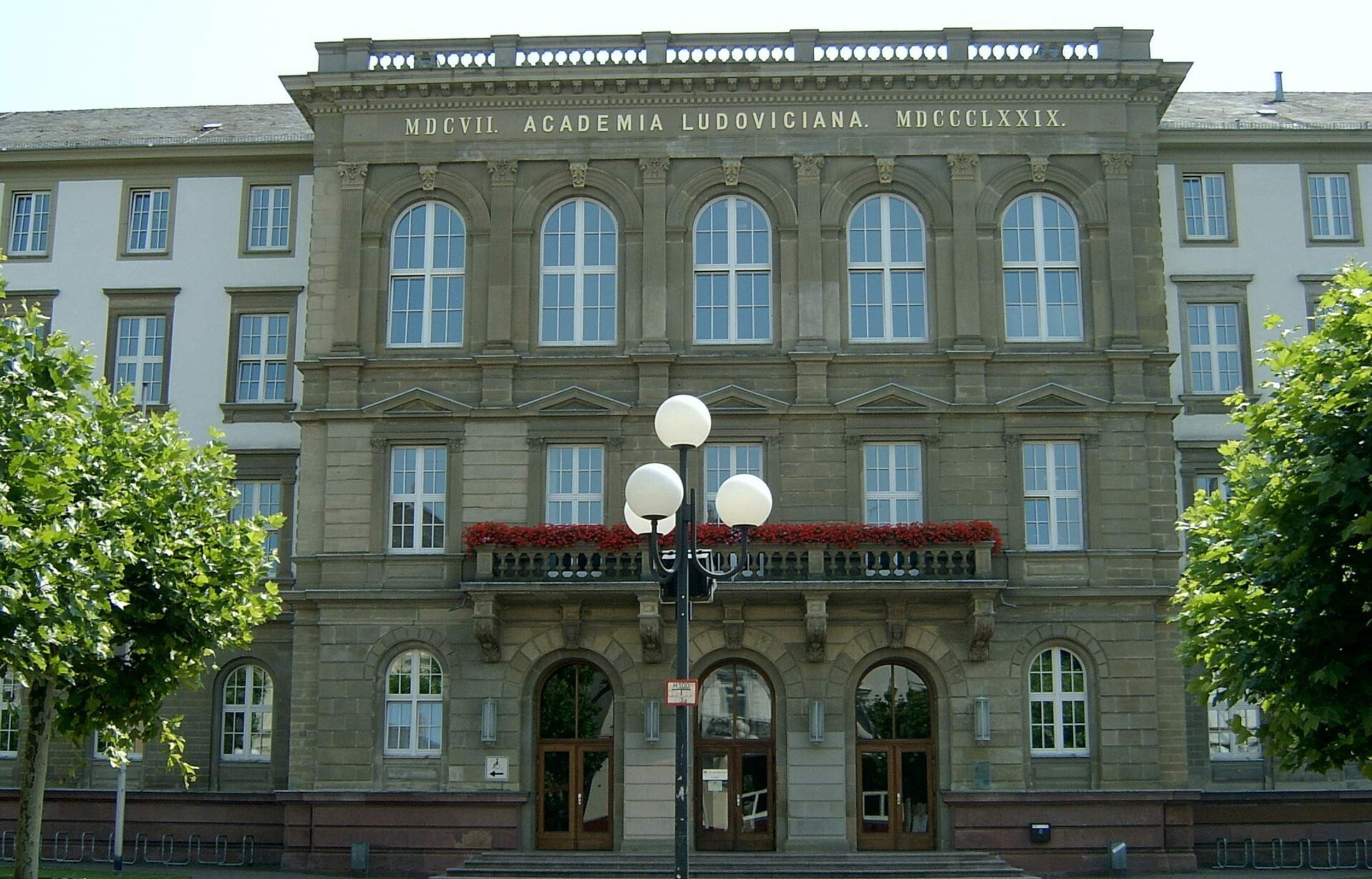
Justus Liebig University Giessen (JLU) is a comprehensive public university in the city of Giessen on the River Lahn in Hesse, founded in 1607. It has around 25,000 students (winter semester 2024/25) and 5,853 employees, including 426 professors (December 2024). It is named after the chemist Justus Liebig, who became Professor of Chemistry at Giessen in 1824, and uses the blue Antonite cross as its crest.
JLU is organised in eleven faculties: Law; Economics and Business Studies; Social Sciences and Cultural Studies; History and Cultural Studies; Language, Literature, Culture; Psychology and Sports Science; Mathematics and Computer Science, Physics, Geography; Biology and Chemistry; Agricultural Sciences, Nutritional Sciences and Environmental Management; Veterinary Medicine; and Medicine. It also has four graduate centres, five interdisciplinary research centres, two interdisciplinary centres for study and teaching, and the College of Liberal Arts and Sciences (CLAS). The range of subjects in the life sciences, including human and veterinary medicine, agricultural, environmental, nutritional and food sciences, is unique in Germany and underpins JLU's One Health research. It also offers the most extensive range of teacher training courses in Hesse, covering all school types, and a large share of students pursue a state examination in education, law, medicine or veterinary science.
More than 100 degree programmes are taught in German, English or Spanish. Three clusters of excellence in perception (The Adaptive Mind), heart-lung research (Cardiopulmonary Institute) and battery research (Post Lithium Storage, POLiS) place JLU among the most successful universities in the German federal and state Excellence Strategy.
The university is spread over four campus areas in Giessen and Bad Nauheim: the Town Centre campus, the Campus for Cultural Studies and Humanities, the Campus for Natural and Life Sciences, and the Kerckhoff Campus. Student life includes the Botanical Garden, the university orchestra, the general university sports programme (Allgemeiner Hochschulsport), Career Services, a children's university and the Faculty Club. The regional student services organisation, the Studierendenwerk, offers accommodation for about 3,500 students in 18 halls of residence and apartment buildings in Giessen, Fulda and Friedberg, and runs canteens and cafeterias on the campuses.
About 3,600 international students study at JLU. The university has around 100 partnership, cooperation and exchange agreements, 250 Erasmus+ partner universities, strategic partner regions in Australia, Europe, Colombia, Southern Africa and Wisconsin (USA), and information points in Australia, Colombia, Poland and Ukraine. It is a founding member of the European University Alliance EUPeace, and holds memberships including the DAAD, the German Rectors' Conference (HRK), the European University Association, uni-assist and the Scholars at Risk Network. Degree programmes are accredited through the agency AQAS, of which JLU is a member.
The International Office awards partial scholarships to international students in Bachelor's, Master's or state examination programmes who are within 12 months of graduation and have earned at least half of the required credits (for example 90 credits in a Bachelor's or 60 in a Master's). Funding comes from the DAAD and the State of Hesse, runs for 3 to 6 months at 300 to 450 euros per month, and funds are limited. Applications are online with a CV, a report on the social situation, the enrolment certificate, proof of past and future financing, transcripts and two reviews from professors or teaching postdocs. The 2026/27 round ran from 15 June to 31 July 2026, with interviews on 7 to 18 September and decisions at the end of October or beginning of November 2026. Selection weighs academic achievement, social situation, the reviews, and social or intercultural commitment. Official page.
International Bachelor's, Master's, state examination and doctoral students who face particular challenges, such as a disability of more than 50 percent, chronic illness, refugee background, single parenthood with a child aged 0 to 8, or caring for close relatives in Germany, can receive 300 to 450 euros per month for 1 to 6 months. Applications use the same winter semester window (15 June to 31 July 2026) and require a CV, a social situation report, the enrolment certificate, proof of the challenge and proof of financing. Official page.
Each year an outstanding international student or doctoral candidate (second year or later, with good academic performance and social or intercultural commitment) is nominated for the DAAD Prize, presented at the Academic Ceremony in November. Informal nominations went to the Vice President for Studies and Teaching by 15 July 2026. Official page.
JLU takes part in the national Deutschlandstipendium. Students enrolled in a degree programme in the winter semester and within the standard period of study may apply (doctoral students cannot). Selection considers excellent academic achievement, special social commitment and personal success, and personal challenges or obstacles in the family or social background. Applications are possible only for the winter semester. Official page.
JLU points international students to DAAD grants, BAföG (for those who meet the legal prerequisites) and German foundations. Grants and financial support.
JLU Graduation Scholarship for International Students →
DAAD STIBET I Scholarships for More Equity and Opportunity (JLU) →
Deutschlandstipendium at JLU →
Browse the scholarships listed for Justus Liebig University Giessen and check each award’s eligibility.
View scholarships for Justus Liebig University Giessen →Applicants must hold a university entrance qualification recognised in Germany. Whether a foreign certificate allows direct entry is checked in the anabin database; applicants who cannot find their qualification there contact the Central Office for Foreign Education (ZAB). Some applicants must first attend a preparatory college (Studienkolleg), for which JLU is a partner through the Studienkolleg Mittelhessen; the Studienkolleg is applied for through uni-assist by choosing the intended degree programme, and the Studienkolleg has earlier deadlines. Passing the Feststellungsprüfung of a Studienkolleg (minimum grade 4) counts as a German-language qualification for enrolment. Some programmes have admission restrictions (Numerus clausus) or aptitude tests.
Applicants with foreign entrance qualifications, and applicants for Master's programmes with a foreign Bachelor's degree, apply through uni-assist. Germans with foreign qualifications, EU/EEA citizens and foreign nationals with a German entrance qualification who apply to nationwide restricted programmes (including medicine, dentistry and veterinary medicine) register with the Stiftung für Hochschulzulassung (Hochschulstart). Applicants with a German entrance qualification to unrestricted undergraduate programmes, Master's applicants with a German Bachelor's degree (or at least 80 percent of the credits), doctoral and higher-semester applicants, and Studienkolleg students enrolled at JLU use JLU's GUDE application portal. Applicants from China, Vietnam, Mongolia and India must provide an APS certificate within the application deadline (applicants from India may submit it after admission, at enrolment).
Summer semester 2027: applications open on 1 December 2026. For programmes without admission restriction the deadline is 28 February 2027 for foreign entrance qualifications and 20 March 2027 for German ones; for restricted programmes it is 15 January 2027. Medicine and dentistry open at the end of October 2026 with a deadline of 15 January 2027. Master's programmes without restriction close on 28 February 2027 (international Bachelor's degree) or 20 March 2027 (German Bachelor's degree); restricted Master's programmes close on 15 January 2027. Winter semester applications usually open at the beginning of June; the 2027/28 deadlines are expected in spring 2027. Some English-taught Master's programmes have earlier periods, for example Human Movement Analytics, Mind, Brain and Behavior and Sustainable Chemistry, which open for applicants with an international Bachelor's degree on 1 December 2026.
German-taught programmes require proof of German for all applicants without a German entrance qualification, at one level for application and a higher level for enrolment. For application: DSH-1, TestDaF with at least 14 points, a B2 certificate (Goethe-Institut, ÖSD or telc), ZMP, more than 1,000 hours of German at a state school or higher education institution, a German Studies degree obtained abroad, or the JLU C1 intensive course. For enrolment: DSH-2, TestDaF with at least TDN 4 in all parts, telc Deutsch C1 Hochschule, ZOP, the Goethe Kleines or Grosses Sprachdiplom or C2, DSD II, ÖSD C2, or the Studienkolleg Feststellungsprüfung (minimum grade 4). Medicine, dental and veterinary applicants through uni-assist must submit the enrolment-level certificate by the application deadline. JLU offers fee-based German intensive courses at all levels, with applications possible at any time.
Applicants to English-taught degrees must show sufficient English; the exact level and any other language requirements are set on each programme page.
Admission requires a Bachelor's degree with a profile matching the Master's programme; the examination board decides whether a different degree gives the required profile. Some Master's programmes require a final grade of 2.6 (good) or better, a motivation letter or further documents, language proof or an aptitude test. Restricted Master's programmes (as of winter semester 2026/27: Nutritional Sciences, Psychology, and Psychology with a focus on Clinical Psychology and Psychotherapy) are allocated by the grade of the first degree.
International doctoral candidates first approach a professor at one of the faculties or one of the doctoral programmes. Enrolment, where needed, is through the application portal with certified copies of the school-leaving certificate and Bachelor's and Master's certificates with transcripts, a CV, and a letter of consent from the supervisor or a letter of admission from the doctoral programme.
Students from non-EU countries apply for a student visa at the German consulate two to three months before the start of study with the admission letter or enrolment certificate and proof of funds: a scholarship from a public provider, a blocked account of at least 11,904 euros (992 euros x 12 months), or a formal obligation (Verpflichtungserklärung). Living costs of about 1,000 euros per month are expected, and statutory student health insurance costs about 130 to 140 euros per month.
The Main University Building is at Ludwigstrasse 23, Giessen. Frankfurt Airport is about 45 minutes away by car.
Study programmes offered at Justus Liebig University Giessen.
Experiences shared by students of Justus Liebig University Giessen.
Studied here? Share your experience to help other applicants.

Book a free consultation with our expert counsellors and take the first step towards your dream university.
Copyrights © 2026 StudyMapped. All rights reserved.

Enter your credentials to continue.
Join us and start your study abroad journey.


