
University in Germany
Berlin, Berlin, Germany
University profile
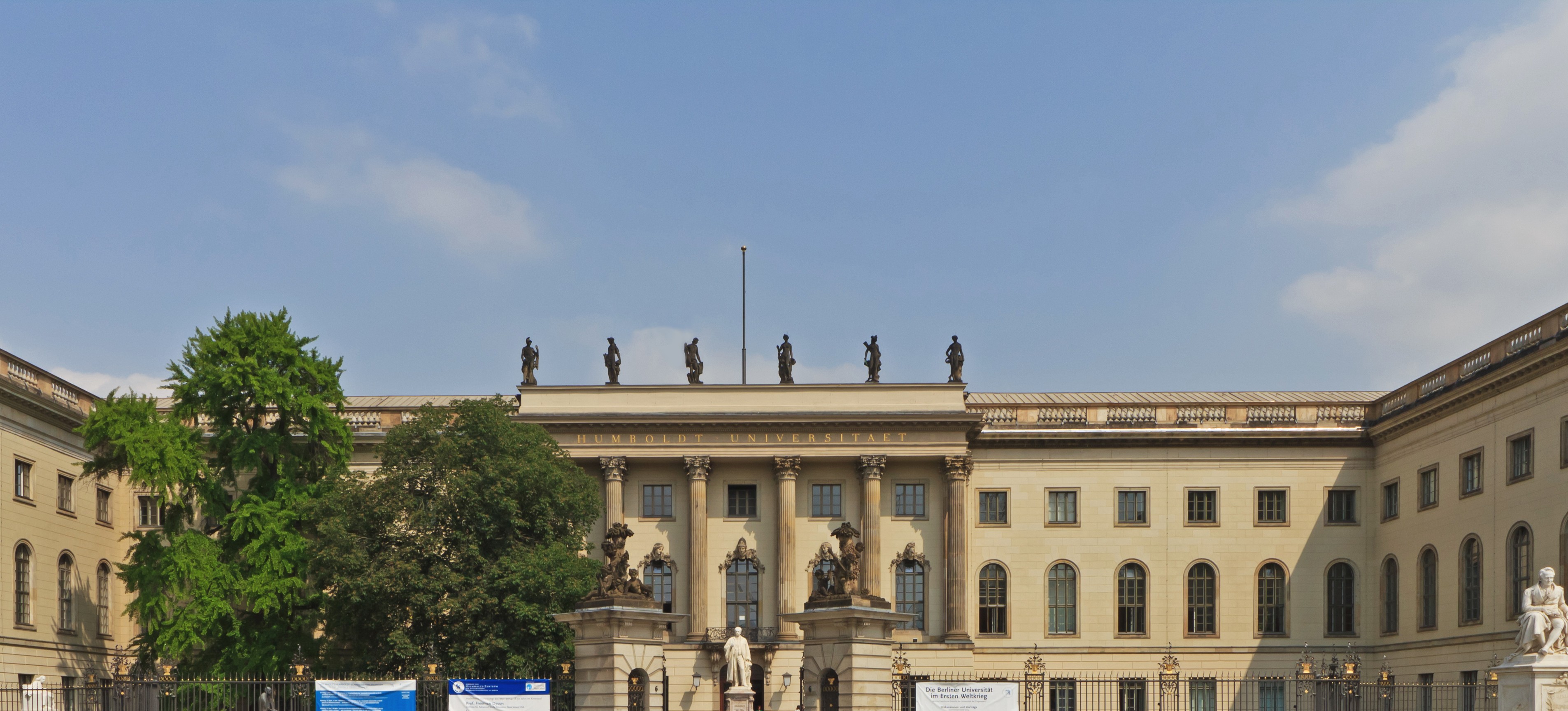
Humboldt-Universität zu Berlin (HU) is the oldest university in Berlin, founded in 1810 by Wilhelm von Humboldt together with other scholars. Its founding idea of a modern university, combining teaching and research, the freedom of science and the broad education of students, spread worldwide and still shapes its self-image. The main building stands on Unter den Linden in the centre of Berlin, a ten-minute walk from the Brandenburg Gate.
The university is organised in decentralised fashion, with eight faculties, six central institutes, five central facilities, eight interdisciplinary centres and two integrative research institutes. The faculties are the Faculty of Law, the Faculty of Humanities and Social Sciences, the Faculty of Life Sciences, the Faculty of Mathematics and Natural Sciences, the Faculty of Arts and Humanities, the Faculty of Language, Literature and Humanities, the Faculty of Theology and the School of Business and Economics. Medicine is taught at the Charité. Teaching covers the humanities, social and cultural sciences, law, life sciences, natural sciences, medicine, agricultural science and sustainability research, with 173 study programmes.
Four campuses, Adlershof, Dahlem, Mitte and Nord, form the core of the university, and the HU has 174 locations across Berlin. Students take part in research projects at an early stage, in line with the Humboldt principle of the unity of research and teaching. The University Library operates at 12 locations, the Language Centre offers courses in up to 14 languages, the Career Centre supports students up to one year after graduation, and University Sports offers over 300 sports courses. Music at HU includes four choirs, three orchestras and a big band, and the Studierendenwerk Berlin runs canteens on all campuses.
International students: 6,279 international students were enrolled in winter semester 2025/26, and the university has 375 partner universities. A Welcome Centre advises international students and researchers on study options, arrival and administrative steps. All undergraduate programmes are taught in German; language requirements for Master's programmes are set per programme.
HU has been recognised as a University of Excellence since 2012 and has been a member of the Berlin University Alliance since 2019. The university states that it aims to be climate-neutral by 2030.
Students enrolled at HU pay the semester contribution (Semesterbeitrag) each semester; this is not tuition.
The Deutschlandstipendium of Humboldt-Universität supports students of all nationalities with 300 euro per month for at least two semesters. The federal government and private sponsors each cover half of the cost.
Financing options for students include BAföG, part-time jobs through the university's job portals, loans, support for short-term financial difficulties, funding for semesters or internships abroad, and provisions for student parents and students with disabilities. International students can use the Deutschlandstipendium and the same options, and can consult the DAAD scholarship database, the Erasmus+ programme and scholarships from other funding organisations. Approval of funding for a stay in Berlin can take up to a year, so planning should begin well in advance. The Career Centre also offers scholarships and counselling. Details: Financing your studies.
Deutschlandstipendium at Humboldt-Universität zu Berlin →
Deutschlandstipendium Themenklasse at Humboldt-Universität zu Berlin →
Browse the scholarships listed for Humboldt-Universität zu Berlin and check each award’s eligibility.
View scholarships for Humboldt-Universität zu Berlin →Applicants with a German university entrance qualification (often the Abitur), and those whose previous study periods were at German universities, apply directly to Humboldt-Universität for programmes with and without admission restriction. For restricted programmes (Numerus Clausus), places are allocated by university selection procedure, average Abitur grade and waiting semesters (up to ten, counted as half-years since the Abitur without enrolment at a university in the European Economic Area).
Applicants with a non-German entrance qualification, or whose application is based on study periods abroad, apply through uni-assist (portal My uni-assist). A higher education entrance qualification (HZB) recognised for study in Germany is required, and uni-assist decides on the recognition of foreign certificates. Applicants without a direct entrance qualification apply for the Studienkolleg at Freie Universität Berlin. Medicine is applied for through the Charité. All undergraduate programmes are taught in German. The application documents are stored for three application periods.
Sports Science applicants must also submit a medical certificate and proof of a sports aptitude test not older than two years. American Studies, Deaf Studies, English, French, German and Spanish require further language certificates with the application.
German at level C1 of the Common European Framework is required for undergraduate programmes. Accepted certificates include Goethe-Zertifikat C1, telc C1, telc C1 Hochschule, DSH-1 and TestDaF with at least 3 in all sections. Certificates of attendance are not accepted. After admission, proficiency is tested in the DSH before enrolment, unless an equivalent is proven, such as TestDaF with at least 4 in all sections, telc C1 Hochschule passed with good or very good, Goethe-Zertifikat C2 or DSH-2 from another German university, with a certificate not older than three years. HU does not run preparatory German courses.
A first university degree (for example a Bachelor's) accepted by German universities is required, or the applicant must be in the final examination stage, with the previous university confirming the expected graduation date. Subject-specific entry and admission requirements (ZZR), including English, German or other language requirements and accepted certificates, are set for each programme. Where the ZZR names no other requirement, German at level C1 is required, and many humanities and social science Master's programmes explicitly require German C1. Some Master's and cooperative programmes (for example Computational Neuroscience, Euromasters, Global History, International Relations and Polymer Science) have their own application procedures and deadlines handled by the programme coordinators.
Enrolment for doctoral studies is possible without a deadline in both semesters. The Humboldt Graduate School is the central point of contact for doctoral candidates, supported by the Research Service Centre and the Study Department.
Facilities across the campuses include the University Library at 12 locations, canteens run by the Studierendenwerk Berlin, the Humboldt Store in the foyer of the main building, the Language Centre, the Career Centre, University Sports with over 300 courses, music ensembles and exhibitions and collections.
Study programmes offered at Humboldt-Universität zu Berlin.
Experiences shared by students of Humboldt-Universität zu Berlin.
Studied here? Share your experience to help other applicants.

Book a free consultation with our expert counsellors and take the first step towards your dream university.
Copyrights © 2026 StudyMapped. All rights reserved.

Enter your credentials to continue.
Join us and start your study abroad journey.


