

University in Germany
Berlin, Berlin, Germany
University profile
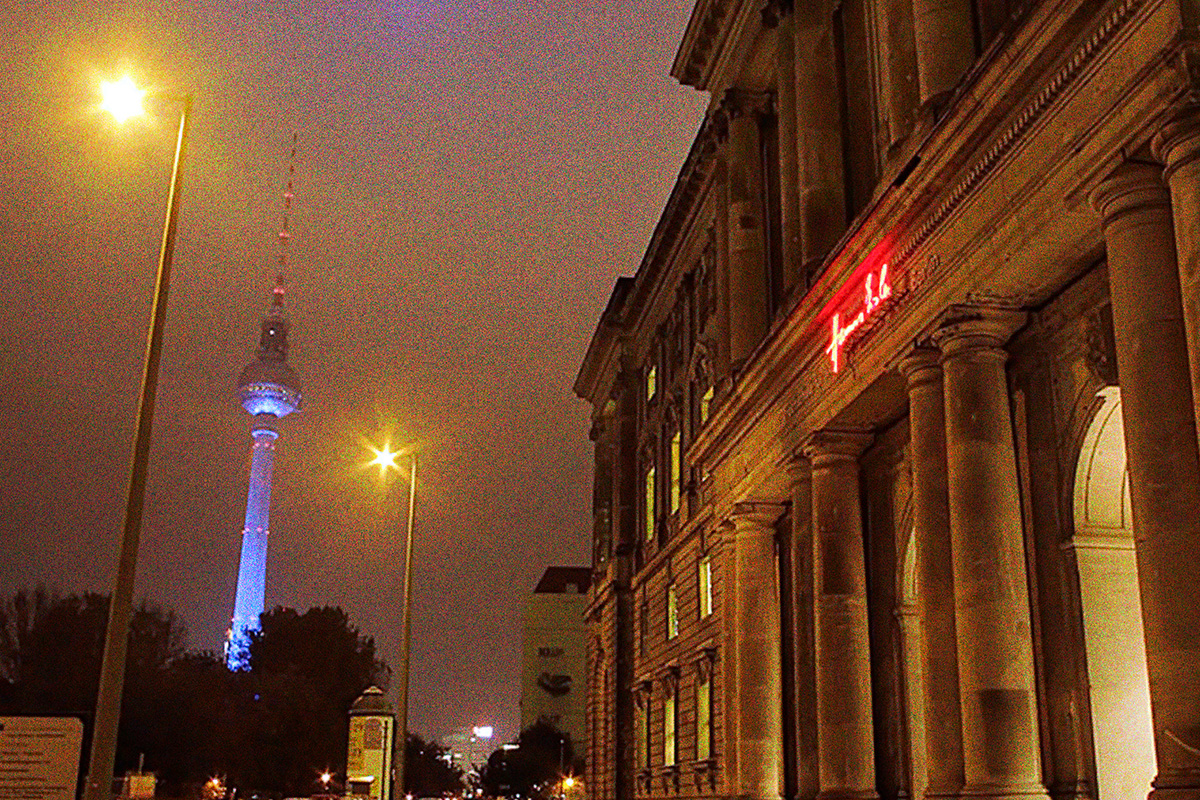
The Hochschule für Musik Hanns Eisler Berlin (Hanns Eisler School of Music Berlin) is a state music conservatoire in the centre of the German capital. It was founded in 1950 as the Deutsche Hochschule für Musik and has carried its present name since 1964. It trains around 500 students, and two thirds of the student body comes from abroad.
The school teaches at two sites in Berlin-Mitte: the main building at Charlottenstraße 55 beside the Konzerthaus Berlin at Gendarmenmarkt, and the Neuer Marstall on Schloßplatz opposite the Humboldt Forum. The curriculum centres on Western art music and covers voice, piano, strings, woodwind and brass, percussion, conducting, music theatre direction, production dramaturgy, musicology and composition.
Teaching is organised in four departments: Department A (Voice/Music Theatre, Direction), Department B (Strings, Harp, Guitar), Department C (Wind, Percussion, Conducting, Correpetition) and Department D (Piano, Composition, Theoretical Studies), together with the Centre for Chamber Music. Three institutes are run jointly with the Universität der Künste Berlin: the Jazz Institute Berlin, KLANGZEITORT Institute for New Music and the Kurt Singer Institute for Music Physiology and Musicians' Health. The school also has a link to the Carl Philipp Emanuel Bach College of Music, a specialist music school for young talent.
Students perform in school ensembles including the Symphony Orchestra, the Chamber Orchestra, the Echo Ensemble, Eisler Winds and the choir, and the school presents nearly 300 public events a year, including concerts, opera projects, lecture evenings and masterclasses. It works closely with Berlin's orchestras and its three opera houses. Visiting artists have given masterclasses and workshops for students.
International students can take intensive and semester courses in German as a foreign language (levels A1.2 to B2.2). The school is a state institution under the Berlin Higher Education Act (Berliner Hochschulgesetz), under the supervision of the Berlin Senate Administration for Education, Youth and Research, and its study programmes are listed in the German accreditation council's database.
The school charges no tuition fees to any student, regardless of country of origin. All students pay a semester fee (Semesterbeitrag) of approx. 300 EUR per semester, which covers the semester ticket for public transport, dues to the studierendenWERK Berlin and administrative costs. The semester fee is not tuition. The school does not offer a full scholarship; its awards co-finance living costs and artistic projects.
300 EUR per month for one academic year, with the option to apply for an extension, open to Bachelor and Master students within the standard period of study. Applications go through muvac with a motivation letter (max. two A4 pages), transcript, CV and a recommendation from the main subject teacher; an internal committee selects. The 2026 deadline was 12 May 2026. Official page.
550 EUR per month for one year (extendable) for exceptionally talented students in financial need, enrolled within the standard period of study. Applications via muvac with a financial-need form, motivation letter, CV and at least 30 minutes of representative repertoire. The next deadline is expected in May 2027. Official page.
500 EUR per month for six months for international students completing their programme within winter semester 2026/27 who have registered for the final exam. The deadline was 14 October 2026. Official page.
The PROMOS scholarship, funded by the Federal Ministry of Education and Research and paid at DAAD rates, supports exchanges, language courses, short courses and competition trips abroad (45 EUR per day for competitions, up to 12 days); it has two deadlines a year. The DAAD-Preis rewards outstanding performance and social engagement by international students. PROMOS | DAAD-Preis.
The Elsa-Neumann-Scholarship funds an artistic project after graduation with 1,350 EUR per month plus a 100 EUR allowance for one year (2026 deadline 8 October 2026). The school also lists awards from the Ottilie-Selbach-Redslob Foundation, the Giovanni Omodeo Foundation, the Studienstiftung des deutschen Volkes and the Encuentro de Música y Academia de Santander. All scholarships.
Students can apply for BAföG, which is open to non-Germans, through the studierendenWERK Berlin. Student emergency funds are available through the AStA, and the Patrons of Hanns Eisler provide project funding.
Deutschlandstipendium at HfM Berlin →
STIBET Graduation Grant at HfM Berlin →
Lucia-Loeser Scholarship at HfM Berlin →
Browse the scholarships listed for Hochschule für Musik Hanns Eisler Berlin and check each award’s eligibility.
View scholarships for Hochschule für Musik Hanns Eisler Berlin →Admission is by artistic aptitude. Applicants demonstrate advanced musical ability in their main subject in an audition exam, preceded by a pre-selection on audio/video recordings (for example at least 10 minutes of video for violin; for composition, several scores of own works). The audition also includes compulsory exams in piano, compositional technique and ear training. Bachelor programmes last 8 semesters and can start in the winter or summer semester (voice, music theatre direction and production dramaturgy start only in the winter semester). Transfer applicants from German music schools recognised by the RKM are exempt from the piano, composition and ear training exams if they present an enrolment certificate.
Applications are made through the muvac platform: create an applicant profile, apply for the study programme, upload proof of identity, recordings and further documents, write a motivation letter and choose a preferred main subject teacher. The application fee is 60 euros (non-refundable) payable by card. Application periods for the winter semester run from 15 February to 8 April, and for the summer semester from 1 October to 8 November. For summer semester 2027, auditions take place on 18-22 January 2027 and the registration deadline for paying semester fees is 19 February 2027; for winter semester 2027/28, auditions are on 7-11 June 2027. Hard copies of certificates are not needed at application and are submitted at enrolment.
Teaching language is German for most programmes (the Master in Chamber Music is taught in German and English). Foreign applicants without a German university entrance qualification need a German certificate at level B2.2 of the Common European Framework, submitted at enrolment at the latest, and must show sufficient programme-related German in the music theory exam. International Bachelor students may instead take the obligatory intensive language course. The school offers German as a foreign language courses from A1.2 to B2.2.
Master programmes last 4 semesters and start in the winter or summer semester. Applicants need a Bachelor of Music with 240 credits or equivalent in the same subject, and advanced musical ability shown in the audition exam after pre-selection. Applicants who do not yet hold the Bachelor certificate submit a transcript of records and provisional certificate showing the degree will be obtained before the Master starts. Voice applicants submit a phoniatric report no more than six months old. Master applicants provide the Bachelor or Diplom certificate at enrolment.
The Konzertexamen (advanced artistic postgraduate degree) and the Junior Scholars programme use the same application periods; the Konzertexamen audition has a first and second round, and applicants provide their Master diploma at enrolment.
Applicants needing a visa are advised to apply early for a Student Applicant Visa, usually issued for three months and extendable up to nine months, which can be converted into a residence permit for study once admitted. For enrolment, admitted students must show proof of public German health insurance and the required certificates; no enrolment is possible without health insurance.
The school library holds around 14,400 books, 57,000 scores and 4,100 CDs and videos, with an online catalogue and e-media such as Naxos Music Library, Henle App and Nkoda available to members. There is no student housing run by the school.
Study programmes offered at Hochschule für Musik Hanns Eisler Berlin.
Experiences shared by students of Hochschule für Musik Hanns Eisler Berlin.
Studied here? Share your experience to help other applicants.

Book a free consultation with our expert counsellors and take the first step towards your dream university.
Copyrights © 2026 StudyMapped. All rights reserved.

Enter your credentials to continue.
Join us and start your study abroad journey.


