
University in Germany
Düsseldorf, Nordrhein-Westfalen, Germany
University profile
Heinrich Heine University Düsseldorf (HHU) is the comprehensive university of the capital of North Rhine-Westphalia. It was founded in 1965 and takes its name from the poet Heinrich Heine, with whose values of tolerance, openness to the world, equality and freedom it identifies. Around 30,000 students study there, with access to its libraries, the university hospital and the cultural life of the city. It describes itself as a citizens' university that fosters dialogue between academia and society.
The university has five faculties on one campus in the south of Düsseldorf, about 3.5 kilometres from the city centre: the Faculty of Arts and Humanities (Philosophische Fakultät), the Faculty of Mathematics and Natural Sciences, the Medical Faculty, the Faculty of Law and the Faculty of Business Administration and Economics. The Medical Faculty was the founding faculty; the campus areas of the university and the University Hospital (UKD) lie directly next to each other, linking research, teaching and patient care. The Faculty of Mathematics and Natural Sciences covers biology, chemistry, computer science, mathematics, pharmacy, physics and psychology, with a core focus on the life sciences and physics. The Faculty of Arts and Humanities includes 12 institutes and offers more than 40 Bachelor and Master programmes, and the Faculty of Law has 17 chairs and professorships and eight institutes.
HHU traces its research roots to the former Medical Academy Düsseldorf and puts special emphasis on the life sciences. Central scientific institutions include the Biomedical Research Centre (BMFZ), the Cluster of Excellence on Plant Sciences (CEPLAS), the Düsseldorf Institute for Internet and Democracy (DIID), the Heine Center for Artificial Intelligence and Data Science (HeiCAD), the Institute for German and International Law of Political Parties (PRuF) and the Center for Digital Medicine (CDM), established in 2022.
Campus life includes summer and film festivals, concerts, choirs and orchestras, and more than 100 courses through university sports. Single rooms, apartments, shared apartments and family apartments are available for students through the Studierendenwerk Düsseldorf, with waiting lists because places are in demand. Food trucks, cafeterias and cafes serve the campus, which is reached by train, bus, bike or car, and the Campus Media outlets let students take part in producing content.
The International Office coordinates Erasmus and other exchange programmes, admits exchange and guest students and supports students from non-EU countries from the start of their studies to the time after graduation. Intensive German courses and the Fit4Heine programme help new international students settle in. The main language of instruction is German, with some courses taught in English. HHU is a state university and takes part in the UNIVERSEH European university alliance.
There are no tuition fees for doctoral researchers at HHU. Enrolled doctoral researchers pay the social contribution for students, currently EUR 371.15 per semester (a semester contribution, not tuition).
The Deutschlandstipendium at HHU supports high-achieving students of all faculties, from the first Bachelor semester to the end of the Master's degree or state examination, with special quotas for students with at least one minor child and for educational climbers. Private donors provide EUR 150 per month, matched by the federal government, so each scholarship holder receives EUR 300 per month. Official page; see also HHU scholarships.
International students (BA, MA or state examination) with good to very good academic results who fall into financial difficulty in the final phase of study through no fault of their own may receive a grant for 1 to 6 months (extension up to 12 months in exceptional cases), funded under the DAAD STIBET I programme. The maximum monthly rate is EUR 992; income and other scholarships above EUR 603 are taken into account. Applications for winter semester 2026/27 ran from 27 July to 31 August 2026 through the online portal, with a letter of recommendation from the supervising professor. Official page.
International students with a refugee background can apply for the HHU Study Start Scholarship (first and second semesters), the HHU Merit Scholarship and the HHU Annual Scholarship (both from the third subject-related semester). They are financed by the NRW Ministry of Culture and Science and depend on funding availability; a German or European bank account is required. Official page.
Scholarships for doctoral researchers are offered through HHU's structured doctoral programmes, alongside DAAD and other external databases. Official page.
Browse the scholarships listed for Heinrich Heine University Düsseldorf and check each award’s eligibility.
View scholarships for Heinrich Heine University Düsseldorf →Applications are made online through the university's application portal. Applicants must hold a university entrance qualification recognised for Germany; the anabin database shows whether a certificate from the home country qualifies. For subjects with restricted admission the deadlines are 15 July for the winter semester and 15 January for the summer semester, and documents cannot be submitted after the deadline. Medicine, Dentistry and Pharmacy (centralised procedure) are applied for through Hochschulstart, except for applicants from non-EU/EEA countries with a foreign entrance qualification, who apply directly through the HHU portal.
Non-EU applicants must submit a preliminary review documentation (Vorprüfungsdokumentation, VPD) issued by uni-assist for their application to HHU, and should contact uni-assist at least 8 weeks before the university deadline. Exceptions apply to non-EU citizens with an entrance qualification from an EU country for subjects with unrestricted or national admission restrictions, who submit home-country certificates with a German, English or French translation instead. EU/EEA citizens and Bildungsinländer upload home-country certificates with translations. A Studienkolleg Feststellungsprüfung counts as a foreign entrance qualification. The International Baccalaureate does not count as a German entrance qualification, even if gained in Germany. Applicants with vocational qualifications but no Abitur may apply to undergraduate (not Master) programmes, with deadlines of 1 April for the winter semester and 1 October for the summer semester.
German-taught programmes require proof of German: DSH-2 or DSH-3, TestDaF with grade 4 or 5 in all parts, the Kleines or Grosses Deutsches Sprachdiplom of the Goethe Institut, Goethe-Zertifikat C2, the Zentrale Oberstufenprüfung, Deutsches Sprachdiplom level 2 of the Kultusministerkonferenz, telc Deutsch C1 Hochschule or ÖSD C2. The Feststellungsprüfung with at least the grade adequate in German is also accepted. For programmes taught in another language, proof of proficiency in that language is submitted with the application.
Applicants submit the Bachelor degree certificate and transcript of records (original plus German, English or French translation) and recognised language proof for the language of the programme. For Master programmes in the Faculty of Mathematics and Natural Sciences and the Medical Faculty, non-EU applicants also need the uni-assist VPD. Deadlines for restricted-admission subjects are 15 July (winter) and 15 January (summer).
Applicants need a supervisor and admission by the Dean's Office of the faculty; the university checks equivalence of the first degree and may start a recognition procedure, which takes about 2 to 4 weeks. Documents include confirmation of supervision, proof of the entrance qualification and, for German-language doctorates, German language proof; for doctorates in another language the Dean's Office certifies language skills. Doctoral candidates in Medicine join the Medical Research School Düsseldorf (MedRSD), in Mathematics and Natural Sciences iGRAD supports candidates, and in Arts and Humanities philGRAD. Degrees awarded include Dr. jur., Dr. rer. nat., PhD in Natural Sciences, Dr. med., PhD in Medical Sciences, Dr. med. dent., Dr. rer. san., Dr. phil. and Dr. rer. pol. Only after admission by the Dean's Office can candidates enrol at the Student and Examination Office.
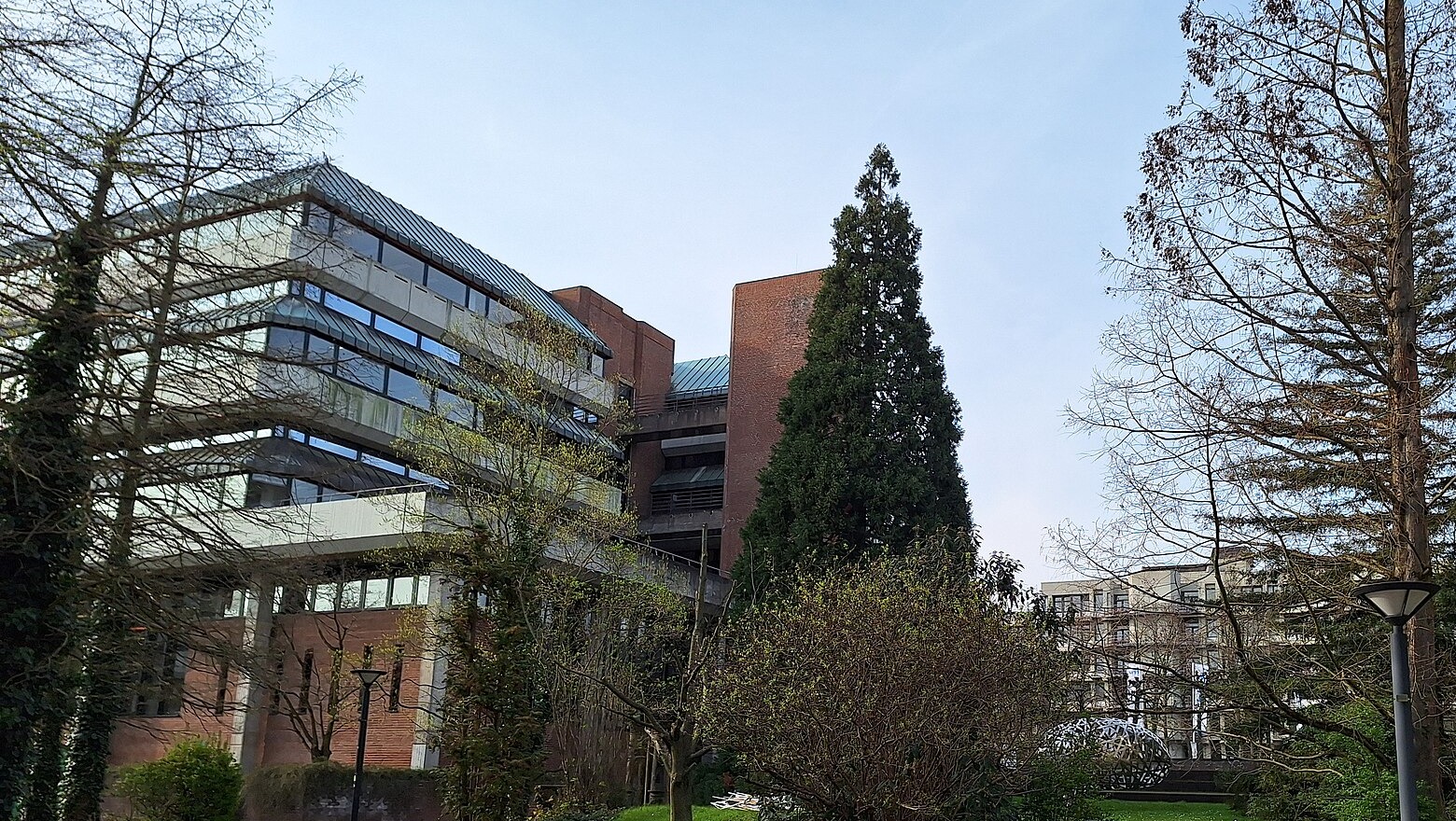
Main campus, Düsseldorf (Universitätsstraße 1, 40225 Düsseldorf). All five faculties are on a single campus in the south of the city, about 3.5 kilometres from the city centre, shared with the University Hospital (UKD). The campus is accessible by train, bus, bike or car.
Study programmes offered at Heinrich Heine University Düsseldorf.
Experiences shared by students of Heinrich Heine University Düsseldorf.
Studied here? Share your experience to help other applicants.

Book a free consultation with our expert counsellors and take the first step towards your dream university.
Copyrights © 2026 StudyMapped. All rights reserved.

Enter your credentials to continue.
Join us and start your study abroad journey.


