

University in United States
Washington, DC, United States
University profile
The George Washington University (GW) is a private research university in Washington, D.C., chartered by an act of Congress on February 9, 1821. Its mission is to prepare graduates to lead with integrity, resilience and purpose, drawing on its location in the nation's capital. More than 27,000 students from all 50 states, Washington, D.C., and over 130 countries are enrolled, and the alumni community exceeds 350,000 in more than 130 countries.
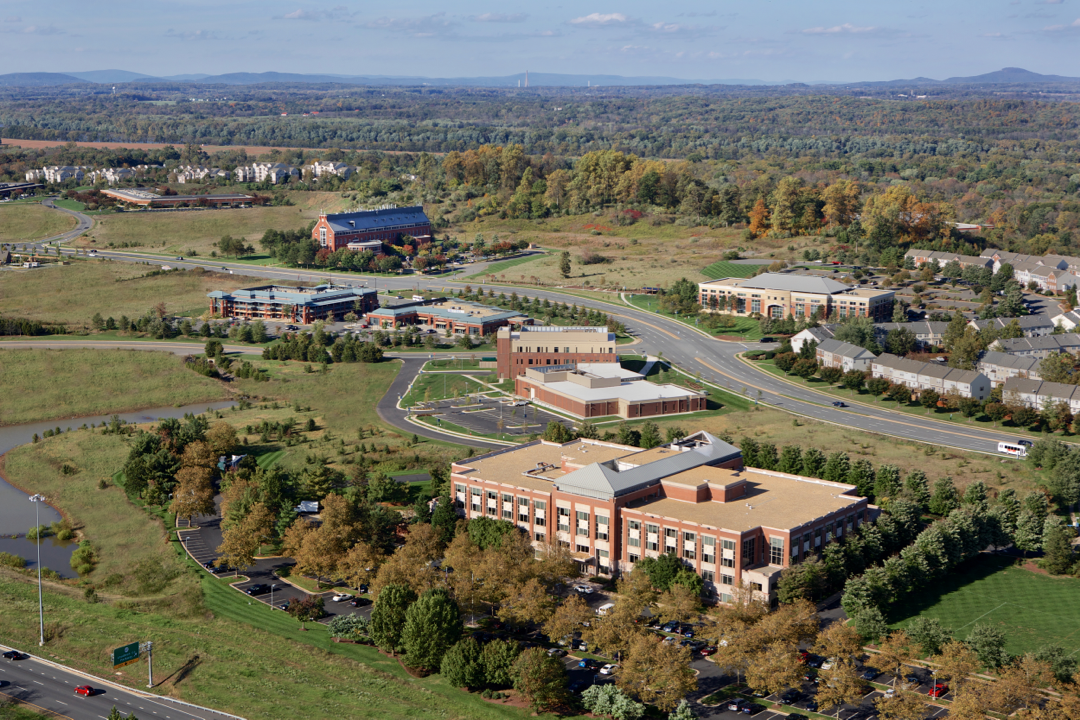
GW has three campuses: Foggy Bottom in the centre of Washington, D.C., the residential Mount Vernon Campus in the Foxhall neighbourhood, and the Virginia Science & Technology Campus in Ashburn, Virginia. Online programmes (more than 100) add a further route to study.
Academics are organised in 10 schools and colleges: Columbian College of Arts & Sciences (the oldest and largest, which includes the Corcoran School of the Arts & Design and the School of Media & Public Affairs), the School of Business, the Graduate School of Education & Human Development, the School of Engineering & Applied Science, the Elliott School of International Affairs, GW Law, the School of Medicine & Health Sciences, the School of Nursing, the Milken Institute School of Public Health, the Trachtenberg School of Public Policy & Public Administration, the Graduate School of Political Management and the College of Professional Studies. GW also has 35+ cross-disciplinary research institutes and six libraries, and its faculty includes a Nobel Laureate, a Pulitzer Prize winner, former White House staff and diplomats.
Student life centres on 500+ student organizations and 20 NCAA Division I athletic teams. Undergraduates and graduates use more than 12,000 internship opportunities in organizations such as the White House, the World Bank and the National Institutes of Health, and funding opportunities support unpaid internships. Washington, D.C. hosts the governments of 177 countries through their resident embassies.
Nearly 11,000 undergraduate students come from outside the United States each year, and the graduate community includes 2,800+ international graduate students. GW is accredited by the Middle States Association of Colleges and Schools, is on the approved list of the American Association of University Women, is a member of the College Board and is a member of the Association of American Universities (AAU).
All first-year, transfer and international applicants are automatically considered for merit scholarships during admission review; amounts vary and appear in the offer of admission. First-year merit awards continue for up to 10 consecutive semesters of undergraduate study with continuous full-time enrollment and satisfactory academic progress. Presidential Academic Scholarships are tuition scholarships for the most competitive applicants. Other awards include the Clark Engineering Scholarship, the Corcoran Scholars programme, the FIRST Robotics Scholarship (4 students), the Scottish Rite Scholarship (up to half of tuition), and transfer awards for Alpha Beta Gamma and Phi Theta Kappa members ($7,500 a year) and National Society of Collegiate Scholars members ($10,000 a year).
Two full-tuition scholarships each year for first-year fall applicants who present ideas for advancing intercultural understanding through an essay or video response; a CSS Profile is also required.
Need-based aid is for eligible U.S. citizens and permanent residents, assessed from the FAFSA (GW school code 001444) and the CSS Profile (code 5246). Deadlines match the admission deadlines (ED I Nov. 1; ED II and RD Jan. 5; fall transfer Apr. 15; spring Oct. 1). The Revolutionary Promise covers full tuition for new domestic residential undergraduates entering fall 2026 with household income of $100,000 or less and at least 50% of tuition for household income up to $150,000. District Scholars and SJT Scholars serve D.C. residents.
International students are not eligible for need-based or U.S. government aid but are automatically considered for merit scholarships. Davis United World College Scholars admitted to GW receive need-based scholarships that may cover up to full tuition and fees (CSS Profile required). Full details: international student aid and scholarships and aid.
Graduate funding is through the Office of Graduate Student Assistantships & Fellowships, loans from the Office of Student Financial Assistance, and payment options including the GW Monthly Payment Plan and third-party billing.
GW You Are Welcome Here Scholarship →
Browse the scholarships listed for George Washington University and check each award’s eligibility.
View scholarships for George Washington University →Applicants use the Common Application or the Coalition Application with a personal essay, a letter of recommendation from a high school counselor or academic teacher, secondary school transcripts for the full secondary career and a non-refundable $80 application fee. Review is holistic (academic background, rigor of high school coursework, GPA, essays, recommendations, extracurricular activities). There is no minimum GPA or SAT/ACT requirement.
Dates (fall): Early Decision I (binding) November 1, with notification in late December; Early Decision II (binding) and Regular Decision (non-binding) January 5, with notification in late February (ED II) and late March (RD). Spring admission Regular Decision: October 1, notification early December.
GW is test-optional: SAT/ACT scores are optional, there is no preference between them and GW superscores both. Scores are required for B.A./B.S.-M.D. applicants, homeschooled applicants and applicants from schools that provide only narrative evaluations. Scores are not required for merit scholarships or special programs other than B.A./B.S.-M.D.
A transfer applicant has completed or is enrolled in at least one college course after high school or the GED. Applications are accepted via GW's Transfer Application, the Common Application or the Coalition Application, with an $80 fee. Spring: August 15 to October 1 (notification by early December). Fall: January 15 to April 1 (notification by late June). Official transcripts from every institution attended are required.
International applicants follow the same application as domestic applicants, with proof of English language proficiency if English is not the first language. SAT/ACT is not required unless the applicant falls into a group above. An English proficiency waiver applies if the most recent four years were in a school where English is the sole language of instruction in all academic subjects. Transcripts and records of all previously attended institutions, with subjects studied, examinations and grades, go directly to the Office of Undergraduate Admissions. The "Funding Your GW Education" form is required of all international applicants to show ability to pay tuition and living expenses; admitted students who pay the enrollment deposit submit further financial documentation for the initial I-20. Additional deadline: transfer, fall admission April 1.
Applicants hold a bachelor's degree from a regionally accredited institution (degrees earned outside the US must be from institutions meeting their national standards) and apply through the Graduate Application Center; Milken Institute School of Public Health, GW Law and the M.D. program use their own school applications. Requirements are unofficial transcripts, a statement of purpose, recommendations (number varies by programme) and, for some programmes, GRE or GMAT scores no more than five years old (GRE code 5246). The application fee is $80. Most programmes use rolling admissions and processing usually takes four to six weeks.
Graduate English minimums: IELTS overall 6.5, TOEFL 81 (code 5246), PTE Academic 53; some schools set higher scores, and scores must be no more than two years old. Some admitted students must take an English for Academic Purposes course. International graduate applicants submit a Visa Request form and financial certification, after which GW issues the I-20 or DS-2019. Funds must be documented in English, in cash accounts without withdrawal restrictions, dated within 12 months of the planned start.
Study programmes offered at George Washington University.
Experiences shared by students of George Washington University.
Studied here? Share your experience to help other applicants.

Book a free consultation with our expert counsellors and take the first step towards your dream university.
Copyrights © 2026 StudyMapped. All rights reserved.

Enter your credentials to continue.
Join us and start your study abroad journey.


