
University in Germany
Potsdam, Brandenburg, Germany
University profile
The Film University Babelsberg KONRAD WOLF (Filmuniversität Babelsberg KONRAD WOLF) is Germany's only film university and the only art university in the state of Brandenburg. Founded in 1954, it teaches, researches and develops artistic work across audiovisual moving-image media, and awards Bachelor, Master, Meisterschüler and doctoral degrees. It sees itself as combining scientific and artistic research and names diversity, openness to the world, sustainability and social engagement as its guiding values.
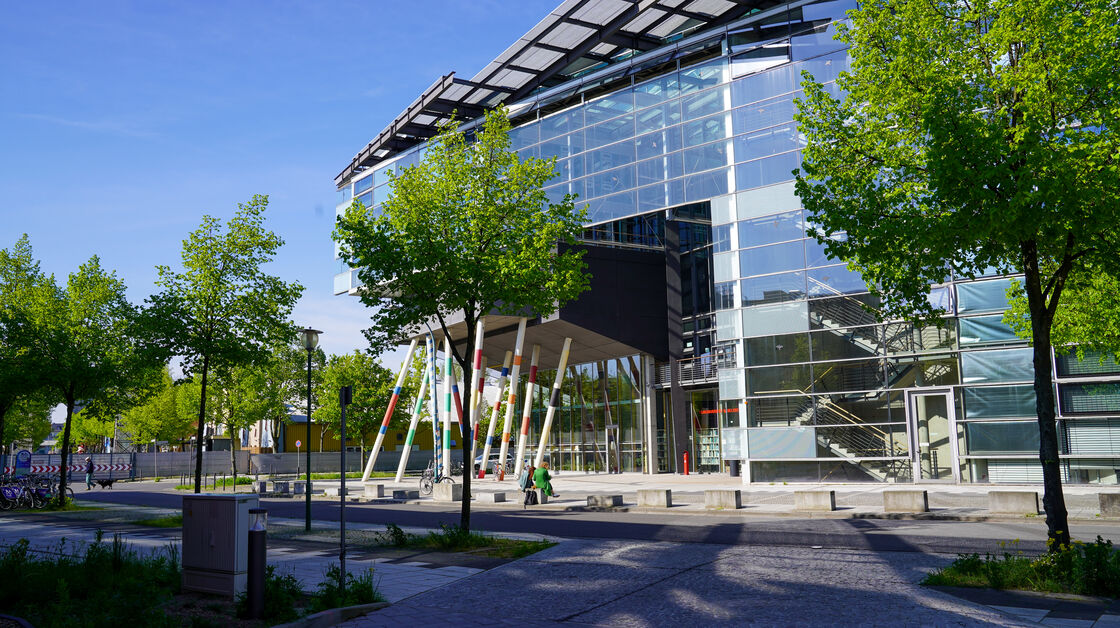
The university sits in the Medienstadt Babelsberg in Potsdam, which describes itself as Germany's UNESCO Creative City of Film. The main building (Häuser 1 to 6, Marlene-Dietrich-Allee 11) was built in 1999/2000 with 10,285 sq m of usable space and houses professional production technology under one roof; Haus 6 opened in 2021 and Haus 7, opposite, opened in 2022. Teaching is organised in two faculties. Fakultät I covers Drehbuch/Dramaturgie, Digitale Medienkultur, Medienwissenschaft, Filmkulturerbe, Film- und Fernsehproduktion, Regie and Schauspiel. Fakultät II covers Animation, Animationsregie, Creative Technologies, Cinematography, Filmmusik, Montage, Tonmeister*in für audiovisuelle Medien, Szenografie and Visual Effects & Virtual Productions.
There are 23 degree programmes in total, with admission once a year for the winter semester. Applicants take a programme-specific aptitude procedure, with portfolios, work samples and entrance tests depending on the programme. The Master Creative Technologies is taught predominantly in English; the other programmes are generally taught in German. Research is organised in the Institute for Artistic Research (IKF), the Media Research Center Babelsberg (MRCB), the Creative eXchange Studio (CX Studio), the Centre for Jewish Film and Audiovisual Remembrance and the Brandenburg Centre for Media Studies (ZeM).
Students work with a technical equipment store (ARRI Alexa Mini, ARRI Amira and Canon C400 cameras among others), two film studios of 150 and 300 sq m, 15 edit suites, three sound studios, a large cinema mix room with Dolby Atmos licence, grading rooms, a motion capture system, a 3D animation and VFX computer lab and cinemas seating up to 222. The University Library has existed since 1956 and holds about 107,000 volumes. The building has a canteen with a full kitchen and 100 seats, and Studierendenwerk West:Brandenburg offers halls of residence in Potsdam.
International students make up around 25% of the student body. The International Office coordinates exchange, summer schools and partnerships with European and international partner universities. Degrees are state-recognised under the Brandenburg Higher Education Act (BbgHG).
The university has awarded Deutschlandstipendien since winter semester 2011/12. The award is EUR 300 per month, half funded by the federal government and half by private sponsors, normally for one academic year. Selection considers achievement, personal background, social engagement and special social, family or personal circumstances. For winter semester 2026/27 about 12 stipends are expected to be awarded; applications ran from 15 July to 15 September 2026 and require a CV, a motivation letter, a letter of recommendation from a teacher of the university, proof of enrolment or admission and records of study results. Details: Deutschlandstipendium.
BAföG is available to eligible students and is advised on by Studierendenwerk West:Brandenburg. Further national foundation scholarships are listed on the financing page.
Each semester students pay a semester contribution of EUR 397.80 (this is not tuition): re-registration and matriculation fee EUR 51.00, Studierendenwerk contribution EUR 80.00, student body contribution EUR 16.00, equipment insurance EUR 20.00, production liability insurance EUR 4.00 and the Deutschland-Semesterticket EUR 226.80. Applications also incur a fee of EUR 25.
Deutschlandstipendium at Film University Babelsberg Konrad Wolf →
Browse the scholarships listed for Film University Babelsberg Konrad Wolf and check each award’s eligibility.
View scholarships for Film University Babelsberg Konrad Wolf →Admission is once a year for the winter semester. Every applicant must pass a programme-specific aptitude procedure (Feststellungsverfahren) with portfolio or work samples, and may apply to several programmes in parallel, but is admitted to only one. Applications are submitted online through the university's own application portal; paper applications are not considered. Applicants with a foreign school-leaving certificate for Digitale Medienkultur, Film- und Fernsehproduktion, Tonmeister*in für audiovisuelle Medien and Szenografie must first have their certificate assessed by uni-assist (preliminary review documentation, VPD), which is uploaded to the portal; uni-assist registration alone is not an application. Applicants who completed a suitable Studienkolleg in Germany do not need uni-assist (Schwerpunktkurs T is expected for Tonmeister*in). Digitale Medienkultur is admission-restricted (NC) and runs through hochschulstart.de plus an aptitude test and interview. Applicants from India, China and Vietnam must provide an APS certificate of authenticity from the Academic Evaluation Centre. Vocationally qualified applicants without a school-leaving certificate can apply under section 9 BbgHG; applicants without a first degree can take an entrance examination (Eingangsprüfung).
The deadlines are exclusion deadlines. The application fee is EUR 25 per application, due within the application period (not for Digitale Medienkultur).
Applicants with a foreign qualification who do not hold German citizenship must prove German. For the Bachelor programmes Animation, Cinematography, Film- und Fernsehproduktion, Montage, Regie, Schauspiel, Szenografie, Tonmeister*in and Visual Effects & Virtual Productions, and for the Master programmes Animationsregie, Cinematography, Creative Technologies, Film- und Fernsehproduktion, Filmmusik, Montage, Regie, Szenografie and Tonmeister*in, the minimum is DSH-1, TestDaF TDN 3 in each of the four parts, Goethe-Zertifikat B2, telc Deutsch B2, ÖSD B2, or the Feststellungsprüfung of a German Studienkolleg, DSD II or the Munich SDI Deutsche Sprachprüfung II. For Digitale Medienkultur and Drehbuch/Dramaturgie (BA), and for Drehbuch/Dramaturgie, Filmkulturerbe and Medienwissenschaft (MA), the minimum is DSH-2, TestDaF TDN 4 in each part, Goethe-Zertifikat C1, telc Deutsch C1 Hochschule or ÖSD C1. A certificate at the required level must be uploaded by the deadline; applicants may apply with at least B1 and submit the required level before study begins. The Master Creative Technologies is taught predominantly in English.
Master applicants need a first degree in a relevant field and must demonstrate the programme-specific artistic, technological or scholarly aptitude through the application documents and work samples, followed by an aptitude examination. Applicants with a first degree from outside Germany must have it assessed by uni-assist for all Master programmes. Regie (MA) is aimed at applicants with a completed degree in a film field and film work showing an individual artistic voice.
The scientific doctorate (Dr. phil.) is offered in media studies and the scientific-artistic doctorate (Dr. phil. in art) in Film- und Fernsehproduktion, Drehbuch/Dramaturgie and Filmkulturerbe. Requirements are a relevant Master degree, written supervisor commitments and a supervision agreement, a proposal, CV and documentation of work. The dissertation may be written in German or English. Application dates are 15 January and 15 June. A Meisterschüler study of four semesters is possible in Animation, Cinematography, Drehbuch/Dramaturgie, Filmmusik, Regie, Montage and Szenografie.
Students from outside the EU, EEA or Switzerland generally need a visa and must convert it into a residence permit after arrival; applicants without admission can apply for a study applicant visa. Proof of health insurance is required for enrolment.
Facilities include two film studios (150 and 300 sq m) with lighting grids, 15 edit suites, three sound recording studios, cinema and small mixing rooms (Dolby Atmos), two colour-grading suites and a 4K grading cinema, motion capture and motion control systems, a 3D/VFX computer lab with render cluster, set-building workshops, a costume store, rehearsal stages and a theatre hall, and several cinemas with up to 222 seats (2026). The University Library holds about 107,000 volumes and around 70 current film and media journals. Studierendenwerk West:Brandenburg runs halls of residence across Potsdam; a student village is located at Griebnitzsee.
Study programmes offered at Film University Babelsberg Konrad Wolf.
Experiences shared by students of Film University Babelsberg Konrad Wolf.
Studied here? Share your experience to help other applicants.

Book a free consultation with our expert counsellors and take the first step towards your dream university.
Copyrights © 2026 StudyMapped. All rights reserved.

Enter your credentials to continue.
Join us and start your study abroad journey.


