
University in France
Saint-Étienne-du-Rouvray, Normandie, France
University profile
ESIGELEC (École supérieure d'ingénieurs en génie électrique) is a private engineering grande école in Normandy, based at the Technopôle du Madrillet in Saint-Étienne-du-Rouvray, on the southern edge of Rouen. It was founded in Paris in 1901 and has been recognised as a private higher-education institution of general interest (EESPIG) since 2016. It is an affiliated school of the Institut Mines-Télécom and holds the French Commission des Titres d'Ingénieur (CTI) accreditation for its engineering diploma, which confers the grade of Master and carries the European EUR-ACE label.
The flagship Programme Grande École runs over five years: three years of fundamental cycle (about 80% common core, with a choice among 9 minors) followed by two years of specialisation in one of 16 majors, in electrical engineering, electronics, embedded systems, automation, energy, software, artificial intelligence and data, cybersecurity and related fields. Students can follow the engineering cycle under student status or as apprentices through the school's own apprenticeship training centre (CFA). Alongside it the school offers a three-year Bachelor Ingénierie (grade de Licence), a Master en Sciences et Technologie (mention Ingénierie des Systèmes Complexes) taught in English, a joint Mastère Spécialisé with CESI, several MSc programmes with partner universities abroad, continuing education and doctoral training.
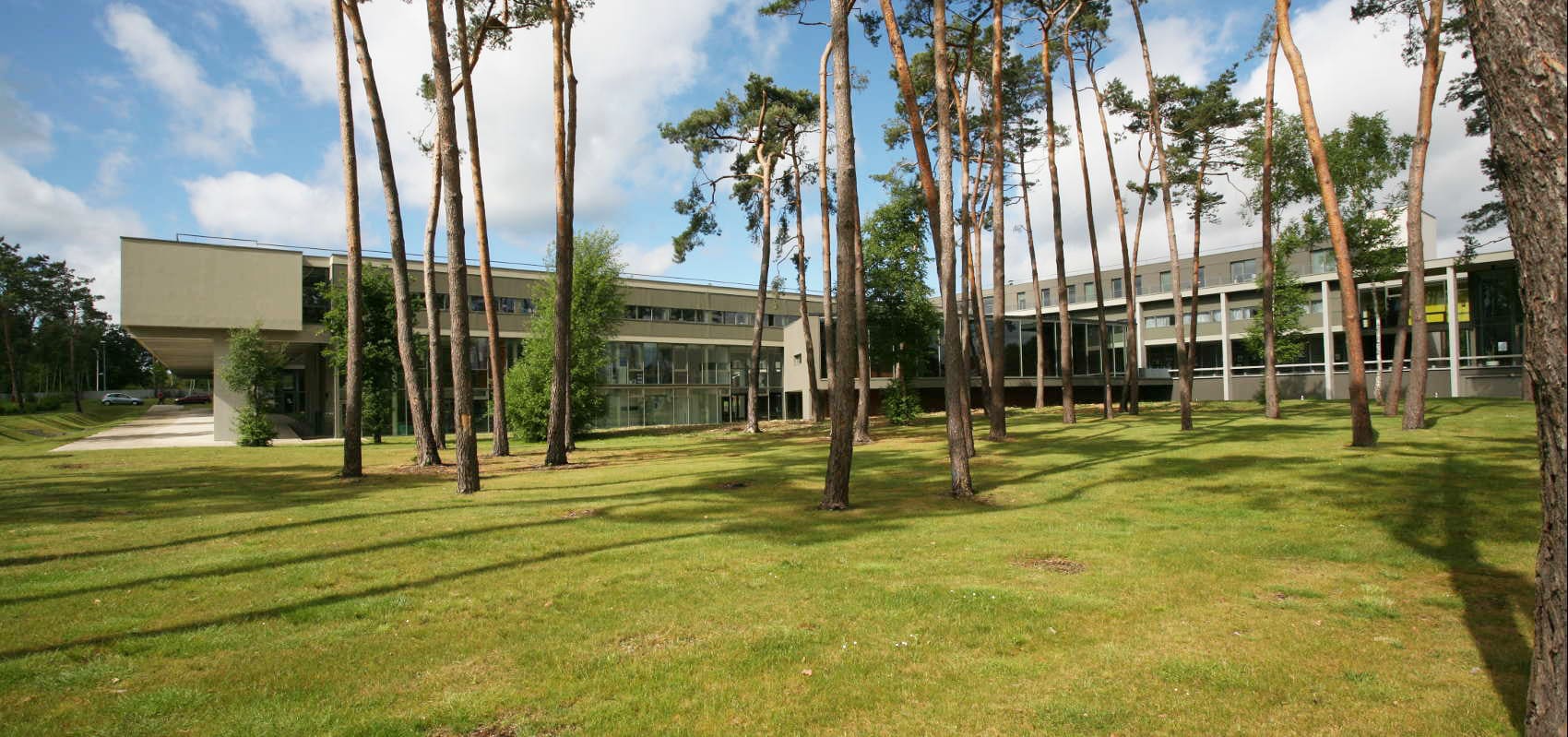
The main Rouen campus covers 4.5 hectares of wooded grounds with more than 18,000 m² of buildings, including a 2,300 m² building opened in September 2022 with a photovoltaic roof used for practical work. It sits within the Sciences et Ingénierie Rouen Normandie eco-campus, which has more than 6,000 students. A second campus at Poitiers (Technopôle du Futuroscope) opened its apprenticeship engineering cycle in September 2023 and an integrated preparatory cycle from September 2026.
Student life is organised around more than 30 student associations, a student bar and snack area, a foyer, more than 15 association rooms, a FabLab, a sports room and co-working spaces. A light infirmary is on site and students have free access to the University of Rouen's preventive medicine service. International newcomers can obtain help from the school's housing unit in finding student accommodation in and around Rouen.
International students make up more than 40% of enrolment across all programmes, with nearly 40 nationalities represented, and the school holds Campus France's Bienvenue en France label (2026-2031). A semester abroad is compulsory for engineering students in the classic stream, and the school has 90 partner universities in 39 countries, joint preparatory cycles in Africa and Asia, and representation offices in China and India.
Programme Ingénieur, integrated preparatory cycle (2 years): 7,800 EUR per year, reduced by 25% (5,850 EUR per year) for holders of a French state scholarship; application fee 150 EUR (first year only); medical protection 60 EUR; association card 80 EUR. Engineering cycle, classic stream: 8,280 EUR per year, with the same 150 EUR application fee, 60 EUR medical protection and 80 EUR association card. Engineering cycle by apprenticeship: no tuition fees, with a salary over the contract period; places are offered at Rouen (120 in year 1, 40 additional in year 2, 40 in year 3) and Poitiers (40 in year 1, 10 in year 2).
Language and scientific adaptation programmes: AALS 8,500 EUR, SALS 6,100 EUR, PCALS 1,600 EUR (each with 150 EUR application fee) and the Semestre d'Enrichissement Linguistique et Culturel 3,000 EUR. Mastère Spécialisé Industrie 4.0 (CESI-ESIGELEC): 13,000 EUR for 12 months, free and paid under an apprenticeship or professionalisation contract. Master in Sciences et Technologie, parcours Systèmes d'Information: 13,850 EUR for the 3-semester programme (February 2027 start) and 16,850 EUR for the 4-semester programme (September 2026 start), with a 150 EUR fee payable only on conditional admission. Partner MSc fees: INP-HB Yamoussoukro 4,624 EUR; UESTC Chengdu programmes 6,800 EUR.
CVEC (Contribution Vie Étudiante et de Campus): 105 EUR per year, payable before enrolment at cvec.etudiant.gouv.fr.
The school grants tuition reductions (dégrèvements) on social criteria and runs a scholarship commission for international stays; the school, the Région Normandie and Erasmus+ support international mobility. About 30% of students hold CROUS scholarships. Students may also claim CROUS social-criteria scholarships through the Dossier Social Étudiant (15 January to 15 May of the year before entry) and honour loans from the Rectorat via CROUS, and the school has agreements with banks for student loans.
Two scholarships of 2,500 EUR are awarded on selection to second-year students continuing in the Génie Électrique et Énergie department, in the dominantes DARIA, EDD, GET or IADES. Apprentices are not eligible. Selection is on excellence and motivation (first-year marks, attendance). Applications with CV, cover letter and first-year transcripts go to [email protected] by 20 November.
ESIGELEC International Excellence Scholarships (MST and MSc tuition waivers) →
UMN Scholarships for ESIGELEC Engineering Students →
Browse the scholarships listed for ESIGELEC and check each award’s eligibility.
View scholarships for ESIGELEC →Pupils in French-system Terminale générale apply through the Concours Avenir on Parcoursup; the selection covers the school record and, depending on the profile (violet: Mathematics specialty with another scientific specialty; orange: other combinations), written tests or an interview. Terminale STI2D and STL pupils apply through Parcoursup under the Concours Avenir technological arrangements, with an assessment of the record and a motivation interview. Scientific-stream pupils outside the French school system are recruited separately: non-French-speaking candidates need at least B1 French, and a language adaptation pathway may be offered. Applications are made through Campus France 'Études en France' where that procedure applies, or through the ESIGELEC online application platform.
Second-year classes préparatoires MP, MPI, PC, PSI and PT enter via AvenirPrépas (e3a-Polytech or Banque PT), with a possible motivation interview; TSI candidates via the Concours Commun INP and ATS candidates via the Concours ATS. Second-year BTS, BUT 2/3, Licence 3 scientific and other Bac+2/+3 holders apply through AvenirPlus (outside Parcoursup): file review, motivation interview and jury decision. Francophone students abroad holding at least a Bac+2 in a suitable scientific field apply via Études en France or the school's online platform. The Poitiers apprenticeship majors have a dedicated recruitment route ([email protected]).
Master 1 students or holders of an equivalent Bac+4 in a related scientific or technological field apply through AvenirPlus: file review, motivation interview and jury decision, under student or apprentice status. Poitiers is apprenticeship only. Non-francophone candidates must have a level of French suited to the programme and may first follow a language and scientific adaptation programme.
Open to holders of a general baccalauréat, STI2D baccalauréat, or a professional baccalauréat in the SN, MSPC or MELEC specialties. Applications go through Parcoursup within the Concours Avenir, with a review of the school record and a motivation interview. The first year is under student status and the following two years can be in apprenticeship.
These programmes require at least four years of higher education. The Master en Sciences et Technologie, mention Ingénierie des Systèmes Complexes (120 ECTS, 4 semesters, taught in English, with parcours Ingénierie Logicielle et Transformation Numérique and Systèmes Électroniques Embarqués) starts in September, with possible entry to semester 2 in February; applications are made online on the ESIGELEC international platform. The Mastère Spécialisé 'Manager de Projet pour l'Industrie 4.0', run with CESI (75 ECTS, 12 months in alternance, taught in French, starting in October), is selected on file, motivation, a test and an interview, and the candidate must find a host company. Partner-based MSc programmes (UESTC Chengdu, INP-HB Yamoussoukro, Manipal and MGCER in India) are open mainly to students of the partner institutions and applications go through the partner or the ESIGELEC representation office in China ([email protected]) or India ([email protected]).
Engineering teaching is in French with bilingual French/English technological majors. The school's adaptation programmes bring students to B2 French: the Année d'Adaptation Linguistique et Scientifique (AALS) is open to Bac+4 students at B1, the Semestre (SALS) to lycée students at B1, and the Programme Court (PCAL) to Bac+4 students or lycée students at B1+ (at least 350 points on the TCF). To graduate, engineering students must reach at least 785 on the TOEIC and complete an international mobility of at least one academic semester (three months for apprentices).
Doctoral theses of three years are prepared within the IRSEEM, mostly enrolled in the Normandie Université doctoral school and attached to one of its three research poles.
[email protected], +33 2 32 91 58 58.
Study programmes offered at ESIGELEC.
Experiences shared by students of ESIGELEC.
Studied here? Share your experience to help other applicants.

Book a free consultation with our expert counsellors and take the first step towards your dream university.
Copyrights © 2026 StudyMapped. All rights reserved.

Enter your credentials to continue.
Join us and start your study abroad journey.


