

University in France
Angers, Pays de la Loire, France
University profile
ESEO is a general engineering school for new technologies, headquartered in Angers with further campuses in Dijon and Paris-Vélizy. It is a Grande École run by a private non-profit association (AETS) under the French law of 1901, recognised as being of public utility, and it has held the EESPIG label (Établissement d'Enseignement Supérieur Privé d'Intérêt Général) since 2016. Its engineering degree has been recognised by the Commission des Titres d'Ingénieur (CTI) since 1956 and is comparable to a Master of Science.
The school teaches mainly computing, electronics and related engineering fields. Students can enter after the baccalauréat through three preparatory courses (Scientific, International Engineer, and IT and Electronics Engineer), the Bachelor in Computer Science and Electronics, or the ESEO Pro vocational Bachelors, or at Bac+2 level directly into the Engineering Cycle, which can be followed under student or apprentice status. The Engineering Cycle is organised in four sectors (Instrumentation, Signal and Data; Embedded Electronics and Software; Electrical Engineering and Renewable Energies; Information System) with 15 elective majors, including Cloud, Systems and Security, Data and Artificial Intelligence, E-health, Industry 4.0, Smart City, Energy and Environment, and Intelligent Transport and Vehicles.
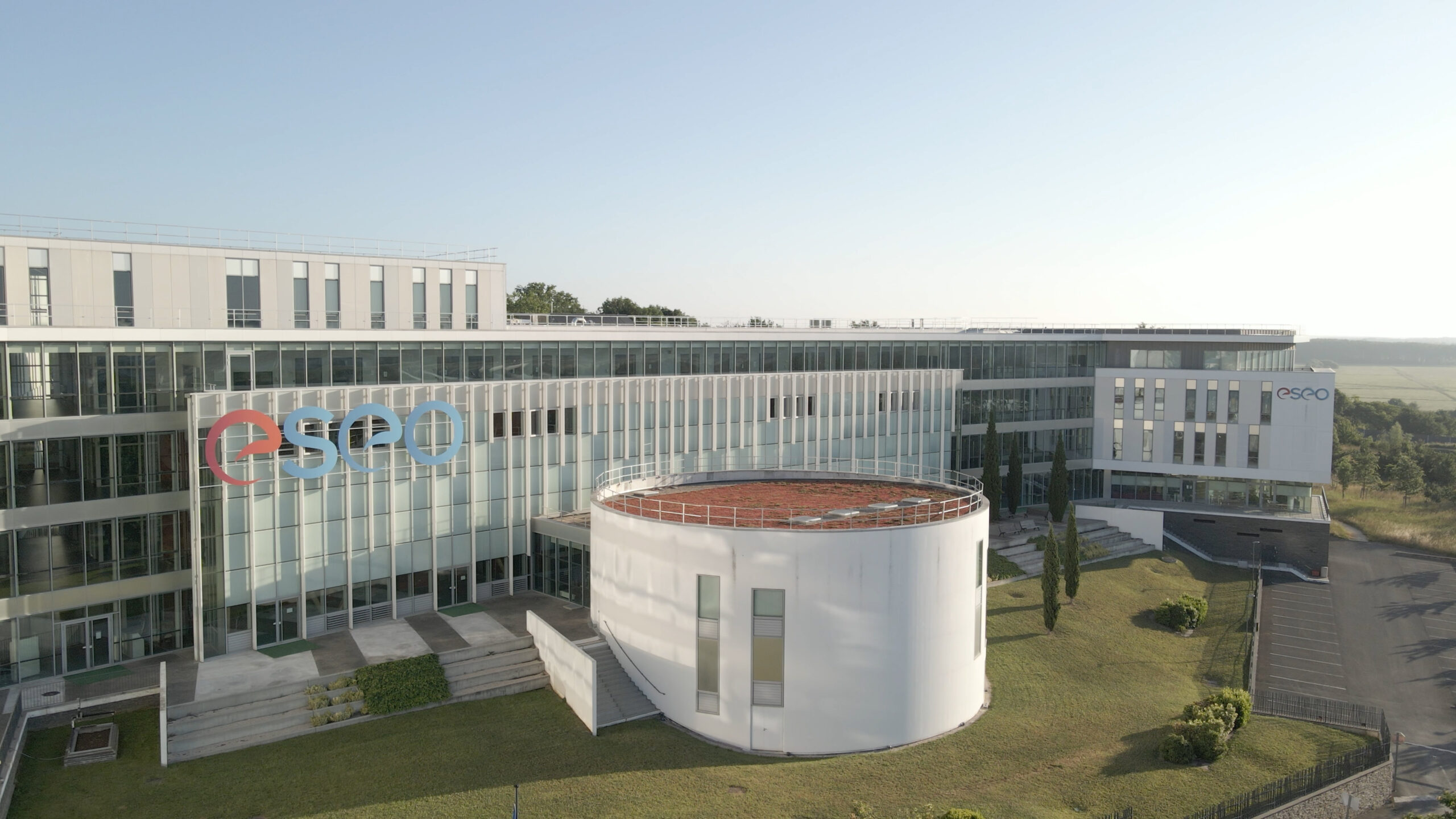
The Angers campus, in the centre of the city, hosts about 1,100 students and 40 laboratories. The Dijon campus occupies a building of 10,000 m² on the Burgundy-Europe University campus, inaugurated in 2022, and the Paris-Vélizy campus is a renovated 3,000 m² site in the Vélizy business park with about 500 students. ESEO's student teams have won the French Robotics Championship several times and took the 2024 title.
Student life is coordinated by the Bureau Des Élèves (BDE), with more than 30 clubs and associations in six main themes, and club activity earns teaching credits. Housing is arranged through the Studapart platform, partner and private residences and CROUS, with welcome teams on each campus. The school holds the 'Bienvenue en France' one-star label for the reception of international students.
International students can join the ESEO engineering degree, the Bachelor in Computer Science and Electronics or the ESEO Pro Bachelors. Every engineering student spends one semester abroad, supported by a network of 42 partner universities, 12 programmes abroad and 50 double degrees. ESEO signed the Erasmus Charter in 2014 (renewed in 2020), and partner preparatory schools in Benin, Cameroon, Mali, Togo and Senegal feed directly into the first year of the engineering cycle.
ESEO sets its own annual tuition fees. Angers: Scientific Prep 1,980 EUR; IT and Electronics Engineering Prep 6,550 EUR (7,550 EUR for non-EU candidates); Bac+3 Bachelor in Computer Science and Electronics 6,550 EUR (7,550 EUR non-EU); ESEO Pro Bachelors 5,500 EUR; Engineering Cycle under student status 9,390 EUR (10,890 EUR non-EU). Paris-Vélizy: Prep 7,600 EUR (8,600 EUR non-EU); ESEO Pro Bachelor 6,550 EUR; Engineering Cycle student status 9,390 EUR (10,890 EUR non-EU). Dijon: Prep 6,550 EUR (7,550 EUR non-EU); Engineering Cycle student status 9,390 EUR (10,890 EUR non-EU). Apprenticeship and professionalisation contracts are paid for by the employer. Additional fees: contribution to the Bureau des Étudiants 89 EUR and first-year welcome seminar 40 EUR (2026/27, subject to change). Transport and accommodation during international semesters are paid by families. In double-degree programmes, students who take the school's exemption pay the fees of both ESEO and the partner university.
For students who meet CROUS scholarship criteria and live in Bourgogne-Franche-Comté, Pays de la Loire or Île-de-France, with a general average above 15 in Première and Terminale and admission to an ESEO prep. The award is 1,000 to 2,500 EUR over the two prep years (Dijon 2 awards, Angers 6, Paris-Vélizy 3), awarded in September 2026; the request is made at enrolment.
Aid of 1,000 to 2,500 EUR over the two prep years for students from priority education zones, lycées in the Cordées de la réussite programme, or rural areas. Files are managed by the partner lycées in liaison with ESEO.
Travel grants for placements and study periods abroad come from the Region, OFAJ (Germany), the European Commission (Erasmus), the Crous and other partners; ESEO also awards its own grants each year to students who did not receive a travel grant.
24% of ESEO students receive CROUS scholarships, applied for through the CLOUS of the student's académie, with the bac merit aid and the Fonds de Solidarité Universitaire also available through the Crous. Loans include honour loans from the Rectorat, zero-rate bank loans, State-guaranteed student loans (1,000 to 20,000 EUR, guaranteed by Bpifrance) and guarantor-free loans. International students can consult the Campus France scholarship directory.
Bourses d'excellence ESEO (prépa intégrée) →
Aide exceptionnelle ESEO prépa intégrée pour boursiers CROUS →
Browse the scholarships listed for ESEO and check each award’s eligibility.
View scholarships for ESEO →The ESEO engineering degree (level 7, Master's equivalent) takes five years after the baccalauréat or three years after a scientific and/or technological Bac+2. The Bachelor in Computer Science and Electronics and the ESEO Pro Bachelors (RNCP, Bac+3) take three years after the baccalauréat.
Engineering degree, post-bac: general or technological baccalauréat (or equivalent) with a good level in scientific subjects, particularly mathematics. Post-Bac+2: a scientific and/or technological Bac+2 diploma with a good level in scientific subjects, particularly mathematics. Bachelor in Computer Science and Electronics: general or technological baccalauréat or equivalent with a good scientific level. ESEO Pro Bachelors: baccalauréat (general, technological or equivalent) with no scientific prerequisites. Admission routes differ by programme and entry level, and the application is made through the school's online application page.
Applicants from countries covered by the Études en France (Campus France) procedure apply through Campus France; applicants from European countries have a separate route, also via Campus France. A good command of French is required for all three programmes. Students from Benin (AUDACIA, Cotonou), Cameroon (International Prepas, Yaoundé), Mali (ITMA, Bamako), Togo (Cours Lumière, Lomé) and Senegal (Cours Sainte-Marie de Hann, Dakar) can follow a two-year partner preparatory course after the baccalauréat and enter the first year of the engineering cycle; entry is by application or competitive entrance exam depending on the partner. For Senegal, the application file includes school reports from the second year to the final year, letters of recommendation from maths, physics-chemistry and life-sciences teachers, a copy of the national identity card and an application fee of 40,000 FCFA. Visa information is available through France Visas.
Exchange students under Erasmus+ or other programmes can study in semesters 8 and 9 of the Engineering Cycle, semesters 1 to 4 of the Preparatory Cycle (Erasmus+ or other exchange), and semesters 1, 2, 3 and 5 of the Bachelor and the RNCP Bachelors (other international exchange programmes only). Exchange students who complete semester 9 may do an end-of-studies placement in semester 10, subject to availability. Contact: [email protected].
[email protected]; the admissions team covers the group and each campus.
Research platforms: a geophysics platform and an electromagnetic compatibility (EMC) platform for integrated circuits.
Study programmes offered at ESEO.
Experiences shared by students of ESEO.
Studied here? Share your experience to help other applicants.

Book a free consultation with our expert counsellors and take the first step towards your dream university.
Copyrights © 2026 StudyMapped. All rights reserved.

Enter your credentials to continue.
Join us and start your study abroad journey.


