
University in France
Palaiseau, Île-de-France, France
University profile
ENSAE Paris (École nationale de la statistique et de l'administration économique) is a French grande école of engineering in quantitative economics and sociology, statistics and machine learning, finance and actuarial science. It combines applied mathematics, data science, economic modelling and the quantitative social sciences, and trains economists, data scientists, financial engineers and actuaries. The school is attached to the Ministry of the Economy and under the technical supervision of INSEE, for which it trains its administrators, and it awards approximately 170 engineering degrees each year.
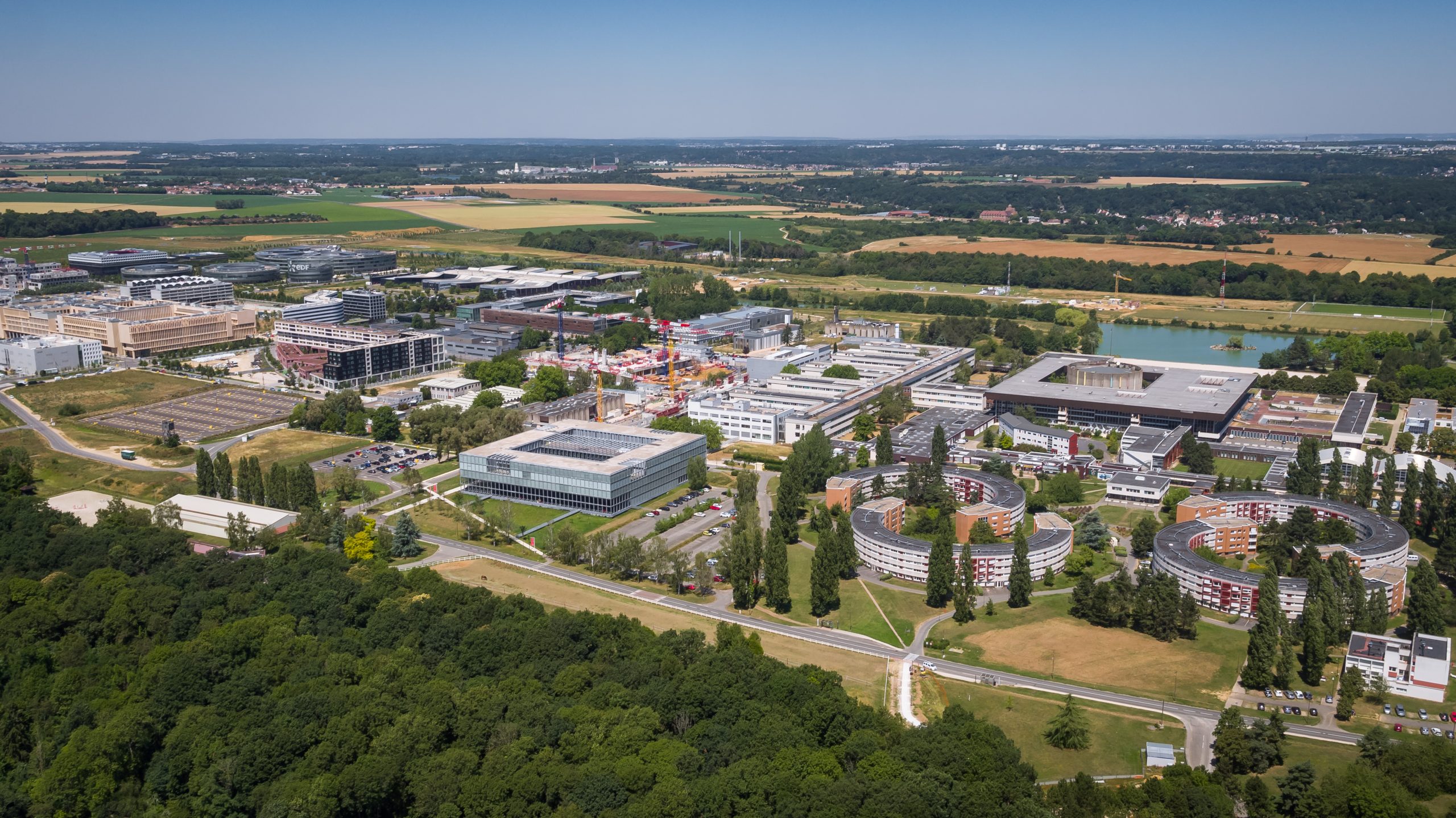
ENSAE Paris is based at 5 avenue Henry Le Chatelier in Palaiseau, about 20 km south of Paris, in the heart of the École Polytechnique campus on the Paris-Saclay plateau. It has been located there since September 2017, alongside École Polytechnique, ENSTA Paris, Télécom Paris and Télécom SudParis, and is a founding member of the Institut Polytechnique de Paris (IP Paris). It is part of GENES (Groupe des écoles nationales d'économie et de statistique) together with ENSAI, the CEPE continuing education centre and the research centre CREST.
The programme offer comprises the three-year Ingénieur ENSAE programme, with six specialisation tracks in the third year (Actuarial Science; Data Science and Business Decision; Data Science, Statistics and Learning; Economic Policies and Dynamics; Finance, Risks and Data; Social Data Science) plus a research track; four Mastères Spécialisés (Actuarial Science, Data Science, Finance and Risk Management, Quantitative Methods for Economic Decision Making); research masters and PhD tracks run jointly with IP Paris; double degrees with HEC, ESSEC, ESCP, Sciences Po, the Écoles Normales Supérieures, CentraleSupélec, Télécom Paris, AgroParisTech and ENSAI, among others; doctoral training; and executive education.
Student life is shared with the IP Paris campus: the library on the second floor of the school, student associations, and sports facilities pooled with École Polytechnique and ENSTA Paris. Housing requests are made through the Paris-Saclay housing portal, with priority for first-year engineering students and first-time international students,.
International students make up 28% of the student body. They enter through the IP Paris international joint admission, the Mines-Ponts competition for those in preparatory classes abroad, double-degree agreements (notably with the African statistical schools ENSAE Dakar, ENSEA Abidjan, ISSEA Yaoundé and ENEAM Cotonou, Maghreb and Brazilian partners), Erasmus+ exchanges, or the Mastères Spécialisés. An International Student Bureau (BDI) supports newcomers. The engineering degree is accredited by the Commission des titres d'ingénieurs (CTI), the Mastères Spécialisés by the Conférence des grandes écoles, and the school holds the three-star Bienvenue en France label from Campus France.
Fees follow the ministerial decree of 17 December 2025 setting fees for the Groupe des écoles nationales d'économie et de statistique. Engineering cycle, students beginning in 2026-2027: €3,500, or €4,900 for non-European students; students who began before 2026-2027: €2,650, or €4,150 for non-European students. Employee students under work-study agreements pay €7,000, and students on a gap year or double degree not set by a partnership agreement pay €1,000. Students holding social-criteria grants (ENSAE-GENES or CROUS) are exempt from tuition fees on supplying their scholarship certificates. Mastères Spécialisés: €10,500 (individual rate for recent graduates and job seekers) or €15,000 (company and self-employed rate). Auditors: €198. PhD: €380 through Institut Polytechnique de Paris. Masters fees are set by IP Paris. Double-degree students pay fees at the host institution according to the agreement.
All students in initial training must obtain a CVEC (Contribution de vie étudiante et de campus) certificate, by payment or exemption, before enrolling; it is separate from tuition fees.
The Eiffel scholarship of the Ministry of Europe and Foreign Affairs targets outstanding international students at master's and doctoral level. International students do not apply directly: in November-December ENSAE Paris selects the candidates it presents to the selection committee. Double-degree and free-mover students are eligible. Nine students received Eiffel scholarships for 2025-26, including six from the CAPESA partner schools.
The grant helps international students facing material difficulties. It is open only to students of institutions with a double-diploma agreement that explicitly provides for eligibility: CAPESA schools (ENEAM Cotonou, ENSAE Dakar, ENSEA Abidjan, ISSEA Yaoundé), Maghreb schools (ENIT, ESSAI, INSEA Rabat) and UFRJ. Applications are handled by the Student Life department once the admission certificate is obtained, with family and tax documents and a certificate of non-scholarship from the home country.
Students from European partners may receive Erasmus+ grants through their home institutions, and international students can consult the Campus France scholarship catalogue. Details: financing your mobility at ENSAE Paris and tuition fees.
Eiffel Excellence Scholarship at ENSAE Paris →
ENSAE-GENES Social Criteria Grant for International Students →
Browse the scholarships listed for ENSAE Paris and check each award’s eligibility.
View scholarships for ENSAE Paris →The three-year engineering programme is entered in the first year through competitive examinations: the Mines-Ponts common competition (mathematics option, for MP/MP* 50 places, MPI/MPI* 10, PC/PC* 8 and PSI/PSI* 12), the inter-ENS social sciences test bank (economics and social sciences option, for khâgnes scientifiques B/L, 26 places) and the common test bank for economic and commercial preparatory classes EC/G (economics and mathematics option, 18 places). Admission on academic qualifications is available for French university L3 holders through GEI-UNIV (15 places), for M1 holders and double-degree students of grandes écoles, and for École Polytechnique students (about 25 places each year, entering in the second or third year) and ENS students with an M1 through the ENS-ENSAE double degree.
Applicants in a preparatory class abroad take the Mines-Ponts competition. Applicants in higher education outside France with at least 180 ECTS credits by 1 September of the admission year, or at least two years of higher education, apply through the IP Paris international joint admission (free-movers), selecting ENSAE Paris; two calls are held each year, one in autumn and one in spring (deadline 15 April), and successful candidates enter the first or second year according to their background. International students enrolled in a French university apply through GEI-UNIV. Students of partner universities apply through their home institution's double-degree or exchange procedure.
The first year is taught in French and a minimum French level of B2 is required on admission. Many second-year courses can be followed in English or French, and third-year courses are mainly taught in English.
Candidates must hold an M2-level degree or a grande école diploma, with sufficient knowledge of economics, mathematics, statistics and finance, and be able to follow courses in French and English. Applications are made online through a dedicated site with a motivation letter, CV, two letters of recommendation, transcripts, degree certificates, a signed declaration of commitment for tuition fees and an identity document. For 2026-2027 there are two sessions: the first from 19 January 2026 with registration until 27 February at 16:00, the second from 2 March 2026 with registration until 2 April at 16:00. Applicants from countries covered by the procedure must also apply through the Études en France website (formerly Campus France) for administrative and visa procedures; the countries listed include Algeria, Benin, Brazil, Burkina Faso, Cameroon, China, Côte d'Ivoire, Egypt, India, Morocco, Senegal, Tunisia, the United States and Vietnam, among others.
Research masters and PhD tracks are run jointly with IP Paris partner schools. Applications are made on the Institut Polytechnique de Paris application site, with academic and language prerequisites set on each master's page. ENSAE engineering students generally apply during the second year, between January and April.
Doctoral training is organised within the multidisciplinary doctoral school of Institut Polytechnique de Paris, co-accredited with HEC Paris, and the Hadamard Mathematics doctoral school, co-accredited with Institut Polytechnique de Paris and Université Paris-Saclay. Applications follow the procedures of these doctoral schools. CREST has about twenty research grants, usually for two years, for doctoral students.
After admission, students register online, uploading a photo, an identity document, a bank identity statement and the CVEC certificate (by payment or exemption); international students also provide a residence permit or visa, and first- and second-year engineering students a medical certificate of fitness for sport. Fees can be paid by bank transfer, cheque or card in one or three instalments.
Palaiseau (Paris-Saclay plateau), 5 avenue Henry Le Chatelier, 91120 Palaiseau: the single campus of ENSAE Paris, located within the École Polytechnique campus and reachable from Massy-Palaiseau station (RER B and C) by a ten-minute bus ride or from Lozère station (RER B). All engineering, Mastères Spécialisés, master and doctoral teaching takes place here; the CREST laboratories occupy the third and fourth floors of the École Polytechnique building.
Study programmes offered at ENSAE Paris.
Experiences shared by students of ENSAE Paris.
Studied here? Share your experience to help other applicants.

Book a free consultation with our expert counsellors and take the first step towards your dream university.
Copyrights © 2026 StudyMapped. All rights reserved.

Enter your credentials to continue.
Join us and start your study abroad journey.


