

University in United Kingdom
Durham, England, United Kingdom
University profile
Durham University is a collegiate, research-intensive university in the historic city of Durham in the North East of England. Founded in 1832 by Bishop Van Mildert and the Dean and Chapter of Durham Cathedral, it is one of the oldest universities in England, and its founding college occupies Durham Castle on Palace Green, part of the Durham World Heritage Site alongside the Cathedral.
Teaching is organised through four academic units: Durham University Business School (Management and Marketing, Finance, Accounting, Economics), the Faculty of Arts and Humanities, the Faculty of Science and the Faculty of Social Sciences. Subjects include Anthropology, Archaeology, Biosciences, Chemistry, Classics and Ancient History, Computer Science, Earth Sciences, Education, Engineering, English Studies, Geography, Government and International Affairs, History, Law, Mathematical Sciences, Modern Languages and Cultures, Music, Philosophy, Physics, Psychology, Sociology, Sport and Exercise Sciences, and Theology and Religion. Flexible degrees include Liberal Arts, Natural Sciences and Combined Honours in Social Sciences, and a Foundation Programme has prepared students for degree study at Durham since 1992.
Every student belongs to one of 17 colleges: Collingwood, Grey, Hatfield, John Snow, Josephine Butler, South, St Aidan's, St Chad's, St Cuthbert's Society, St Hild and St Bede, St John's, St Mary's, Stephenson, Trevelyan, University College (Castle), Van Mildert and Ustinov. Colleges provide catered or self-catered accommodation within Durham City, libraries and social spaces, common rooms, formal dinners and their own sport, music and theatre. College sport runs over 550 teams across 18 sports, and there are over 80 music societies, over 30 student theatre companies and over 200 Students' Union societies.
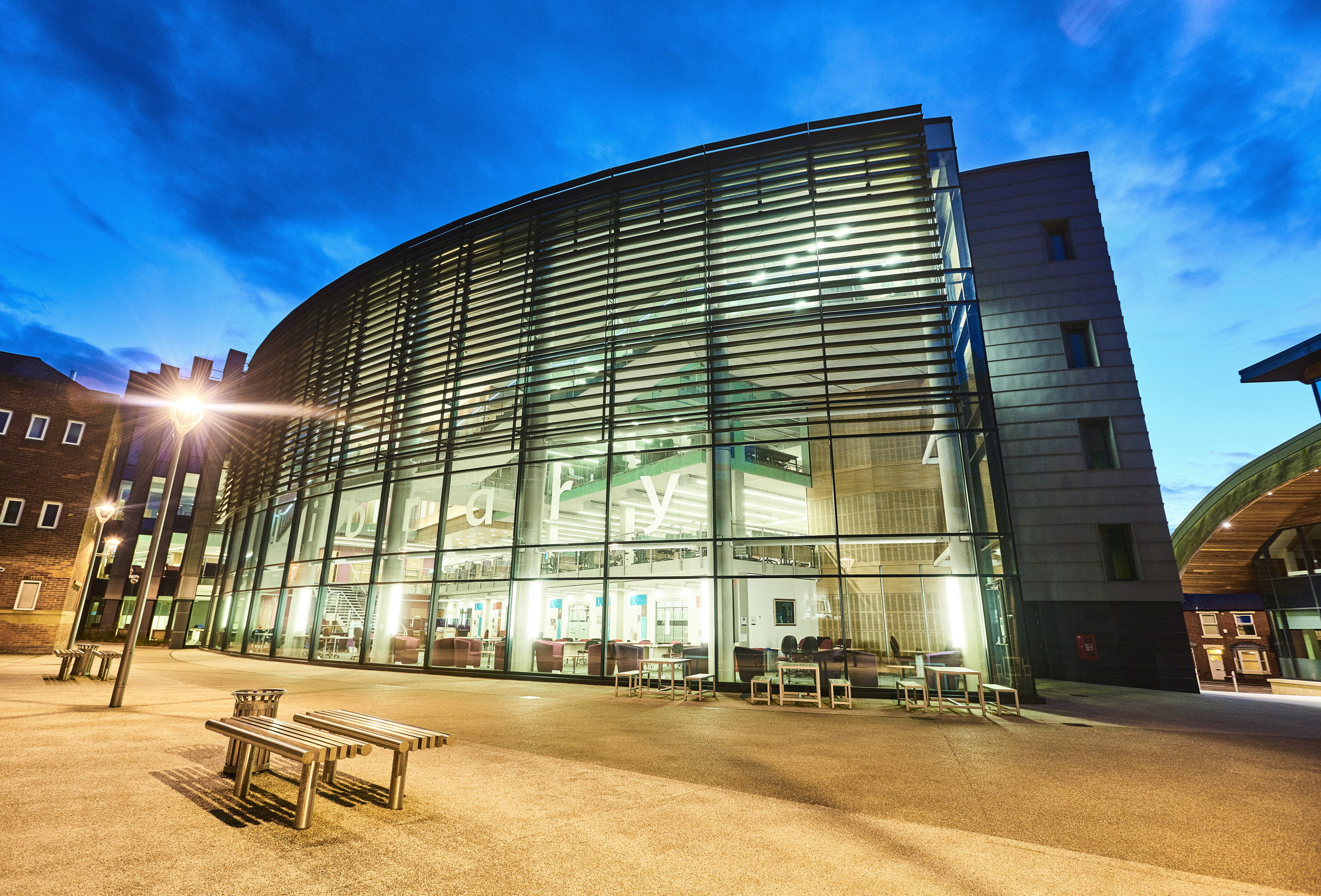
Research is organised through ten University Research Institutes, among them the Institute for Computational Cosmology, the Institute for Particle Physics Phenomenology, the Durham Energy Institute, the Institute of Advanced Study and the Wolfson Research Institute for Health and Wellbeing, together with over 80 research centres. University Library and Collections includes the Bill Bryson Library, the Barker Research Library at Palace Green, the Oriental Museum and the Botanic Garden.
Durham has around 21,588 students (2023/24) and over 4,300 staff, with 120 countries represented across staff and students. International students who do not meet direct entry requirements can take an International Foundation Year, Pre-Masters or English language course at the Durham University International Study Centre at Queen's Campus, Stockton, run by Study Group in collaboration with the University.
The tuition fee for home undergraduates starting in 2026/27 is £9,790, rising to £10,050 in 2027/28 (subject to parliamentary approval). In 2026/27 the fee for a placement year is £1,958 and for a year abroad £1,468.50. International fees are listed on each course page for the first year; from 2025/26 entry they rise each year by up to the higher of 6% or the latest annual CPI increase.
A non-repayable bursary for home undergraduates (and eligible PGCE students) with household income below £62,410, paid in every eligible year including placement and study abroad years. For 2026/27: £2,721 for household income below £30,000; between £2,720 and £851 for £30,000 to £47,200; and £714 for £47,201 to £62,410. No application is needed; it is paid in three instalments (November, January and May). Enquiries: [email protected].
Hardship and support funds include the Student Support Fund, Care Leaver and Independent Student Bursaries. See Scholarships, International scholarships and Durham Undergraduate Bursary. Scholarship enquiries: [email protected].
Durham Inspiring Excellence Undergraduate Scholarship (International) →
Durham Inspiring Excellence Postgraduate Scholarship (International) →
Global Sports Award: International Scholarship →
Keep Making History - STEM and Professional Excellence Scholarships →
Browse the scholarships listed for Durham University and check each award’s eligibility.
View scholarships for Durham University →Undergraduate applications are made through UCAS using the institution code D86. Applications usually open in September for entry the following year, and applicants should apply by the January UCAS Equal Consideration Date for the best chance of an offer. Applicants choose up to five courses; the application includes personal details, qualifications, course choices, a personal statement and a reference. Entry requirements and typical offers are set course by course.
Home fee status applicants may receive a contextual offer if they have been eligible for free school meals, or if they meet two or more of: a home postcode in TUNDRA LSOA or MSOA Quintile 1 or 2; a postcode classified as Censation Affluence level E; attending a UK state school; being care-experienced; or being an estranged student.
The Foundation Programme, running since 1992, prepares students for degree study at Durham. Achieving at least 50% in all modules allows progression to the first year of the degree without a further application.
Durham accepts a wide range of UK and international qualifications, with country-specific guidance for each region. International students who do not meet direct entry requirements can take the International Foundation Year or Pre-Masters programme at the Durham University International Study Centre at Queen's Campus, Stockton, with progression to more than 100 undergraduate and 90 postgraduate degrees on successful completion. Students without British or Irish nationality may need a visa before travelling.
Applicants not from a majority English-speaking country must show English proficiency. Each course is set at one of four direct entry bands:
Durham's own Password Skills Plus test, Trinity ISE, GCSE/IGCSE English and Cambridge O level English are also accepted. Pre-sessional English routes are available for applicants below the direct entry level.
The typical requirement is a 2:1 Bachelor's (Honours) degree from a UK university or overseas equivalent, plus a personal statement; applicants with significant relevant professional experience may also apply. Applications for 2027/28 entry open on 1 October 2026 and are made through the Applicant Portal, with transcripts, English test certificates, personal statement and an academic reference. Applicants needing a student visa should normally apply by the end of July and meet offer conditions by mid-August; others should apply by the end of August and meet conditions by mid-September. PGCE and teacher training routes have separate application processes.
PhD, MRes, professional doctorate and other research degree applications are handled through the Doctoral School, which advises on finding a supervisor, entry requirements and funding.
All first-year undergraduates can apply to be guaranteed an offer of University accommodation; rooms are in colleges or purpose-built student accommodation in the city, catered or self-catered, with en-suite or shared bathrooms. Second and third-year undergraduates live in private accommodation while remaining college members. University Library and Collections holds over 100,000 museum objects and over 8 miles of archives, manuscripts and special collections, with Durham Cathedral Library and Ushaw College Library as partner libraries.
Study programmes offered at Durham University.
Experiences shared by students of Durham University.
Studied here? Share your experience to help other applicants.

Book a free consultation with our expert counsellors and take the first step towards your dream university.
Copyrights © 2026 StudyMapped. All rights reserved.

Enter your credentials to continue.
Join us and start your study abroad journey.


