
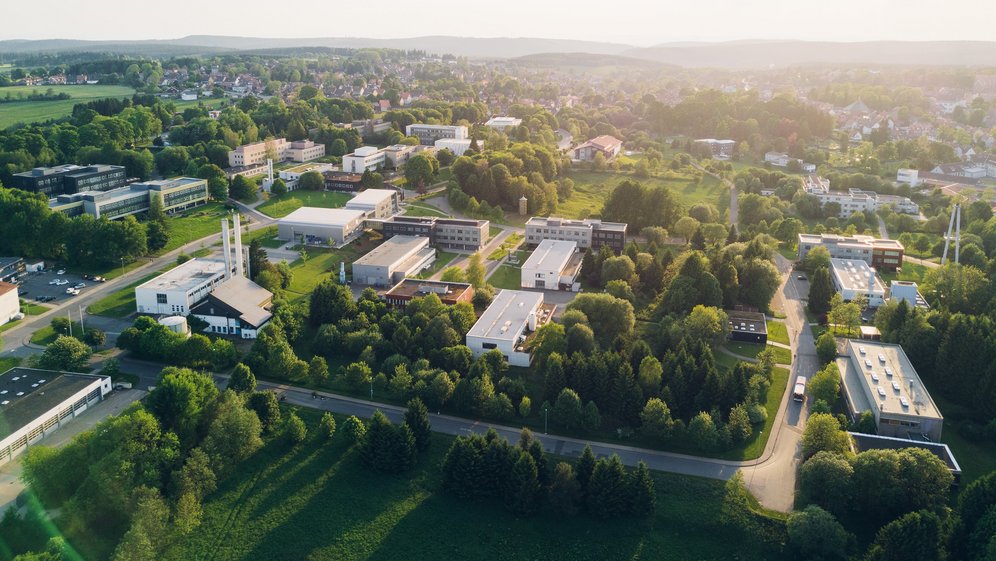

University in Germany
Clausthal-Zellerfeld, Niedersachsen, Germany
University profile
Clausthal University of Technology (Technische Universität Clausthal, TU Clausthal) is a small technical university in Clausthal-Zellerfeld in the Upper Harz, Lower Saxony, set within the Harz UNESCO World Heritage landscape. It was founded in 1775 as a mining teaching institution and has been a technical university since 1968. It describes itself as the largest employer and most important economic factor in its region.
The university has about 85 professors, around 3,000 students and more than 1,100 staff, which keeps contact between students, professors and researchers close. Its guiding theme across research, teaching and transfer is the Circular Economy: resource-efficient recycling, renewable energy and the digital control of the whole system, organised in four research fields (Sustainable Energy Systems; Raw Materials Security and Resource Efficiency; Sustainable Materials and Processes; Digitalisation for a Sustainable Society).
Teaching and research are organised in two faculties and 28 institutes: the Faculty of Engineering and Economics (Fakultät A), with institutes for chemical and process engineering, electrical engineering, energy and fuel technology, geotechnology and mineral resources, management, economics and law, mechanical engineering, welding and tribology; and the Faculty of Natural Sciences, Mathematics and Computer Science (Fakultät B) with institutes for chemistry, electrochemistry, physics, informatics, mathematics, metallurgy, non-metallic materials, polymer materials and software and systems engineering. Five interdisciplinary research centres link the institutes: CZM (materials technology), DIGIT (digital technologies), DSC (Drilling Simulator Celle), EST (energy storage technologies) and SWZ (simulation science, Clausthal-Gottingen).
Bachelor programmes have no admission restriction, and applications go directly to the university. Studierendenwerk halls provide more than 1,250 places, mostly within about five minutes' walk of the institutes and canteen. The Sports Institute offers about 60 sports, and student groups include a symphony orchestra, big band, university choir, a pop and jazz choir, a theatre group, a sailing club and a scientific diving group.
Clausthal is one of Germany's most international universities: about 50 per cent of students come from abroad, from more than 100 countries. The International Centre Clausthal (IZC) runs applications by international students, German language courses, a welcome service and exchange programmes, and there is a tandem programme and associations of students from China, Cameroon and other countries. The university is a member of the DFG, DAAD, HRK and the European University Association, and states that its programmes regularly place in the top group of the CHE Ranking.
Students pay a semester contribution (Semesterbeitrag), which is not tuition: 242 euro per semester, made up of the Studierendenwerk contribution (150 euro), the administrative cost contribution (75 euro) and the student body contribution (17 euro). Long-term study fees of 500 euro apply after the study entitlement has been used up (doctoral students are exempt). Continuing-education (Weiterbildung) programmes carry a separate fee set by the programme.
For the winter semester 2026/27 the university awards 32 scholarships, each a one-off payment of 500 euro. The application period runs from 15 October to 1 November 2026 (23:59). Forms and the call are on the university's Niedersachsenstipendium page.
The Deutschlandstipendium supports high-achieving students, half financed by private sponsors and half by the federal government. German and international first-year and continuing students may apply, and selection considers study performance, progress within the standard period of study, extra-university engagement, and social circumstances such as need, educational background or migration background. It is excluded where another talent-based material support is received or exceeds an average of 30 euro per month. Applicants submit a one-page motivation letter, a two-page CV, entrance qualification, transcripts and supporting evidence through the application portal; for the academic year 2026/27 the portal was open from 15 May to 15 July 2026. In February 2026 the university awarded 38 scholarships. Details: Deutschlandstipendium at TU Clausthal; contact [email protected].
The International Centre Clausthal awards Studienabschlussstipendien and Studienbeihilfen. Bachelor students qualify from the 4th semester, Master students from the 2nd semester, applicants must come from a country on the OECD DAC list, show clear study progress, and must not receive BAföG or have had BAföG stopped because the maximum period was exceeded. The latest call ran from 21 September to 15 October 2026 (12:00). Details: IZC Beihilfeantrag; contact [email protected].
Subject-specific funding from companies and foundations is listed on the university's page, including RWE Power Engineers (Master, mechanical, process and electrical engineering, mining and raw materials, physics, industrial engineering), the Stahlinstitut VDEh (materials science, metallurgy), the MTU Foundation, SMS Demag, the Bayer Foundation, the Ernest Solvay Foundation, the Stahlwerk Georgsmarienhütte Foundation (funding for Bachelor theses) and the Festo education fund. International students are pointed to the DAAD scholarship database. Student jobs (Hiwi jobs), BAföG for eligible students and study loans are also covered by the university's financing pages: Scholarships and funding.
Browse the scholarships listed for Clausthal University of Technology and check each award’s eligibility.
View scholarships for Clausthal University of Technology →A general higher education entrance qualification (Hochschulzugangsberechtigung) is required, typically the Abitur. Under the Lower Saxony Higher Education Act other routes also qualify, such as a subject-relevant Fachabitur, a Fachhochschule degree, or a Meister or Techniker qualification. Some programmes require a pre-study internship. The Bachelor programmes currently have no admission restriction (no Numerus Clausus), applications go directly to the university and not through a central allocation body, and a complete application received on time leads to admission for applicants who hold an entrance qualification.
Applications are made online through the HISinOne portal (tuc.hispro.de). Winter semester deadlines: 15 October for Bachelor and 1 October for Master in German-taught programmes; summer semester: 15 April for Bachelor and 1 April for Master. English-taught programmes: 15 July for the winter semester and 15 January for the summer semester. Petroleum Engineering (Master) admits for the winter semester only and is applied for through its institute.
Applicants with a foreign secondary school certificate need a certificate that is recognised as equivalent to the German Abitur. With equivalent certificates, direct admission follows proof of German at DSH-2 or DSH-3, TestDaF (TDN 4) or an equivalent recognised German examination. Applicants whose certificate is not equivalent may still have direct access if, depending on country and schooling, they show one or two successfully completed years of study in their home country. Those whose qualification is only partly comparable must pass the Feststellungsprüfung at the Studienkolleg, which for all Lower Saxony universities is at Leibniz University Hannover (a two-semester preparatory course after an entrance test). Applications for the Studienkolleg are made through TU Clausthal. For an invitation to the entrance test, applicants abroad need a Goethe B2 certificate; applicants attending a course at Sprachenzentrum Mariaspring or VHS Goslar need a B2 certificate from that provider. Applicants with a recognised entrance qualification but without sufficient German can receive a conditional admission together with a German-course confirmation, which can be used for a visa application; the semester of admission depends on the German level, with C1 as the required level. A processing fee is charged for the examination of foreign applications; only complete applications with proof of payment are processed. Applications are submitted digitally with the required documents as PDF files, and enrolment is completed in person at the IZC with the original documents (not possible from abroad).
A first degree (Bachelor) is required, together with any further criteria in the admission regulations of the individual Master programme. Master programmes have admission restrictions: a committee decides on individual criteria. Admission rules are set out in the general admission regulations for Master programmes (AZO-M).
Doctoral candidates first secure a supervisor and funding (usually as research staff at an institute), then apply for admission to doctoral studies at the dean's office of Faculty A or Faculty B with an application, a supervision agreement, a doctoral study plan and a declaration on doctoral attempts. Candidates then enrol as doctoral students at the Study Centre, as required by the Lower Saxony Higher Education Act. The Graduate Academy advises doctoral researchers.
Proof of health insurance status (statutory insured or exempt) is required for enrolment, and the insurer reports it electronically using the university's sender number. Admitted applicants pay the semester contribution to be enrolled. Applications from Ukrainian refugees are processed without the processing fee.
Campus facilities include campus Wi-Fi and eduroam, computer pools with specialist software, recorded lectures online, the Sports Institute (about 60 sports, a boathouse on the Okerstausee for sailing, windsurfing and stand-up paddling), and more than 1,250 Studierendenwerk hall places within walking distance of the institutes.
Study programmes offered at Clausthal University of Technology.
Experiences shared by students of Clausthal University of Technology.
Studied here? Share your experience to help other applicants.

Book a free consultation with our expert counsellors and take the first step towards your dream university.
Copyrights © 2026 StudyMapped. All rights reserved.

Enter your credentials to continue.
Join us and start your study abroad journey.


