
University in United Kingdom
London, England, United Kingdom
University profile
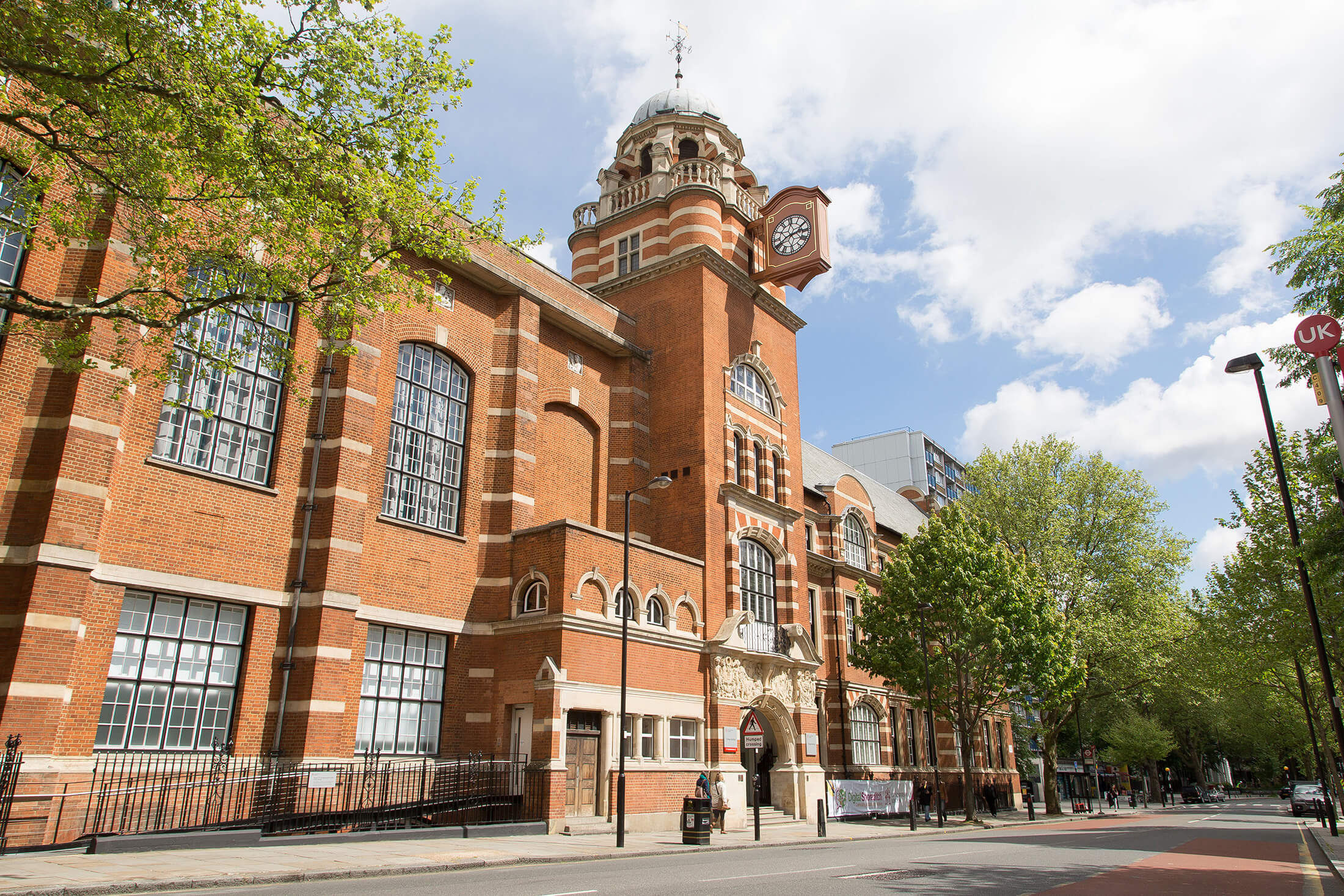
City St George's, University of London was formed on 1 August 2024 by the merger of City, University of London and St George's, University of London. It educates more than 27,000 students from over 170 countries and is one of the largest higher education destinations for London students and one of the most significant suppliers of the health workforce in the capital. The Lord Mayor of London is the University's Rector, a link marked each year in events such as the Lord Mayor's Show.
Teaching takes place across three London campuses: Clerkenwell (Northampton Square, EC1V 0HB), Moorgate (Bunhill Row and 33 Finsbury Square, home of Bayes Business School) and Tooting (Cranmer Terrace, SW17 0RE), where health and medical education has been based since the move from Hyde Park Corner in 1980.
Academic work is organised in six Schools:
The merger joins St George's long specialism in health and medicine with City's breadth in business, law, communications, policy and global affairs, and science and technology, with interdisciplinary work in treatment, population health monitoring, workforce development, policy and advocacy. The City Law School was the first in the UK to deliver all stages of legal education, and Bayes Business School has taught business for over 50 years. Professional bodies help shape many courses and facilities, giving access to work experience.
Around half of all students come from outside the UK. Students have four libraries (around 250,000 printed books, over 25,000 online journal titles and over 1,600 study places), the CitySport fitness centre at Clerkenwell, and eight residential halls for undergraduates and postgraduates near the Clerkenwell and Tooting campuses. The alumni community numbers 175,000 in over 170 countries, including John Hunter, Edward Jenner, Henry Gray and Patrick Steptoe.
The legacy City joined the University of London in 2016, while St George's medical school joined in 1836. The merged institution is a member of the University of London and runs under a dual-running model, so some services still carry legacy City or St George's names.
The undergraduate fee for UK students starting in 2025/26 is £9,535 for the first year of study, and fees in later years may rise in line with government policy. Fees for international students and for all postgraduate courses vary by course. Eligible postgraduates can borrow up to £11,836 through the government master's loan, and PhD students up to £27,892 over three years through the doctoral loan.
A non-repayable bursary for students ordinarily resident in England from lower-income households on their first higher education course, paid on top of student finance. There is no separate application: eligibility is assessed from the Student Finance England application, so students must agree to share household income details. The 2024/25 rates were £1,700 in the first year and £1,000 in later years (household income £0–£16,000), £1,250 and £500 (£16,001–£25,000), and £750 and £500 (£25,001–£30,000). Care leavers receive the maximum award. From the 2026/27 intake the grant will be combined across all campuses, with changed eligibility and values. Grants and bursaries.
£8,000 off first-year tuition (2026/27) for international-fee undergraduates who meet or exceed the conditions of their offer for a full-time Bayes programme starting in September 2026. Applicants must make City St George's their Firm choice on UCAS, apply by 30 June 2026 and complete registration by 12 October 2026. Students on the International Study Centre or Kaplan foundation route are not eligible. Scholarship details.
Up to ten scholarships a year for Black UK-domiciled undergraduates from lower-income households. Each covers the full home tuition fee plus a £6,000 annual stipend for three years, with mentoring. Applications for the 2026 intake open on 1 October 2025 and close at midnight on 15 March 2026. Scholarship details.
A fee waiver for School of Science & Technology graduates who go on to a taught master's in that School: 35% of fees for a First, 30% for an Upper Second and 25% for a Lower Second. It is awarded automatically once the offer is accepted and degree results are confirmed. Scholarship details.
Medicine MBBS (5-year) students can apply for NHS Student Bursaries support from year five, and graduate-entry MBBS (4-year) students from year two. This can include a partial or full tuition fee grant, a non-income-assessed £1,000 living-cost grant and an income-assessed bursary. A non-repayable, non-means-tested government grant of up to £8,000 a year is available to nursing, midwifery and other health students.
Academic scholarships of up to 50% off first-year fees, hardship funds, grants for students with dependants, and the Disabled Students' Allowance through Student Finance England. External awards such as Chevening and Commonwealth Scholarships appear in the University's funding finder, which lists 83 funding options. The Student Funding team can be contacted at [email protected].
President's International Scholarship →
Bayes Business School International Excellence Scholarship →
School of Policy and Global Affairs Global Excellence Scholarship →
GREAT Scholarship 2026 (Pakistan and Vietnam) →
Browse the scholarships listed for City St George's, University of London and check each award’s eligibility.
View scholarships for City St George's, University of London →All undergraduate applications, from UK and international students alike, are made through UCAS. After the main UCAS deadline in January, applicants may still be able to apply through UCAS Extra. The general minimum requirement is passes in two subjects at GCE A-level or equivalent, and a wide range of equivalent qualifications is accepted. Each course sets its own requirements, which may be higher, and applicants must also be accepted by the course admissions tutor. Many courses are competitive, so meeting the minimum does not guarantee admission. Typical offers are set course by course.
A contextual admissions scheme is open to UK (Home fee) undergraduate applicants taking certain qualifications who meet the criteria. Eligible applicants may receive a conditional offer with reduced entry requirements. Separate contextual admissions policies apply to Clerkenwell and Moorgate courses and to Tooting courses.
Some School of Health & Medical Sciences courses hold selection days or interviews as part of the application process. Courses in this School may also require occupational health checks, an enhanced Disclosure and Barring Service (DBS) check and references.
Country-by-country equivalences to GCE A-level grades (for undergraduate entry) and to UK honours degrees (for postgraduate entry) are set out on the entry requirements page. International foundation routes include the City St George's International Study Centre and Kaplan International College London, and pre-master's programmes from Kaplan International College London and INTO City, University of London are recognised.
Nationals of majority English-speaking countries, and applicants who completed a degree in one, do not need to prove their English. For other applicants, Clerkenwell and Moorgate courses set an IELTS level on each course page, from IELTS 5.5 to 7.0 depending on the course. IELTS Academic (including IELTS Online and One Skill Retake), PTE Academic (not the online version; equivalents of 54, 60, 62 and 69 for IELTS 5.5, 6.0, 6.5 and 7.0), TOEFL iBT (in-person and Home Edition, not MyBest scores), Cambridge Advanced and Proficiency, and LanguageCert tests are accepted. Student visa applicants taking PTE need at least 59 in all four subtests. Tests must be taken no more than two years before the CAS is issued. Tooting campus courses use their own three-group system, which also accepts professional registration or a suitable academic qualification, and English tests must be dated within two years of the course start date.
Applicants should normally hold a UK honours degree or equivalent in a relevant subject. Applicants with suitable experience or professional qualifications may be considered at the department's discretion. Most applications go directly to the University through its online system, with links on each course page. Most courses have no fixed deadline and admit on a rolling basis until full. Final-year students and those awaiting English test results can apply and may receive conditional offers. Decisions normally take two to six weeks, and most offers require a non-refundable deposit that counts towards tuition fees.
Applicants should explore staff research interests, contact a potential supervisor and develop a research proposal before applying formally. Each research programme sets its own application deadline. Funded studentships and Research Council doctoral training partnership places are available.
International students needing a Student visa must show their English proficiency as part of the visa application. The University provides free, confidential immigration advice to international students.
Residential halls: eight halls in all. Undergraduates can choose Arbour House (5 minutes' walk to Clerkenwell), Cross Court House (7 minutes), The Garden Halls (10 minutes), Romano Court (12 minutes) or Horton Halls (20 minutes' walk to Tooting). Postgraduates can choose iQ City (9 minutes' walk to Clerkenwell), Alliance House or Eleanor Rosa House. Most rooms are en suite, and accessible rooms are available at Eleanor Rosa House, Horton Halls and The Garden Halls.
Study programmes offered at City St George's, University of London.
Experiences shared by students of City St George's, University of London.
Studied here? Share your experience to help other applicants.

Book a free consultation with our expert counsellors and take the first step towards your dream university.
Copyrights © 2026 StudyMapped. All rights reserved.

Enter your credentials to continue.
Join us and start your study abroad journey.


