
University in Germany
Chemnitz, Sachsen, Germany
University profile
Chemnitz University of Technology (Technische Universität Chemnitz) is a public technical university in Chemnitz, Saxony, with roots in the Royal Trade School founded in 1836. It has about 8,500 students, around 2,800 of them international students from almost 100 nations (33 per cent), and about 2,350 staff, half of whom are funded from third-party project money. Its profile centres on engineering, natural sciences, computing and mathematics, alongside economics, humanities, social sciences and primary-school teacher education.
Teaching is organised in eight faculties: Natural Sciences, Mathematics, Mechanical Engineering, Electrical Engineering and Information Technology, Computer Science, Economics and Business Administration, Philosophy, and Human and Social Sciences. Central institutions include the University Library, the International University Centre, the Language Centre, the University Computer Centre, the Centre for Teacher Education and Educational Research, the Centre for Sport and Health Promotion, the Centre for Early-Career Researchers and the Centre for Knowledge and Technology Transfer. There are 171 professorships and 11 junior professorships.
For winter semester 2026/2027 the university offers 102 study programmes: 36 Bachelor and 63 Master programmes plus three offerings at the Centre for Teacher Education and Educational Research. Several Master programmes are taught in English, among them Advanced Manufacturing, Automation, Robotics and Control, Business & Economics, Design and Test for Integrated Circuits, Embedded Systems, Information and Communication Systems, Micro and Nano Systems, Advanced and Computational Mathematics, Advanced Functional Materials, Automotive Software Engineering, Neurorobotics and Web Engineering.
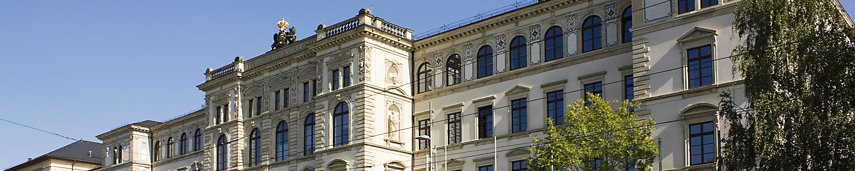
The main campuses lie in Chemnitz: Straße der Nationen (with the historic Böttcher-Bau and the University Library in the former Alte Aktienspinnerei), the Reichenhainer Straße campus with the central lecture-hall building and the science and engineering faculties, Wilhelm-Raabe-Straße, the Sportforum and Erfenschlager Straße. Research outposts operate in Annaberg-Buchholz, Reichenbach im Vogtland, Boxberg and Spremberg.
Student life draws on the Studentenwerk Chemnitz-Zwickau (halls of residence near the campus, canteens, BAföG and social counselling), student initiatives and clubs, university sport as a partner university of elite sport, language courses, a buddy programme for international students and the Career Service. A tuition-free study environment applies in Saxony, with a semester contribution payable each term. The university is a state institution of the Free State of Saxony.
There are no general tuition fees in Saxony. A semester contribution is payable each term; it is not tuition. From winter semester 2026/2027 it is 341.40 euros, made up of the Studentenwerk contribution (93.00 euros), the student body contribution (18.80 euros), the student cultural ticket (2.80 euros) and the Deutschlandsemesterticket (226.80 euros). Under the Saxon higher education act, fees apply only in special cases: long-term study fee of 1,500 euros per semester when the standard period is exceeded by more than four semesters, second-degree fee of 350 euros per semester, certain distance-learning Bachelor semesters (Management and Public Sector Management), and 40 euros per semester for guest auditors. Fees can be waived or deferred in cases of hardship on written request.
The International University Centre announces funding programmes as available. Georgius-Agricola-Stipendien (merit awards): for international students in STEM Staatsexamen, Diplom and Bachelor programmes from the third semester and Master students from the first semester with above-average results; up to six months at 300 euros per month (deadline 21 October 2026). Georgius-Agricola-Stipendien (basic awards): for gifted students from selected countries (Argentina, Bolivia, Brazil, Ecuador, Guyana, Colombia, Paraguay, Peru, Suriname, Venezuela) pursuing a technical or science degree at TU Chemnitz, about 992 euros per month for the standard study period (deadline 30 October 2026). BIDS-Motivationsstipendium: 450 euros per month for the first year for graduates of PASCH schools (DSD or German schools) in Poland and the Czech Republic or countries of the Saxon liaison offices for science, with DSD II certificate, starting a Bachelor programme. STIBET I: support of up to six months for international students and doctoral candidates in the current budget year. AI GlobalMinds (DAAD Academic Horizons): stays of three to six months for outstanding Master and early-stage doctoral students from Chile, Serbia and Tunisia in artificial intelligence. The Hilde Domin Programme (Federal Foreign Office and DAAD) supports threatened students and doctoral candidates.
Details and application forms: International University Centre scholarships.
The Studentenwerk Chemnitz-Zwickau handles BAföG, halls of residence, canteens and social, psychological and legal counselling; BAföG should be applied for two to three months before study starts. Contact points for foundations and scholarship bodies are listed by the Central Student Advisory Service, and the Career Service runs a job portal for student jobs.
Deutschlandstipendium at TU Chemnitz →
Georgius Agricola Merit Scholarship (Leistungsstipendium) for International Students →
Browse the scholarships listed for Chemnitz University of Technology and check each award’s eligibility.
View scholarships for Chemnitz University of Technology →Applicants need a university entrance qualification recognised in Germany. International applicants whose school certificate is not equivalent to the German Abitur must first attend a Studienkolleg and pass the Feststellungsprüfung; this cannot be taken at TU Chemnitz, and applicants are directed to the Studienkolleg Sachsen in Leipzig. Admission to a Studienkolleg requires German at level B2 (for example DSH-1, TestDaF 3/3/3/3 or a Goethe certificate). The anabin database shows whether a given certificate requires a Studienkolleg. Some programmes are admission-restricted (Numerus clausus); most others are open to enrolment. Places in Bachelor Psychology and Staatsexamen Primary School Teaching are allocated through the DoSV procedure at hochschulstart.de.
International applicants without a German Abitur applying for undergraduate programmes, and those with a foreign Bachelor or Master degree, apply through uni-assist; the Master programmes Advanced and Computational Mathematics, Advanced Manufacturing, Automotive Software Engineering, Design and Test for Integrated Circuits, English Studies, Information and Communication Systems and Web Engineering use the EduApplication Portal. Applicants with a German Abitur, a Studienkolleg Feststellungsprüfung, a German degree, European Baccalaureate, or DSH-2 with conditional admission use the university's own online application portal (SBservice). Exchange students (Erasmus) apply online through the university portal, and doctoral candidates can apply for enrolment at any time once admitted by the doctoral committee. The university does not work with commercial recruitment agencies. Applications via uni-assist open on 1 April for winter semester and 1 October for summer semester, with up to four study choices.
Applications must be complete by 15 July for the winter semester and 15 January for the summer semester. EU/EEA and Swiss applicants to admission-free programmes have an extended deadline of 31 August (winter) and 28 February (summer), which does not apply to those who must first attend a Studienkolleg or German course. Exchange students apply from mid-May to 15 July (winter) and mid-December to 15 January (summer).
Secondary school certificate with subjects and grades in the original language plus a German or English translation, entrance examination results where required by the home country, transcripts and degree certificates of earlier university study with translations, an APS certificate for applicants from China, Vietnam and India, sports aptitude proof for Secondary School Teaching in Sport where applicable, and proof of German language skills.
For German-taught programmes: DSH-2 or DSH-3, TestDaF 4/4/4/4, telc C1 Hochschule, Goethe-Institut ZOP, KDS, GDS or Goethe-Zertifikat C2, ÖSD C2, DSD Stufe II or the language examination of the Sprachen- und Dolmetscher-Institut München.
English at CEFR B2 is required, for example IELTS 5.5, TOEFL iBT 72 points, TOEFL ITP Level 1 543 points or Pearson PTE Academic 59 points (the Master English Studies is excepted). German at level A2 must be shown for Bachelor English Studies and Master Advanced Manufacturing, Automation Robotics and Control, Business & Economics, Design and Test for Integrated Circuits, Embedded Systems, English Studies, Information and Communication Systems and Micro and Nano Systems; applicants with A1 must reach A2 by the end of the third semester. For Bachelor Foundations in Data Science and the Master programmes Advanced and Computational Mathematics, Advanced Functional Materials, Automotive Software Engineering, Neurorobotics and Web Engineering, German instruction is part of the programme and no German proof is needed at application.
A first professionally qualifying degree such as a Bachelor is required. Applicants without the degree certificate can be enrolled for a limited period if the certificate is submitted by 31 March (winter semester entry) or 30 September (summer semester entry) at the end of the first semester. For admission-restricted Master programmes, proof of at least 80 per cent of the credits of the previous study and the resulting average grade must be uploaded.
Admission to doctoral studies is granted by the responsible doctoral committee; enrolment as a doctoral student follows on written admission and lasts usually up to three years, with extensions on request. International applicants also need written confirmation from the supervisor that the language skills needed for the doctorate are in place.
Applicants should check the visa requirements and required language certificates with the German embassy in their country.
Facilities include the University Library with individual, group and PC workplaces, computer pools run by the University Computer Centre, eduroam Wi-Fi, a Centre for Fitness and Health, and canteens and cafeterias run by the Studentenwerk. Halls of residence near the campus let single or shared rooms at 200 to 310 euros per month including utilities, applied for through the Studentenwerk Chemnitz-Zwickau.
Study programmes offered at Chemnitz University of Technology.
Experiences shared by students of Chemnitz University of Technology.
Studied here? Share your experience to help other applicants.

Book a free consultation with our expert counsellors and take the first step towards your dream university.
Copyrights © 2026 StudyMapped. All rights reserved.

Enter your credentials to continue.
Join us and start your study abroad journey.


