

University in France
Marseille, Provence-Alpes-Côte d'Azur, France
University profile
Centrale Méditerranée is a public general engineering school (grande école) and a member of the Group of Écoles Centrale, with campuses in Marseille and Nice on the Mediterranean coast. It was created in 2003 as the École Généraliste d'Ingénieurs de Marseille, renamed École Centrale de Marseille in 2006, and took its present name in 2022 when the Nice campus opened. It trains multidisciplinary engineers with a strong scientific base and attention to financial, societal, cultural, legal and ecological dimensions of engineering problems.
The Engineer of École Centrale programme is taught in French on the Marseille campus, in the Technopôle de Château-Gombert, and is delivered through alternating study and work-based training. A class of around 300 students enters each year. The first three semesters (S5 to S7) build a shared scientific culture, with four academic weeks followed by one week of professional immersion; the second phase, over three to five semesters, is personalised through thematic semesters, projects, international mobility, options, internships and double degrees.
On the Nice campus (Méridia, in the Plaine du Var) the school runs a three-year Bachelor in responsible engineering and digital transformations, taught in French and English, built around four themes: connected city, data and representation of the world, new technologies and health, and industry of the future. Beyond the engineering degree the school offers co-accredited Masters with Aix-Marseille Université, international Masters (Europhotonics and the Erasmus Mundus WAVES programme), a post-graduate programme in artificial intelligence (Centraledigitallab) and specialised Masters (Mastères Spécialisés) in marine and offshore wind engineering and in cybersecurity of complex systems.
Student life is organised around nearly 40 associations grouped into poles for student life, business, citizenship, culture, innovation and sport, federated by the Union des Associations, with time reserved in the timetable for association work. A listening and prevention scheme, l'AnTenne, was created in 2021. Housing is in university residences (CROUS), private student residences with preferential rates, or city accommodation, with a partnership with Studapart.
International students make up 24.2% of the student body (2022 academic year), with 33 nationalities on campus and about 100 partnerships in 35 countries. Exchange and double-degree students are nominated by their partner university. The school belongs to the Group of Écoles Centrale (CentraleSupélec, Lyon, Nantes, Lille, Méditerranée, Beijing, Casablanca and Mahindra) and is co-accredited with Aix-Marseille Université to award Masters.
For the 2025/2026 academic year, fees for the Masters co-accredited with Aix-Marseille Université are set under the national regulation for public higher-education institutions: EU students EUR 254 (reduced rate EUR 166); non-EU students EUR 3,941 (reduced rate EUR 2,627). Exchange students under bilateral agreements pay no tuition fees.
French students can obtain, depending on family circumstances, a national higher-education grant (BCS) from the Rectorat, a departmental grant from certain Conseils Départementaux, an honorary loan, a travel grant and a mobility grant. Applications are made once through the student social file (DSE), which also covers university-residence housing, on the national portal between 15 January and 15 May each year for the following academic year; the application must be renewed annually and the answer comes only after university enrolment. CNOUS and the CROUS Aix-Marseille grants department provide information.
The Erasmus+ allowance supports study periods in Europe under inter-institutional exchanges and can be combined with the BCS grant. The international mobility grant of EUR 400 per month is a supplement for BCS grant holders on study periods abroad of 2 to 9 consecutive months, available through the international relations office on the first floor of La Jetée, Marseille campus.
The Fondation Centrale Méditerranée runs financial-aid campaigns; students submit a completed application form with supporting documents to [email protected], a selection committee meets in December, and the Fondation de France pays awards about five weeks later. The alumni association has a partnership with Crédit Agricole Alpes-Provence for student bank loans ([email protected]), and state-guaranteed student loans are available from banks. Official page: Grants and financial aid.
Browse the scholarships listed for Centrale Méditerranée and check each award’s eligibility.
View scholarships for Centrale Méditerranée →About 320 students enter the engineering cycle each year. Entry is mainly through the Concours Centrale-Supélec after two years of classes préparatoires. For 2026 the written tests ran from 4 to 7 May, oral tests from 22 June to 19 July, with assignments from 28 July 2026.
Parallel admission routes (admissions parallèles) are the ATS competition, a university competition for students in the last year of a Licence or Bachelor degree wishing to join one of six Écoles Centrale (CentraleSupélec, Lyon, Nantes, Lille, Méditerranée and Casablanca), five places reserved each year for students of the Fédération Gay-Lussac integrated preparatory class in chemistry, and admission sur titre: holders of a first-year Master's degree or recognised equivalent can be admitted directly to the second year after file review and an interview with the admissions jury.
Applicants must be selected by their home university and have a strong command of French (B2 recommended). Students are nominated by their home institution to [email protected] and then receive the procedure and document list on the Mobility Online platform. Exchange students pay no tuition fees under bilateral agreements. Application deadlines are 1 May for autumn (September) exchanges and 1 December for spring (February) exchanges. Documents: nomination letter from the home university, transcript of records, learning agreement, motivation letter, and a copy of identity card or passport for students from outside Europe.
Double-degree students begin at their home university and spend two years at Centrale Méditerranée before returning home to complete degrees from both institutions. Exchange students may follow Master-level courses (S8, S9, S10) for one or two semesters. Students from partner universities can also complete a 4 to 6 month research project or dissertation in one of the school's laboratories.
A three-year full-time Bachelor on the Nice campus, taught in French and English, with a work placement of 1 to 2 months in year one, an international placement of 2 to 3 months in year two and work-study throughout year three. Graduates can continue to a Master's degree or be selected for the Grandes Écoles engineering course.
Engineering students can follow a co-accredited Master's with Aix-Marseille Université alongside their third year. Applications to the university Masters go through the national Master platform (Trouver mon master).
Engineers with a research Master's degree can undertake a PhD of about three years in partner laboratories within the co-accredited doctoral schools of the Aix-Marseille site, under a doctoral charter signed by the candidate, supervisor, doctoral school director and laboratory head. Theses are catalogued in SUDOC.
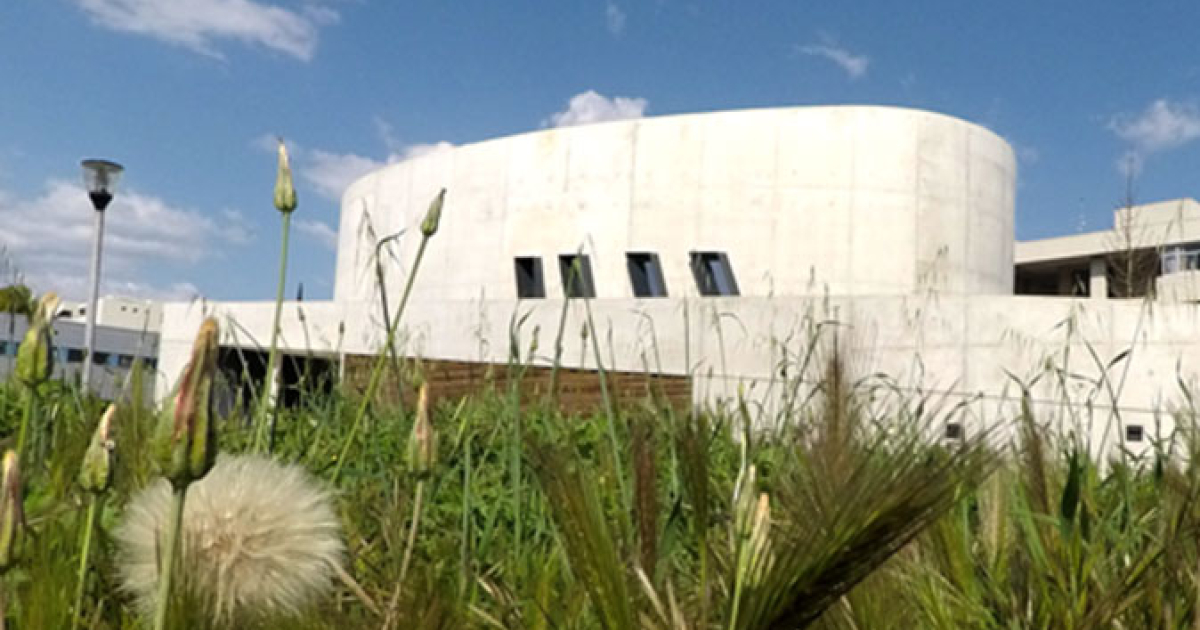
Together the two campuses have 20,726 m² of premises on 9.5 ha of land, including a 160 m² Deck incubator for student entrepreneurs and 1,473 m² dedicated to community life. A documentation centre serves students and doctoral candidates, and a Fablab and sports clubs operate through student associations.
Study programmes offered at Centrale Méditerranée.
Experiences shared by students of Centrale Méditerranée.
Studied here? Share your experience to help other applicants.

Book a free consultation with our expert counsellors and take the first step towards your dream university.
Copyrights © 2026 StudyMapped. All rights reserved.

Enter your credentials to continue.
Join us and start your study abroad journey.


