

University in Canada
North Vancouver, British Columbia, Canada
University profile
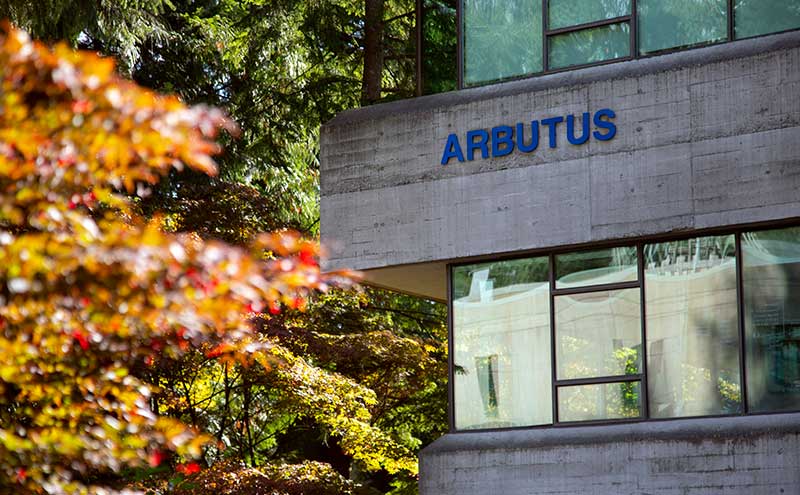
Capilano University (CapU) is a public university in North Vancouver, British Columbia, serving the North Shore and the Sea-to-Sky corridor. It opened in 1968 as Capilano College and was re-designated a university on April 25, 2008. In 2025–2026 it enrolled 9,282 students in for-credit programs, with an average class size of 26 and 1,760 work-integrated learning experiences. The main campus stands on a 13-hectare site at 2055 Purcell Way, and it holds Northwest Commission on Colleges and Universities (NWCCU) accreditation, the first in B.C. (2012).
CapU has campuses in North Vancouver and Squamish and the Ts̓zil Learning Centre in Mount Currie, owned and operated by Líl̓wat Nation. There are nearly 100 programs, including 16 bachelor's degrees, as well as associate degrees, diplomas, certificates, post-baccalaureate programs, minors and academic upgrading. Teaching is organised into five areas of study:
Film, animation and design are taught at the Nat and Flora Bosa Centre for Film and Animation (opened 2012), which has sound recording and mixing suites and an 8,000-square-foot sound stage. The Capilano University Centre for the Performing Arts is a 372-seat theatre, and the Centre for Sport and Wellness (the Sportsplex) is the athletics and fitness hub for the Capilano Blues teams. The Indigenous Student Centre, Kéxwusm-áyakn, hosts student gatherings and Elder-in-Residence activity.
Students can live in CapU Residence at the North Vancouver and Squamish campuses, with live-in residence advisors, a meal plan and residence programs and events. A children's centre on the North Vancouver campus offers daycare for the children of students and employees.
CapU enrolled 2,802 international students in full-time study from 89 countries. The Wong and Trainor Centre for International Experience supports international students, and the Visiting International Student Program (VISP) and exchange terms are open to students from other institutions. The Capilano University Alumni Association counts about 100,000 alumni.
Scholarships, bursaries and awards recognise achievement in academics, sports and the arts, with some considering financial need and many rewarding community involvement and leadership. One online application through myCapU (Apply for SBAs, then Entrance Awards) covers most awards; some require supporting documents sent to [email protected]. For 2026-27 entry, applications opened October 15, 2025. The deadline for the Capilano Excellence Scholarship (CAPX) was March 1, 2026; all other entrance awards closed March 31, 2026 for both the online application and supporting documents.
New international students admitted for Spring, Summer or Fall 2027 who pay international fees, are credential-seeking, have an admission GPA of 2.50 or higher in required courses and register in 12 or more credits receive a tuition reduction of CAD $150 per credit: CAD $1,800 per semester for 12 credits, and up to CAD $18,000 over a four-year degree. The award continues each term with a 3.50 term GPA and continued enrolment in 12 or more credits. It applies to select diplomas, associate degrees, bachelor's degrees and post-baccalaureate diplomas and EAP pathways (EAP students must be placed at EAP 100/101). Qualifying deadlines: Spring 2027, apply by September 30, 2026 and pay the deposit by October 15, 2026; Summer and Fall 2027, apply by November 30, 2026, pay the deposit by December 4, 2026 and submit the study permit application by December 31, 2026. The award is subject to availability and may close early.
Continuing students apply through myCapU (Apply for SBAs). For Fall 2026, applications opened July 6, 2026 and closed September 21, 2026, with recipients notified in November 2026. Additional awards cover leadership, community and campus engagement, sustainability and gender and women's issues.
Emergency bursaries and interest-free emergency loans, the Eat Share Care Fund for food insecurity (domestic and international students), the Indigenous Emergency Assistance Fund, government student loans and grants for Canadian citizens and permanent residents, and funding for former youth in care. Financial Aid & Awards: [email protected].
Entrance awards | Funding for international students | Current and returning students | Emergency funding
Capilano Excellence Scholarships (CAPX) →
Browse the scholarships listed for Capilano University and check each award’s eligibility.
View scholarships for Capilano University →Most programs require completion of B.C. secondary school (Grade 12) or equivalent (B.C. Adult Dogwood Graduation Diploma or General Education Diploma), with a minimum grade point average of 2.0 (60%) calculated on English Studies 12, English 12 or English First Peoples 12 plus two academic Grade 12 courses. Admission requirements vary by program and may include a portfolio, interview, resumé or audition. After admission, some applicants need the English Diagnostic Test (for English 100) or the Math Placement Test (for certain entry-level Math courses).
Optional provincial exams are not required for admission, but exams mandatory for the B.C. Graduation Program must have been written; where an optional exam is written, the higher of the school mark or the blended school and exam mark is used. Students with superior records may apply for concurrent admission to take one or two Arts and Sciences courses while still in secondary school (consent form co-signed by a parent or guardian, with comments from the principal).
AP courses can be combined with an approved high school curriculum for admission and are considered for transfer credit. AP scores convert to percentages: 5 = 96, 4 = 86, 3 = 80, 2 = 70. IB Diploma holders are eligible for admission; IB exam grades convert as 7 = 96, 6 = 90, 5 = 86, 4 = 76, 3 = 70. IB certificate courses can be used alongside another high school curriculum. Where an AP or IB course is repeated by the related high school course, the higher grade is used.
Test results more than two years old are not accepted. Other ways to meet the requirement include English Studies 12, English 12 or English First Peoples 12 with C+ or higher; a three-credit CapU ENGL course at C- (60%) or higher; AP English Language and Composition or Literature and Composition with a mark of 3; IB English A (Literature, or Language and Literature, HL or SL) with a mark of 4; CapU EAP 100 and 101 with B+ (77%) in each; four or more consecutive years of full-time education in English in Canada or in a country where English is the principal language; or graduation from a recognised degree program taught in English in a listed English-speaking country (the list includes Ghana, Nigeria, Kenya, Uganda, Zambia, Zimbabwe, Sierra Leone, Liberia, the Gambia, Tanzania, South Africa, the UK, Ireland and the USA). Applicants from Quebec may be asked for proof. An English Language Waiver Form may be submitted to the Registrar's Office, and the English for Academic Purposes (EAP) program prepares students for the EAP 100/101 level.
International students are non-Canadian students without permanent resident status who need an IRCC study permit for programs longer than six months, and a Temporary Resident Visa or eTA depending on citizenship. International secondary school equivalencies are assessed against CapU's equivalencies list. Steps: choose a program and check its requirements; apply through EducationPlannerBC with a non-refundable application fee of C$135 (covers two programs) and upload transcripts as PDFs, with certified English translations where needed; complete any program-specific requirements such as a portfolio, interview or audition; receive a Letter of Offer and pay the tuition deposit; then receive the letter of acceptance (and Provincial Attestation Letter where applicable) for the study permit application. New international students pay a one-time $5,000 deposit, applied to international tuition once registered in courses.
Canadian citizens and permanent residents apply through EducationPlannerBC (EPBC) with an application fee of $50 for up to two programs, uploading transcripts and supporting documents; Grade 12 students request that the Ministry of Education send their transcript directly. Applicants with prior post-secondary study must send official transcripts to the Registrar's Office, Library Building LB152, 2055 Purcell Way, North Vancouver. Notarized copies are not accepted; certified copies and apostille documents are. Applicants receive a Student ID and a myCapU account after applying, which is also used to apply for entrance awards. Application deadlines vary by program and are shown on each program page.
Courses from other institutions, IB/AP courses and Prior Learning Assessment can count toward a CapU program; courses in the BC Transfer Guide are assessed automatically after the official transcript is received, and other courses are assessed from course outlines with a Request for Transfer Credit Form (six to eight weeks). Transfer credit request deadlines: Fall, second week of May; Spring, second week of October; Summer, second week of January. Programs are open to mature students, and academic upgrading courses can raise a high school GPA or meet English requirements. Returning students re-apply through EducationPlannerBC, and students changing programs submit a new application.
Study programmes offered at Capilano University.
Experiences shared by students of Capilano University.
Studied here? Share your experience to help other applicants.

Book a free consultation with our expert counsellors and take the first step towards your dream university.
Copyrights © 2026 StudyMapped. All rights reserved.

Enter your credentials to continue.
Join us and start your study abroad journey.


