
University in United States
Providence, RI, United States
University profile
Brown University is a private, nonprofit research university in Providence, Rhode Island, founded in 1764. It describes itself as a University-College: a research university in which undergraduate education is based in the College and students and faculty at all levels collaborate across the College, departments and schools. Providence has been the University's home for more than two and a half centuries.
Undergraduate study is built on the Open Curriculum, a flexible but rigorous approach in which students choose their own courses, sample widely and then specialise in one of more than 80 undergraduate concentrations. Brown reports a 6:1 student-to-faculty ratio, more than 2,000 undergraduate courses each year, over 900 independent study and research courses each year, and 68 percent of classes with fewer than 20 students.
The University is organised into the following schools and colleges:
Brown offers 46 doctoral programmes, 41 master's degree programmes, 13 executive and certificate programmes and two dual-degree medical programmes, along with more than 100 medical residency and fellowship programmes. Special undergraduate pathways include the eight-year Program in Liberal Medical Education (PLME) and the five-year Brown | RISD Dual Degree Program with the Rhode Island School of Design.
Brown has 11,164 total students, including 7,196 undergraduates, 3,369 graduate students and 599 medical students. More than 400 student groups operate on campus, 100 percent of first-year undergraduates live on campus, and 15 percent of undergraduates are the first in their families to attend college. The student body represents more than 122 nations and territories and all 50 states, and about 14 percent of students come from abroad. Brown fields 34 Division I sports teams and 40 club teams, and students can study abroad in more than 40 countries.
The University has an International Students Resources website and International Student and Scholar Services (ISSS) for visa and immigration advice to admitted international students.
Brown practises need-blind admission for first-year applicants, meets 100 percent of demonstrated financial need and does not include loans in University financial aid packages (the Brown Promise). Brown does not offer aid based on academic achievement, athletic ability or any other form of merit; eligibility is determined solely on financial need. 51 percent of the Class of 2030 received need-based scholarship or grant aid, parent responsibility is $0 for most families with less than $60,000 in annual income, and the minimum scholarship commitment is $74,568 for most families with less than $125,000 in annual income. Home equity in a primary residence is not counted as an asset.
Applicants submit the FAFSA (U.S. citizens and permanent residents) and the CSS Profile (Brown CSS code 3189) by November 2, 2026 for Early Decision or February 1, 2027 for Regular Decision. MyinTuition and the College Board Net Price Calculator give cost estimates.
Brown is need-blind for first-year international undergraduate applicants entering in fall 2025 and after. International students complete the CSS Profile (no fee waivers; not the ISFAA form) and may be asked for documents through IDOC. Students admitted before fall 2025 remain under the need-aware policy in place when they applied.
Cost of attendance for undergraduates: tuition $74,568, fees $3,084, housing $10,710 and food $8,754, a direct subtotal of $97,116; with $2,878 in personal expenses the total is $99,994.
Incoming doctoral students, domestic and international, receive five or six years of guaranteed support including a stipend, tuition remission, a health-services fee and health and dental insurance; doctoral students in the humanities and social sciences are guaranteed six years.
Brown University Need-Based Undergraduate Scholarship (Brown Promise) →
Brown University Financial Aid for International First-Year Undergraduates →
Brown University Doctoral Funding Guarantee →
Browse the scholarships listed for Brown University and check each award’s eligibility.
View scholarships for Brown University →First-year applicants apply online through the Common Application plus the Brown member section. Four essays are required for all first-year and transfer applicants, with additional essays for PLME and Brown | RISD Dual Degree applicants. Early Decision deadline is November 1 and Regular Decision deadline is January 5, with Regular Decision applicants notified by early April. The application fee is $80, non-refundable, with automatic fee waivers for students enrolled in or eligible for the Federal Free or Reduced Price Lunch program or in other federal, state or local programmes that aid low-income families.
Brown returned to a policy requiring SAT or ACT scores for first-year applicants beginning with the 2024-25 admission cycle. Scores are superscored across the SAT, the ACT or both. The SAT Essay and ACT Writing are optional, and ACT Science is optional from spring 2025. There are no minimum scores. Institutional codes: SAT 3094, ACT 3800, TOEFL 3094. For Early Decision, testing must be completed by the last October test date, and for Regular Decision by the last December test date.
Transfer applicants (Fall or Spring entry) apply through the Common Application transfer application with the $80 fee or a waiver. The checklist includes the high school transcript, official transcripts from all previous colleges, a College Report, a Mid-Term Report and two instructor evaluations. Brown is test-optional for transfer applicants through the 2026-2027 cycle. U.S. military veterans apply through the separate Veterans Application, and a Resumed Undergraduate Education (RUE) programme exists for students who interrupted their education.
There is no separate application for international applicants: first-year or transfer students use the same application and indicate citizenship according to the passport they plan to enter the United States with. English proficiency must be achieved before admission, and Brown offers no ESL courses for undergraduates. Applicants whose first language, primary home language or language of secondary instruction is not English are strongly encouraged to submit a test: TOEFL, IELTS, Duolingo English Test, Pearson Test of English or Cambridge English. Minimum scores expected in most cases: TOEFL iBT 105 (taken before January 2026) or 5.5 (taken January 2026 and later); IELTS 8.0; Duolingo 130; Pearson 75; Cambridge C1 Advanced or C2 Proficiency 191. Official score reports are required from matriculating students, and MyBest scores are not accepted.
The Graduate School manages applications for all doctoral and MFA programmes through its online application, while each programme sets its own admission criteria and decides on admission. Each programme chooses whether to require the GRE (Graduate School code 3094; School of Public Health code 7765), and requirements are listed on each programme page. Applicants are notified four to eight weeks after the programme deadline. International graduate applicants must hold the equivalent of a U.S. bachelor's degree and provide original or officially certified documents. International master's applicants without full financial assistance must provide certified proof of financial support adequate for annual expenses before final admission. Fee waivers for doctoral and MFA applicants require demonstrated financial need. Master's (non-MFA) programmes are handled through masters.brown.edu.
Brown University's main campus is on College Hill in Providence, Rhode Island, the state capital. The campus is made up of brick quadrangles, greens, renovated historic buildings and modern architecture, alongside laboratories and libraries.
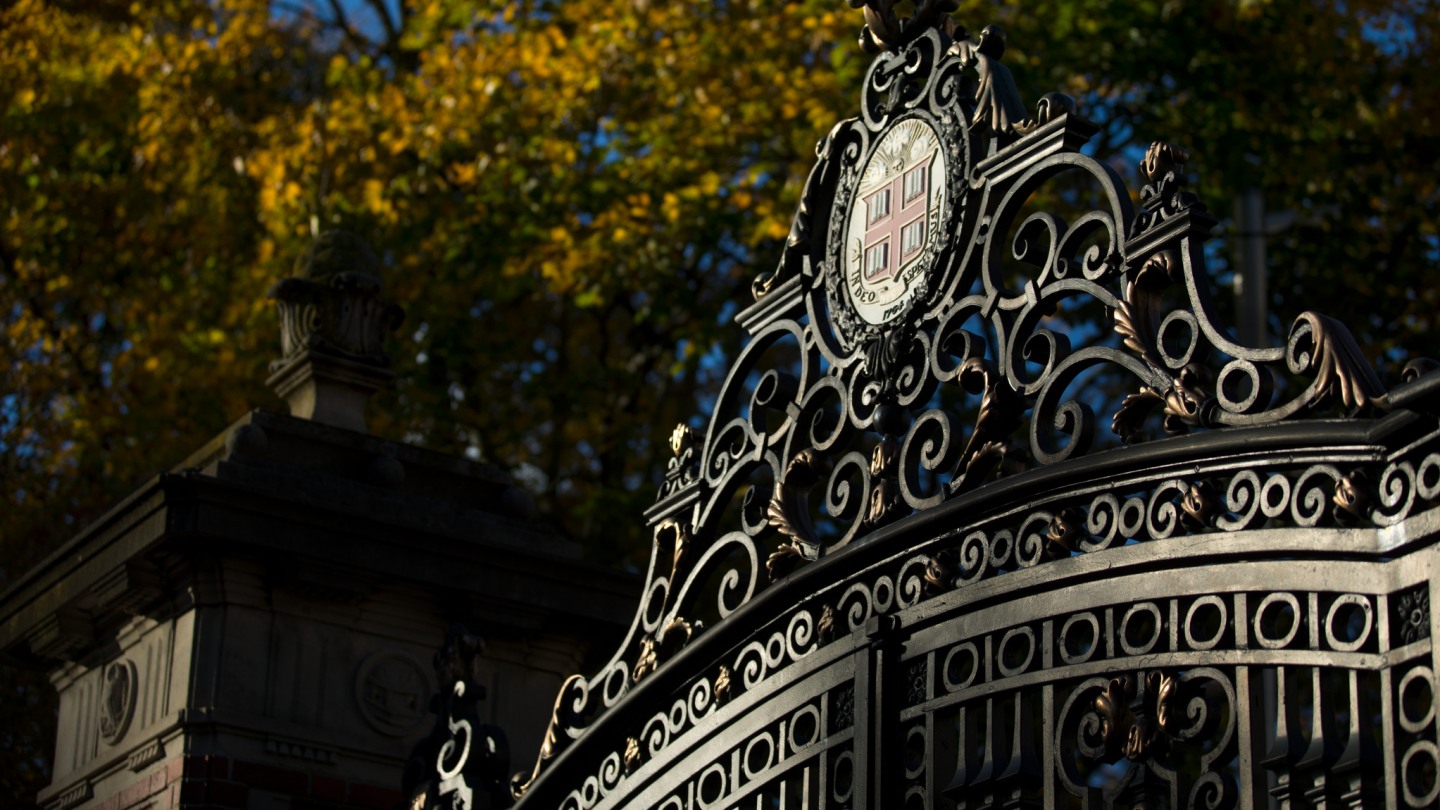
Brown's first building, the red-brick University Hall, was built in 1770 and still stands on the College Green. The Van Wickle Gates on College Hill mark the ceremonial entrance used at Opening Convocation.
The university also has facilities in Providence's Jewelry District, where it is locating administrative operations. Brown is near Interstates 95 and 195; T.F. Green Airport is 10 miles south and Boston Logan International Airport is about an hour's drive away.
Study programmes offered at Brown University.
Experiences shared by students of Brown University.
Studied here? Share your experience to help other applicants.

Book a free consultation with our expert counsellors and take the first step towards your dream university.
Copyrights © 2026 StudyMapped. All rights reserved.

Enter your credentials to continue.
Join us and start your study abroad journey.


