
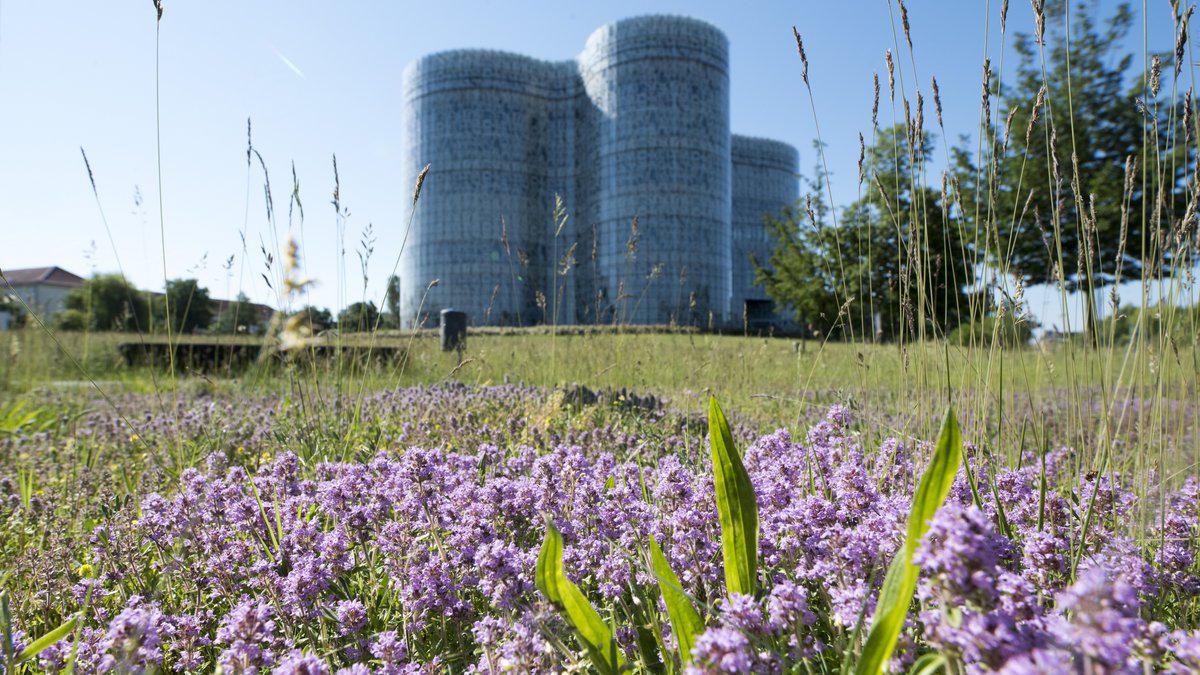

University in Germany
Cottbus, Brandenburg, Germany
University profile
Brandenburg University of Technology Cottbus-Senftenberg (BTU) is a campus university in the south of Brandenburg, with locations in Cottbus and Senftenberg. It describes itself as a university of technology that develops application-oriented solutions to major global issues and transformation processes, with a particular responsibility for the Lusatia region. Around 7,500 students study there, and about 45 percent of them come from abroad, from 130 countries.
The university has three sites: the Central (Main) Campus in Cottbus, the Cottbus-Sachsendorf campus and Campus Senftenberg. It is organised into six faculties: Faculty 1 (Mathematics, Computer Science, Physics, Electrical Engineering and Information Technology), Faculty 2 (Environment and Natural Sciences), Faculty 3 (Mechanical Engineering, Electrical and Energy Systems), Faculty 4 (Human Sciences), Faculty 5 (Business, Law and Social Sciences) and Faculty 6 (Architecture, Civil Engineering and Urban Planning). BTU is also a supporting university of the Joint Faculty of Health Sciences Brandenburg, part of the Brandenburg Health Campus initiative.
Central institutions include the Information, Communication and Media Centre (IKMZ) with the University Library, the Language Centre, the Centre for Continuing Education, the University Sports Centre and the BTU College, which was set up in 2013 to prepare prospective and first-year students for technical degree programmes. Research centres include the Center for Hybrid Electric Systems Cottbus (chesco), the Center for Landscape Transformation (ZLT), the Centre for Law and Administration (ZfRV), the Center for Flow and Transport Modelling and Measurement (CFTM2) and the German-Polish Centre for Public Law and Environmental Network, run jointly with the University of Wroclaw.
Programmes range from engineering, natural sciences, computer science and artificial intelligence to architecture, urban planning, business, law, social sciences, teacher education, midwifery science and instrumental and vocal music. The university offers dual study programmes (training-integrated or practice-integrated) alongside full-time and part-time study, and 14 to 20 English-language programmes across Bachelor, Master and PhD level, including double and joint degrees with partner universities. Doctorates are possible at all six faculties.
International students can prepare through the Bridge to Studies and PROFIS D (German as a Foreign Language) programmes, and the Language Centre offers German intensive courses and the DSH examination. Student halls of residence are run by the Studierendenwerk Ost:Brandenburg (four in Cottbus and one in Senftenberg), with private residences in Cottbus as additional options. BTU is a member of the EUNICE European university alliance.
Studying at BTU is mostly free of tuition charges. Every student pays the semester fee, which is not tuition: for winter semester 2026/27 it totals 391.80 euros (student services contribution 100.00, semester ticket 226.80, student body 14.00, enrolment and registration fees 51.00 euros). Some continuing-education Master programmes charge fees: Forensic Science and Engineering 2,500 euros for each of the first and second semesters; Business Law for Technology Companies 500 euros per semester; Public Administration 1,450 euros per semester; Urban Design Revitalization of Historic City Districts 1,500 euros in the first semester and 750 euros from the fourth semester.
BTU awards Deutschlandstipendien of 300 euros per month for two semesters (1 year), independent of income and not counted against BAföG. Applicants must be enrolled, within the standard period of study and have an average grade of 2.5 or better (for first-year students, the Abitur or previous degree). Selection is by points for grade average and a cover letter covering voluntary work, personal circumstances and motivation. Applications usually open in October and close at the end of October; awards are funded by sponsors such as BASF Schwarzheide, Wacker Chemie, Trumpf Sachsen, envia Mitteldeutsche Energie and the BTU foundation. Contact: [email protected]. Scholarships and foundations.
The International Relations Office awards STIBET I scholarships funded by the DAAD from Federal Foreign Office funds. They go to international students who are doing well academically and will graduate within a year but are in hardship, and to particularly dedicated students with outstanding commitment in an international context. Applications are open 1 to 31 July for the winter semester and 1 to 31 January for the summer semester. Up to three motivational scholarships are awarded each winter semester to foreign graduates of German schools abroad, partner schools and DSD schools starting a Bachelor or the Bridge to Studies programme (funded by the BIDS project; application 1 June to 30 September 2026, with a German motivation letter, CV, school reports and a recommendation). Apply to the International Relations Office, Platz der Deutschen Einheit 1, 03046 Cottbus. International student scholarships.
Postgraduate scholarships for female researchers nearing completion of a doctorate (1,500 euros per month) or habilitation (1,800 euros per month) run for four months. Top female STEM students in Mathematics and Computer Science receive 500 euros (Bachelor) or 1,000 euros (Master). InterFEMStip gives international female researchers with family responsibilities or equality involvement 400 euros per month. The Studierendenwerk Ost:Brandenburg grants hardship loans on application, and BTU also lists external foundations such as the Dr Friedrich Jungheinrich Foundation, Friedrich Ebert Foundation and the German University Foundation for its students.
Browse the scholarships listed for Brandenburg University of Technology Cottbus-Senftenberg and check each award’s eligibility.
View scholarships for Brandenburg University of Technology Cottbus-Senftenberg →A German university entrance qualification is the usual requirement for Bachelor programmes; some programmes add language certificates or health certificates. Applicants with a German qualification apply directly through the myBTU portal. Applicants whose last entrance qualification was gained abroad apply through uni-assist; this also covers those who completed a Studienkolleg with the Feststellungsprüfung, the AbiBac, the International Baccalaureate or the German International Baccalaureate, and former exchange students who wish to start a full degree. Direct application through myBTU applies to those with an Abitur from a Deutsche Schule abroad, the European Baccalaureate, exchange students and dual-degree applicants. Some programmes have restricted admission (for example Teaching Degree for Primary Education and the Master in Biotechnology). Applicants lacking the entrance qualification can prepare through the Bridge to Studies programme or ESiSt.
Winter semester 2026/27, Bachelor: 1 March to 15 July 2026 with a foreign qualification (extended to 15 August for EU/EEA citizens), 20 April to 15 September 2026 with a German qualification. Summer semester 2027, Bachelor: 1 November 2026 to 15 January 2027 with a foreign qualification, 1 December 2026 to 1 March 2027 with a German qualification. Master winter semester 2026/27: German-language programmes 1 March to 15 July 2026 (foreign) or 20 April to 31 August 2026 (German first degree); international (English-taught) programmes 1 March to 15 May 2026 (foreign) or 20 April to 31 August 2026, with Artificial Intelligence, Chemistry: Materials, Engineering and Sustainability, Heritage Conservation and Site Management and World Heritage Studies at 15 July for foreign applicants; Biotechnology 20 April to 15 July 2026. Master summer semester 2027: 1 November 2026 to 15 January 2027 (foreign) and 1 December 2026 to 1 March 2027 (German); Biotechnology 1 December 2026 to 15 January 2027. Bridge to Studies and PROFIS D: 1 March to 15 July 2026 for the two-semester programmes, 1 November 2026 to 15 January 2027 for the one-semester programmes. Deadlines are set each semester and are subject to change.
English-taught programmes: TOEFL iBT with at least 79 points or equivalent, with exceptions for applicants previously educated in English. German-taught programmes: DSH level 2 or an equivalent such as TestDaF 4x4 or DSD 2. Applicants who are registered for a language test but do not yet hold the result can still apply, and must supply the certificate by the end of the enrolment deadline or, for some cases, within the first semester. The Language Centre offers the DSH examination, and digital TestDaF dates are listed in the semester schedule.
A first degree qualifying for a profession in a suitable subject is required, together with proof of the required language level. Applications may include a current transcript of records; provisional enrolment is possible if all required examinations are passed before the semester begins, with the Bachelor certificate due by the end of the first semester after enrolment. Certified copies are not required: scans of documents and official translations in German or English are uploaded online.
Doctorates are possible at all six faculties and, since 2020, at the Joint Faculty of Health Sciences Brandenburg, either as an individual doctorate or in structured doctoral programmes. A completed German university degree (Diplom, Master's, Magister or Staatsexamen) qualifies; a degree from a university of applied sciences may qualify under certain conditions, and the faculty determines the equivalence of foreign degrees. Candidates enquire at the dean's office of the faculty concerned. External doctorates and Cotutelle (binational) doctorates are possible.
A student visa is required for study except for citizens of the European Union and a few other countries; a tourist visa does not allow university registration. Admitted international applicants can request a letter confirming the necessity of presence in Germany for the purpose of study.
The University Library operates three site libraries (Central Campus, Sachsendorf and Senftenberg) with databases, electronic journals and library courses. Students can live in four Studierendenwerk Ost:Brandenburg halls in Cottbus and one in Senftenberg, in the private residences T1 Campus, Prima Campus and the Uni-Service guest house in Cottbus, or on the private market. The University Sports Centre and the Language Centre serve all sites.
Study programmes offered at Brandenburg University of Technology Cottbus-Senftenberg.
Experiences shared by students of Brandenburg University of Technology Cottbus-Senftenberg.
Studied here? Share your experience to help other applicants.

Book a free consultation with our expert counsellors and take the first step towards your dream university.
Copyrights © 2026 StudyMapped. All rights reserved.

Enter your credentials to continue.
Join us and start your study abroad journey.


