
University in United Kingdom
Bangor, Wales, United Kingdom
University profile
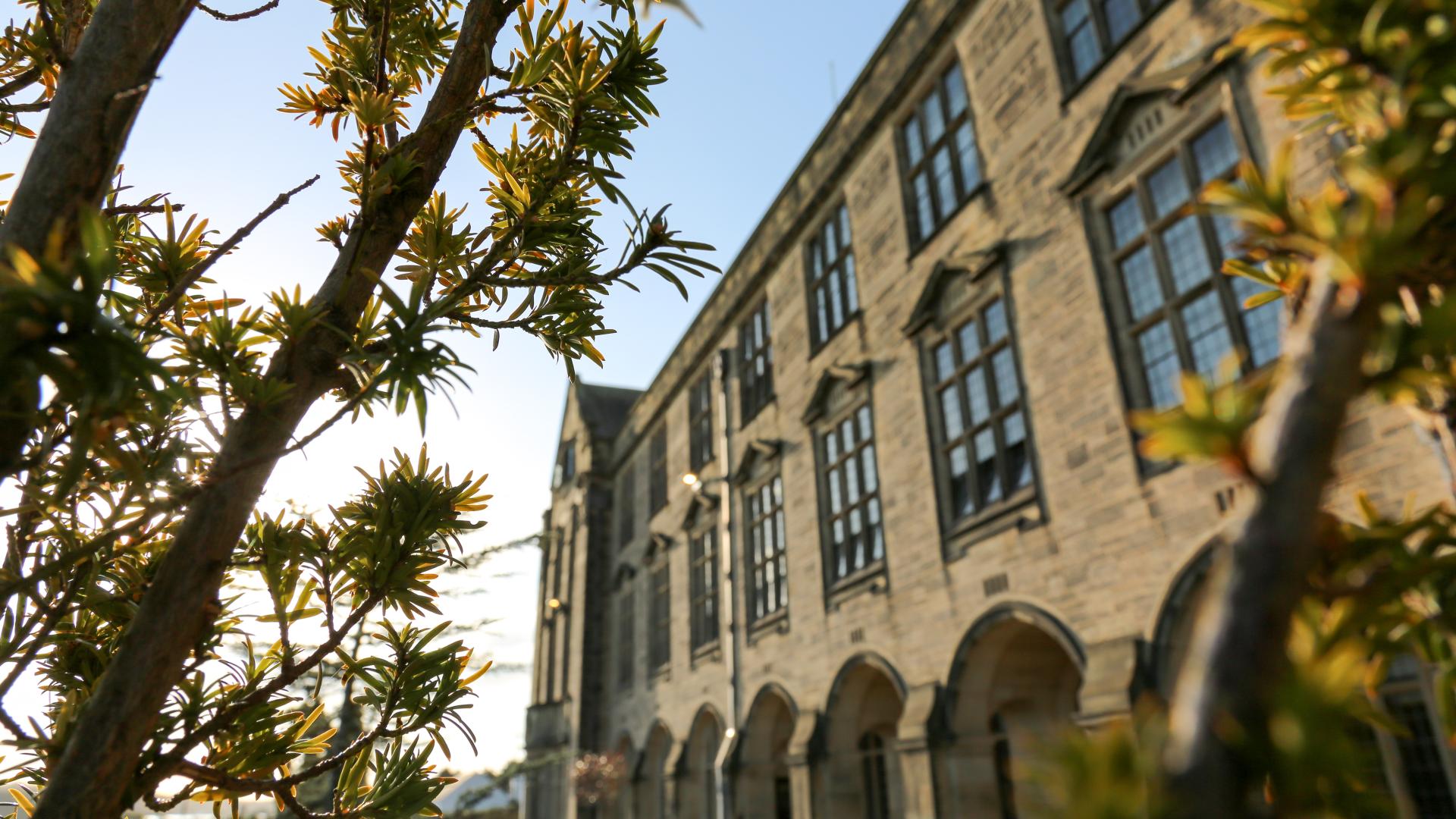
Bangor University is a bilingual Welsh university on the North Wales coast, set between the mountains of Eryri (Snowdonia) and the Menai Strait. Founded in 1884 as the University College of North Wales, it has over 10,000 students and around 2,000 staff, and teaching and research span the arts, humanities, business, law, the sciences, engineering, medicine and health. Bilingualism is built into the student experience, with courses, halls and services available in Welsh as well as English.
Academic work is organised into three Colleges. The College of Arts, Humanities and Social Sciences houses the Albert Gubay Business School, the School of Arts and Humanities, the North Wales School of Education, the North Wales School of Law and the School of Welsh. The College of Science and Engineering houses the School of Computer Science and Engineering, the School of Environmental and Natural Sciences, the School of Ocean Sciences and the BioComposites Centre. The College of Medicine and Health houses the School of Health Sciences, the School of Psychology and Sport Science and the North Wales Medical School, one of the country's newest medical schools.
The main campus lies across the city of Bangor, with the Main Arts Building, the Main Library on College Road and the Pontio arts and innovation centre, which contains a theatre, cinema, teaching and social spaces and the Students' Union. The School of Ocean Sciences is at Menai Bridge on Anglesey and runs the research vessel Prince Madog; Treborth Botanic Garden on the Menai Strait serves as a living laboratory; and a Wrexham campus beside the Maelor Hospital teaches BSc Diagnostic Radiography. The University is a major provider of NHS training in Wales and a partner in the North Wales Clinical School, working with Betsi Cadwaladr University Health Board.
Student accommodation is grouped in two student villages, Ffriddoedd and St Mary's, both within walking distance of the main buildings; rooms are mostly single-occupancy, en-suite and self-catered. New full-time undergraduates and postgraduates who meet the booking conditions are guaranteed a room. The Students' Union (Undeb Bangor) runs sports clubs, many of them competing in BUCS, societies and volunteering projects, and the annual Varsity contest against Aberystwyth University.
Nearly 3,500 international students from 110 countries study at Bangor. International applicants can apply directly with no application fee or through UCAS, and Bangor University International College (BUIC), an embedded on-campus college run with Oxford International Education Group, delivers International Year Zero, International Year One and Pre-Masters stages that progress into Bangor degrees. ELCOS, the English Language Centre for Overseas Students, runs pre-sessional English courses.
The tuition fee for full-time Home undergraduates starting in September 2026 is £9,790, set at the Welsh Government's maximum regulated fee. The 2027 fee had not yet been set. International undergraduate fees for September 2026 entry are £18,000 a year (Band A: Arts and Humanities, Education, Law), £19,000 (Band B, including Business and Healthcare Science), £20,000 (Band C, including Biological Sciences, Computer Science and Zoology) and £21,000 (Band D, including Electronic Engineering, Medical Science, Ocean Science, Psychology and Nursing). Taught postgraduate fees for international students range from £19,000 to £26,000 a year for 2026 entry. Full-time research degrees range from £18,500 to £24,500 a year for 2026 and 2027 entry, and part-time research fees are 50% of the full-time rate.
Details: Scholarships for International Students and International Tuition Fees.
Details: Scholarships and Bursaries, Bangor Bursaries and Entrance Scholarships.
Postgraduate funding includes Inclusive Bangor Scholarships for master's study (one per College), a Postgraduate Taught Access Bursary for eligible UK students progressing from undergraduate study or from unemployment, and Y Werin Legacy Fund awards such as the Llewelyn Williams Postgraduate Studentship (up to £7,000). Students can also apply for fully funded ESRC Welsh Graduate School for the Social Sciences studentships and for UK Government postgraduate loans. See Scholarships, Studentships and Bursaries.
Bangor University Vice-Chancellor Scholarship (International) →
Bangor University Deans Scholarship (International, Undergraduate and Postgraduate Taught) →
Bangor University International Scholarship (Undergraduate and Postgraduate Taught) →
Bangor University Alumni, Existing Students and Family Discount (International) →
Browse the scholarships listed for Bangor University and check each award’s eligibility.
View scholarships for Bangor University →Undergraduate applicants apply through UCAS; Bangor's institution code is B06. For 2027 entry, UCAS applications can be submitted from 1 September 2026 and the initial deadline is 13 January 2027. Bangor still considers applications received after that date, and applications received between 25 February and 30 June are forwarded by UCAS and considered where places remain. Entry requirements are set separately for each course.
The deadline for Medicine and Graduate Entry Medicine (2027 entry) is 15 October 2026. Applicants must sit the UCAT (book by 16 September 2026; last test date 24 September 2026). Shortlisted applicants are invited in late November to in-person Multiple Mini Interviews (MMIs) at Bangor, held 7 to 11 December 2026. Offers are made only after all interviews have been completed, and are issued through UCAS in March 2027.
Under its widening access policy, Bangor uses contextual data to decide whether an applicant is eligible for a lower contextual offer. This includes POLAR4 and WIMD postcode data and UCAS indicators such as receiving free school meals, being estranged from parents, having caring responsibilities, having spent time in care, having served or having a parent in the UK Armed Forces, or being the first in the family to attend university. No offer is based on contextual data alone.
International students can apply directly through the University's Online Application Portal, with no application fee, or through UCAS. First-year entry requires a school-leaving qualification equivalent to A-levels or the International Baccalaureate; country-specific equivalences are set out for each country. Students who have completed a matching first year at another university may transfer into Year 2 with a certified transcript. Relevant professional experience of two years or more may be recognised, with employer references and a detailed CV. Applicants without direct-entry qualifications can take a four-year International Incorporated Bachelor's degree, with Year Zero taught at Bangor University International College (BUIC) on campus. For international applicants, the recommended application deadlines are the end of June for September entry, the end of October for January and the end of February for May.
Requirements vary by subject and level. Most undergraduate programmes require IELTS 6.0 (5.5 in each component); Law and Philosophy and Religion require 6.5 (6.0); Nursing and Midwifery require 7.0 (7.0); and Radiography requires 7.0 (6.5). Most taught postgraduate programmes require 6.0 (5.5), with higher levels for some, such as Law and English Literature at 6.5 (6.0) and Nursing, Midwifery and Counselling at 7.0 (6.5). Equivalent scores are accepted in TOEFL iBT, Pearson PTE Academic (for example 56 with 51 in each component for IELTS 6.0 (5.5)), Duolingo, Cambridge English, Trinity ISE, LanguageCert Academic, IELCA and Password Skills Plus. The Bangor English Language Test (BUELT) is no longer offered. Applicants below the direct-entry level can take ELCOS pre-sessional English courses.
Most taught programmes take applications directly through the University's online application form. Applications are accepted all year, with recommended deadlines of the end of June for September entry and the end of October for January entry. Some courses have their own closing dates or application routes, including the PGCE and the Chartered Banker MBA. International applicants need a bachelor's degree equivalent to at least a UK second-class honours degree. Business School applicants who do not meet this can take an International Incorporated Master's with a pre-master's stage at BUIC.
PhD and MPhil applicants should first find a potential supervisor and agree a research outline with them. They then apply online with a research proposal, degree certificates and transcripts, an academic reference, a CV and a passport (for international applicants). Applicants for advertised funded studentships apply through each studentship's own route. Applications are accepted all year, and most Schools allow a start at any point, subject to the supervisor's agreement. International research applicants need a master's degree equivalent to a UK master's and should secure funding before applying.
Study programmes offered at Bangor University.
Experiences shared by students of Bangor University.
Studied here? Share your experience to help other applicants.

Book a free consultation with our expert counsellors and take the first step towards your dream university.
Copyrights © 2026 StudyMapped. All rights reserved.

Enter your credentials to continue.
Join us and start your study abroad journey.


