
University in Nigeria
Katsina, Katsina State
University profile
Al-Qalam University Katsina (AUK) is the first Islamic university and the only not-for-profit university in Nigeria. It receives no subventions or grants from any of Nigeria's three tiers of government and is owned by the Muslim community (Ummah) rather than by an individual. Its vision is to impart relevant knowledge with high moral standing through up-to-date teaching and research facilities in informatics, sciences and humanities, and its mission is academic excellence in an Islamic, morally sound and conducive learning environment. The university enrols more than 7,000 students and keeps registration fees low to widen access to university education for children from low-income households in the region.
The university is in Katsina, the capital of Katsina State in north-western Nigeria. It opened in 2005 under a National Universities Commission licence and took the name Al-Qalam University Katsina in 2014. Academic work is organised in six colleges: Allied Health Science (Nursing Science, Radiography, Human Nutrition and Dietetics, Physiotherapy, Public Health), Social and Management Sciences (Accounting, Business Administration, Economics, Political Science, Sociology), Humanities (African Languages with Arabic and Hausa units, English, Islamic Studies), Education, Natural and Applied Sciences (Biological Sciences, Chemistry, Physics, Science Laboratory Technology) and Computing and Information Science (Computer Science and Information Technology; Software Engineering and Cyber Security). The School of Postgraduate Studies, set up in 2015, coordinates postgraduate work, and the School of Basic and Remedial Studies runs Pre-Degree and IJMB programmes.
The university offers 35 undergraduate programmes approved by the NUC and more than 40 in operation, five of them newly approved programmes that started in 2024. Part-time programmes run in the Colleges of Education, Social and Management Sciences and Natural and Applied Sciences. Thirteen undergraduate programmes were visited in the NUC accreditation exercise of November and December 2022, and all received full accreditation: Microbiology, Biochemistry, Science Laboratory Technology, Political Science, Sociology, Accounting, Business Administration, Economics, Software Engineering, Mathematics, and B.Ed. Arabic, English and Hausa.
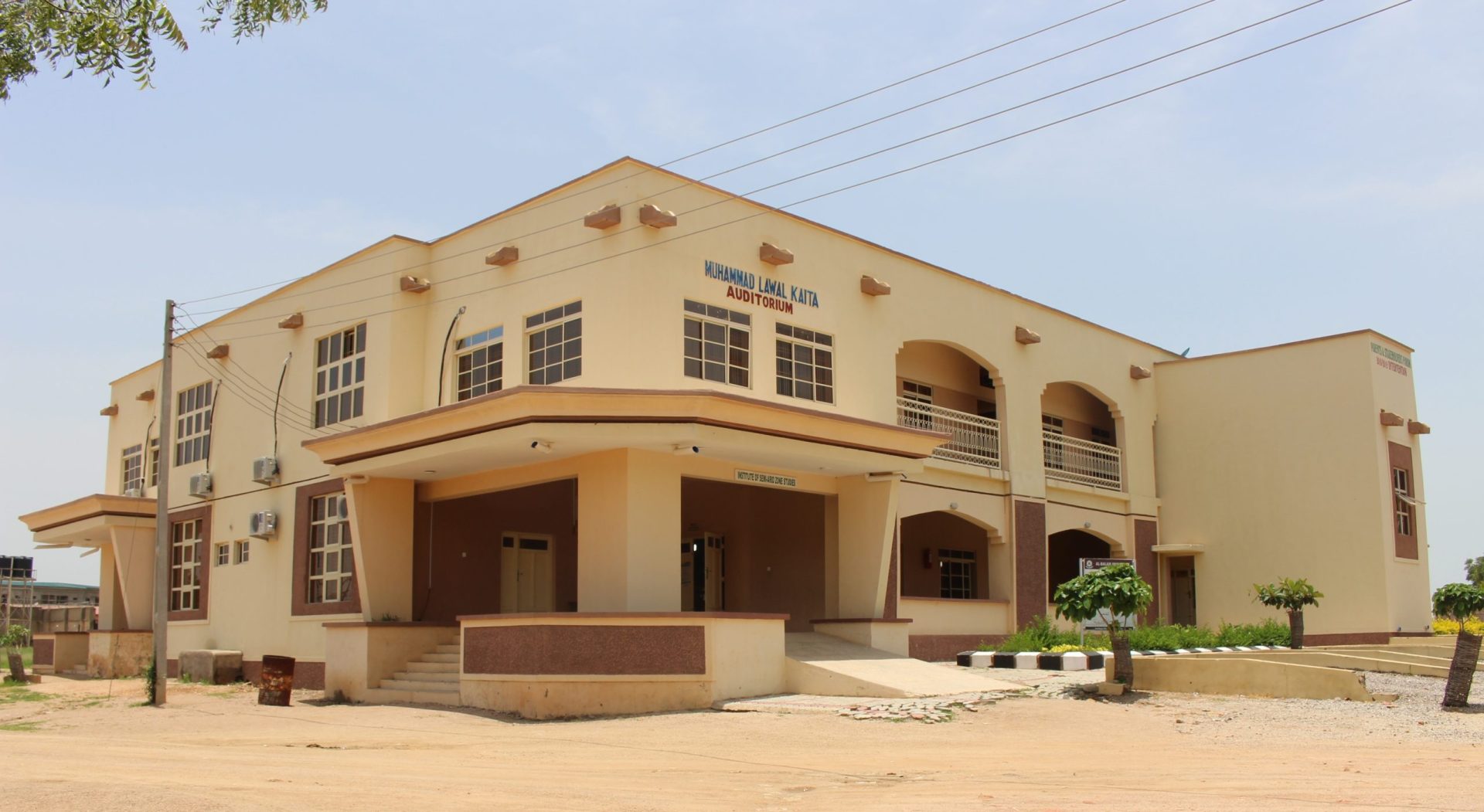
The Institute of Semi-Arid Zone Studies, founded in 2020, carries out research on sustainable farming, livestock-based farming systems and range management in dryland areas, and the Directorate of Research, Innovation and Development coordinates staff research. The university prioritises research on poverty alleviation, robotics, ICT for development, peace, stability and sustainable growth.
Student life follows the Islamic ethos of the university, with a student handbook setting out moral and academic conduct rules. Accommodation consists of hostels on campus, including Kano House for male students and several female hostels (Ulul-Albab, Sani Zangon Daura, Old Hostel and Usman Nagoggo Hostel), supplemented by rented houses treated as part of the campus. Facilities include the Bilya Sanda (Khadimul Islam) Library with college libraries, an electronic library unit, a 24-hour university clinic with doctors, nurses and pharmacists and an ambulance on standby, sports facilities for football, volleyball, handball, basketball, badminton, table tennis and lawn tennis, and a Counselling and Human Development Centre that also handles registration of international students.
Browse the scholarships listed for Al-Qalam University, Katsina and check each award’s eligibility.
View scholarships for Al-Qalam University, Katsina →Applicants choose Al-Qalam University in JAMB and apply through the university student portal (sis.auk.edu.ng). Entry requires five O-Level credit passes (WAEC, NECO or NABTEB) including English Language, with subjects set by programme, and the UTME subject combination for the programme. Examples: Nursing Science, Radiography, Human Nutrition and Dietetics, Physiotherapy and Public Health need UTME English, Biology, Chemistry and one of Mathematics or Physics, with O-Level credits in English Language, Mathematics, Physics, Chemistry and Biology. Computer Science, Cyber Security, Information Technology and Software Engineering need UTME English, Mathematics, Physics and one of Chemistry, Biology/Agricultural Science, Economics or Geography, with O-Level credits in English Language, Mathematics, Physics and two other sciences. Accounting, Business Administration and Economics need UTME English, Mathematics, Economics and one other subject. B.A. English needs UTME English, Literature in English and two other subjects; B.A. Arabic, Hausa, Islamic Studies and Sharia need English plus the relevant language or Islamic Religious Studies and two other subjects. Education programmes also require acceptable points in UTME and post-UTME screening. Admission lists are issued in batches each session, and admitted candidates complete processing on the JAMB portal.
Direct Entry candidates enter at 200 Level and complete in three years. In the College of Humanities, two A-Level or IJMB passes including the relevant subject, or a credit/merit pass in a recognised NCE or Diploma in the subject, qualify. In the College of Education, entry is a minimum of merit in NCE, 6 points in IJMB or GCE A-Level, or Lower Credit in ND, plus O-Level credits and post-UTME screening. Direct Entry candidates admitted in 2025/2026 appear on a published DE admission list.
Both are one-year programmes. Entry needs five O-Level credits including English and Mathematics (three other basic subjects) in not more than two sittings. The online application form costs N15,000, original credentials are presented at screening, and registration fees are N245,000 for sciences and N220,000 for social and management sciences and arts (subject to review). Pre-Degree students who pass JAMB and the school qualifying examination qualify for 100 Level; IJMB graduates who pass the qualifying examination may seek Direct Entry to 200 Level at AUK or other Nigerian universities.
Postgraduate Diploma (1 year): at least a third-class degree, or a lower credit in HND. Professional Master's (1 year): minimum second-class lower, or second-class upper in an unrelated field with a good postgraduate diploma in the relevant area or a professional qualification. Academic Master's (2 years): degree with CGPA not below 2.75/5.00 in the relevant area, or a third-class degree plus a postgraduate diploma with CGPA of at least 3.00/5.00. Ph.D (3 years): academic Master's in a relevant area with CGPA of at least 3.50/5.00. M.Phil (1 year): all Ph.D requirements plus a CGPA of 3.00. Full-time and part-time options exist.
Applications and admission are handled only through the official website and the portal sis.auk.edu.ng, and all payments go through the portal's payment gateway, never to personal accounts. Registration fees for 2026/2027 for 100 Level full-time degrees range by programme, for example N349,887 to N368,900 for several Education and Humanities programmes, N494,950 for Social and Management Sciences programmes, N546,950 for most computing and science programmes, N666,800 for Public Health and N1,111,680 for Nursing Science. Returning students log in with their registration number, generate an invoice, pay it and register courses. Enquiries: 08038311691 (admission) and 08165929616 (technical).
The university operates from its main campus in Katsina, the capital of Katsina State.
Experiences shared by students of Al-Qalam University, Katsina.
Studied here? Share your experience to help other applicants.

Book a free consultation with our expert counsellors and take the first step towards your dream university.
Copyrights © 2026 StudyMapped. All rights reserved.

Enter your credentials to continue.
Join us and start your study abroad journey.


