

University in Canada
Wolfville, Nova Scotia, Canada
University profile
Acadia University is a liberal arts and sciences university founded in 1838 in Wolfville, Nova Scotia, a college town overlooking the Annapolis Valley and the Bay of Fundy, about an hour's drive from Halifax and Halifax Stanfield International Airport. It describes its model as a liberal education built on personalized attention, experiential learning, community engagement, environmental stewardship and global citizenship.
Teaching is organized in four faculties: Arts, Pure and Applied Science, Professional Studies (including the Manning School of Business and the School of Education) and Theology (Acadia Divinity College). Together they offer more than 200 degree combinations at undergraduate level, nearly all of them four-year bachelor programs, plus a few diploma and certificate programs. Popular majors include biology, marketing, English, psychology, environmental studies and kinesiology. Graduate study covers 18 programs, among them Applied Geomatics, Applied Kinesiology, Biology, Chemistry, Community Development, Computer Science, Education (Counselling, Curriculum Studies, Inclusive Education), English, Environmental Science, Geology, Mathematics and Statistics, Political Science, Psychology, Social and Political Thought and Sociology, and an inter-university PhD in Educational Studies.
The 250-acre campus is residential. Ten residence buildings range from double rooms to deluxe single suites, each with a residence assistant team and 24/7 campus security, and the Vaughan Memorial Library at the centre of campus holds over a million titles in all formats. Varsity athletics, a tradition dating to 1875, compete in U SPORTS and Atlantic University Sport through nine varsity teams and fifteen athletic clubs, with an athletics complex that includes an Olympic-sized ice rink, a multi-sport turf field with all-weather track, a fitness centre and a high performance centre.
International students are guaranteed on-campus housing for the duration of their studies and receive a residence discount of $2,000 CAD per year for up to four years for those starting in Fall 2026. Support includes pre-arrival webinars, airport arrival help, orientation, health insurance guidance, study permit information and a custodianship arrangement for students under 19, delivered through the OneStop Service Centre. A Fair Trade Campus, Acadia also became in 2022 the first institution in Canada to receive the Organic Campus designation.
Every applicant to an undergraduate program, Canadian or international, is automatically considered for an entrance scholarship, with initial offers of $500 to $2,500 included in the offer letter. Eligibility needs an average of at least 80% in the courses required for admission (final Grade 11 plus first-semester Grade 12 results, international grades scaled to Canadian standards), maintained in Grade 12, and graduation from high school within the past five years. Transfer students need a cumulative GPA of at least 3.5 or 80%, first undergraduate degree, and no more than two years or 60 credit hours completed. Complete the scholarship application in the Status Portal by 1 March.
Students with a scholarship average of at least 95% are considered for the Chancellor's Scholarship ($40,000, $10,000 a year), Board of Governor's Scholarship ($32,000, $8,000 a year) and President's Scholarship ($28,000, $7,000 a year).
Scholar-bursaries combine academic standing and demonstrated financial need (a student loan application shows need), with an 80% average and a 1 March deadline. The Harrison McCain Scholar-Bursary is worth $16,000 over four years ($4,000 per year) for Canadian high school graduates with an 85% or higher Grade 12 university preparatory average, financial need, leadership and initiative in funding their education. The Spicer-Hennessey Scholar-Bursary, valued at the full cost of tuition plus a complimentary base-category residence room, is for Nova Scotia-born graduates of Nova Scotia high schools with an entering average of 85% or higher entering the Manning School of Business or Biology, Chemistry, Computer Science, Engineering, Geology, Mathematics and Statistics, Nutrition and Dietetics or Physics.
These need separate applications: the Arthur L. Irving Family Foundation Scholarships ($20,000 per year over four years, for environmental-related studies, deadline 31 March), the Edwin Borden Awards ($3,500 annually, renewable for four years, for entering Black Nova Scotian students, deadline 1 March) and the Raymond E. Ivany Merit Award ($5,000, open to domestic or international entering students, selected on a 500-word essay and possible interview).
International students starting in Fall 2026 receive a $2,000 CAD residence discount each year for up to four years. Acadia awards more than $8 million annually in scholarships, scholar-bursaries, awards and prizes. Graduate funding includes Acadia Graduate Scholarships and Graduate Teaching Assistantships plus conference funding support.
Details: Entrance scholarships; Graduate money matters; International residence discount.
Acadia Entrance Scholarships and Scholar-Bursaries →
Browse the scholarships listed for Acadia University and check each award’s eligibility.
View scholarships for Acadia University →General admission requires Grade 12 (senior secondary) English and four additional Grade 12 academic or advanced courses, with a minimum 70 per cent average calculated by Admissions for all programs. Admission is competitive; the average entering grade is stated as 86 per cent for the Class of 2021. Provincial guidelines name the required English course: English 30-1 in Alberta, English Studies 12 or English 12 First Peoples in British Columbia and the Yukon, English A30 and B30 in Saskatchewan. Quebec CEGEP applicants need two English courses and a 70% average (75% for Biology and Kinesiology); one year of CEGEP is normally equivalent to Grade 12, and a two-year DEC with a 70% average gives entry to the second year of a four-year program.
The IB Diploma is accepted, including IB English, with an overall score of 24 or better. Students with a score of 30 or higher receive 30 credit hours; individual credit is given for Higher Level courses with grades of 5, 6 or 7, and courses required for specific programs must be passed with a 4 or better.
The application needs a $40 CDN processing fee, official certified transcripts from all institutions attended (sealed by the school, sent directly or through the student) and official language test results if English is not the first language. An admission offer is issued before a study permit can be sought, and the offer letter is used for the permit application. Admission decisions are normally made 3 to 4 business days after all documents arrive.
The requirement may be waived after three years of English-medium instruction.
Applications to undergraduate programs open after 21 September (Education applications for 2025-2026 opened 1 October); apply by 1 March to be considered for an entrance scholarship, with scholarship offers notified by mid-April. Canadians pay a $40 CDN fee online by credit card and upload an unofficial Grade 11 and current Grade 12 transcript, with the final transcript sent at the end of June; the offer may be withdrawn if the admission average is not maintained. Education applicants pay $35 CDN, supply official post-secondary transcripts, a supplemental form and three referee forms. Applications are made online through the Acadia application and Status Portal, which takes about 15 minutes. Official documents are mailed to the Admissions Office, Acadia University, 15 University Avenue, PO Box 7, Wolfville, NS B4P 2R6, or emailed to [email protected].
Transfer applicants pay $40 CDN and arrange for official transcripts to be sent directly, with course descriptions. Transfer credit is normally given for courses with a minimum grade of C-. Most programs need a 2.0 GPA; Applied Bioscience, Biology, Business Administration, Computer Science, Environmental Science, Kinesiology, Psychology, Nutrition, Community Development and Applied Science (Engineering) need 2.5. Letters of Permission are available for students taking courses while attending another university. Mature students are full-time applicants out of high school for at least four years who do not meet the published guidelines; they supply all transcripts, two employer references, a resume and an outline of future plans, may be interviewed, and may be asked to complete up to 18 credit hours as independent part-time students with grades of C- or better before admission to a degree.
Graduate applicants must first obtain the consent of a potential Acadia supervisor in most research programs. The application fee is a non-refundable $100 CDN ($150 for Counselling), paid by credit card through the Applicant Status Portal. MEd applicants need two years of full-time relevant experience after a four-year undergraduate degree (a BEd for Curriculum Studies). Graduate English minimums for tests taken from 21 January 2026: IELTS Academic 7.0 overall with no subtest below 6.5; TOEFL iBT 5.0 overall with no score below 5; CAEL 70 with no subtest below 60; PTE Academic 65 with no subtest below 60 (tests taken earlier: IELTS 6.5/6.0, TOEFL iBT 93 with no subtest below 20, PTE 61). Duolingo is not accepted for graduate study, and some programs require higher scores. Applicants with a GPA of at least 3.0 in each of the last two undergraduate years who apply complete by the 1 or 15 February program deadline are automatically considered for an Acadia Graduate Scholarship and Graduate Teaching Assistantship.
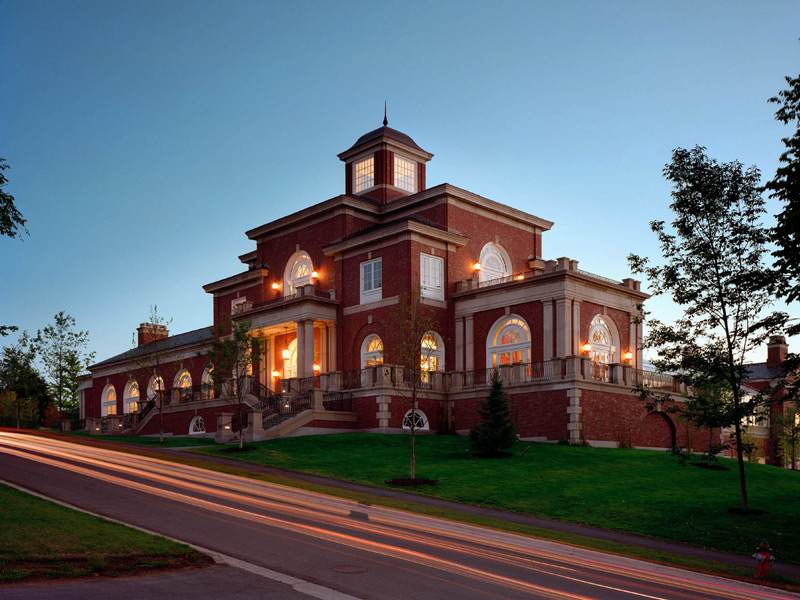
Wolfville campus (Wolfville, Nova Scotia): the single main campus of about 250 acres, with all four faculties and graduate programs.
Study programmes offered at Acadia University.
Experiences shared by students of Acadia University.
Studied here? Share your experience to help other applicants.

Book a free consultation with our expert counsellors and take the first step towards your dream university.
Copyrights © 2026 StudyMapped. All rights reserved.

Enter your credentials to continue.
Join us and start your study abroad journey.


